
A flooring material is sustainable when it minimizes environmental harm across its full lifecycle — from raw material sourcing through manufacturing, use, and end-of-life disposal or recovery. The most sustainable options combine recycled or renewable inputs, long service lives, low maintenance demands, and the ability to be recycled or repurposed once they wear out. Below, we unpack the specific questions that matter most when evaluating flooring from an environmental perspective.
What criteria define a flooring material as sustainable?
A sustainable flooring material is one that reduces negative environmental impact at every stage of its life: how it is sourced, how it is made, how long it lasts, and what happens to it afterward. No single factor determines sustainability on its own. Instead, it is the combination of recycled content, manufacturing efficiency, durability, indoor air quality, and end-of-life options that together define how environmentally responsible a flooring choice really is.
The most widely used framework for evaluating this is lifecycle assessment (LCA), which measures the total environmental cost of a product from extraction to disposal. Materials that score well on LCA typically use post-consumer or post-industrial recycled inputs, require less energy to produce, and last long enough to avoid frequent replacement. Low or zero emissions of volatile organic compounds (VOCs) during use also matter, both for indoor air quality and for overall environmental impact.
Certifications like Cradle to Cradle, FloorScore, and Environmental Product Declarations (EPDs) give buyers a structured way to compare options without having to run their own assessments. These are useful benchmarks, but they are not the whole picture. Context matters too: a material that performs well in a dry office may degrade quickly in a wet industrial environment, driving up replacement frequency and undermining its sustainability credentials.
How does a material’s lifespan affect its environmental impact?
A flooring material’s lifespan has a direct effect on its environmental impact because a longer-lasting floor means fewer replacements, less waste, and a lower overall resource cost over time. A cheaper material that needs replacing every five years will almost always have a greater environmental footprint than a more durable option that lasts twenty or thirty years, even if the durable option required more energy to produce initially.
This is where lifecycle costing becomes a practical tool. Lifecycle costing looks beyond the upfront purchase price and accounts for installation, maintenance, repair, and eventual disposal over the full period of use. When you factor in all of those costs, durable flooring materials consistently come out ahead, both financially and environmentally. Replacing a floor generates construction waste, consumes installation labor, and often involves adhesives or underlays that carry their own environmental costs.
Durability also reduces the frequency of maintenance interventions. Flooring that resists moisture, compression, and heavy traffic needs less cleaning product, fewer repairs, and less downtime. Each of those savings adds up across the years, making lifespan one of the most underrated factors in any honest sustainability assessment.
What’s the difference between recycled content and recyclability?
Recycled content refers to the proportion of a material that was made from previously used or recovered materials, while recyclability describes whether the material can be recovered and reprocessed again at the end of its useful life. These are two separate qualities, and a flooring product can have one without the other.
A floor made from post-consumer recycled rubber, for example, diverts waste from landfill at the point of manufacture. That is a meaningful environmental benefit. But if that same floor cannot be recycled again when it eventually wears out, it still ends up in landfill at the end of its life. Conversely, a floor made from virgin materials might be technically recyclable but still carries a high environmental cost from extraction and production.
The most sustainable flooring options aim to deliver both: high recycled content going in, and a clear, practical route to recycling or recovery at the end. This is the foundation of circular rubber flooring, where materials loop back into the production process rather than being discarded. When evaluating a product, it is worth asking the manufacturer specifically about both attributes, because marketing materials often highlight one while staying quiet about the other.
Which flooring materials have the lowest environmental footprint?
Flooring materials with the lowest environmental footprint generally include recycled rubber, cork, linoleum, and reclaimed hardwood. Each has strengths and limitations, and the best choice depends on the application. Recycled rubber stands out for high-traffic and heavy-duty environments because it combines high recycled content, exceptional durability, and resistance to conditions that would quickly degrade softer materials.
Recycled rubber
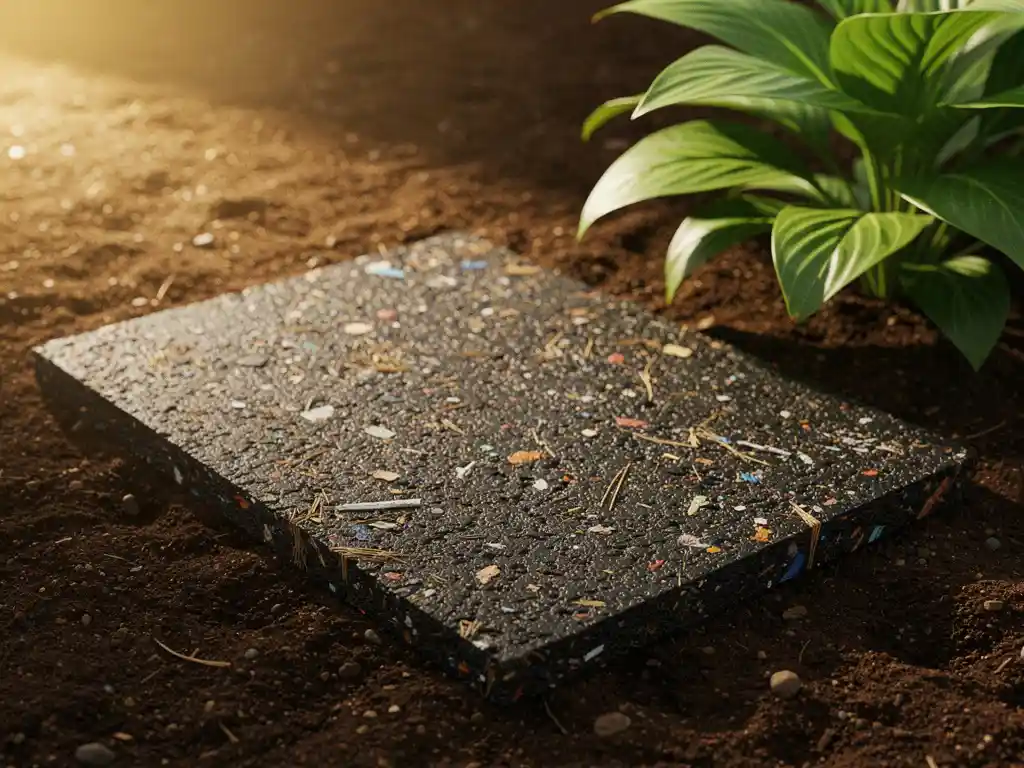
Recycled rubber flooring is typically made from post-consumer materials such as used vehicle tires, diverting significant volumes of waste from landfill. It is non-porous, moisture-resistant, and capable of withstanding heavy loads and constant foot traffic without degrading. In demanding environments, its long service life gives it a strong advantage in lifecycle costing terms.
Cork and linoleum
Cork is harvested from the bark of cork oak trees without felling them, making it a genuinely renewable material. Linoleum is made from linseed oil, wood flour, and natural resins, all of which are biodegradable. Both are good choices for lower-traffic interior spaces, but they are less suited to wet or heavy industrial conditions where rubber performs better.
Reclaimed hardwood
Reclaimed wood avoids the need for new timber and often comes with appealing character and visual warmth. Its environmental credentials depend heavily on sourcing and the energy used in processing. In the right setting, it is a strong option, but it requires careful maintenance and is not suitable for wet or high-impact environments.
Does sustainable flooring mean sacrificing durability or performance?
No, sustainable flooring does not mean sacrificing durability or performance. In fact, many of the most environmentally responsible flooring options are also among the most durable ones available. The idea that sustainability requires a trade-off with performance is outdated. Materials like recycled rubber, properly produced linoleum, and reclaimed hardwood all demonstrate that environmental responsibility and long-term reliability can go hand in hand.
The confusion often arises from early generations of eco-labeled products that prioritized green credentials over functional design. That has changed. Today, sustainable materials are engineered to meet the same performance benchmarks as conventional options, and in many cases they exceed them. Recycled rubber, for instance, is used in some of the most demanding environments imaginable, including industrial floors, livestock facilities, and heavy-traffic commercial spaces, precisely because it holds up under conditions that would destroy softer materials.
The practical takeaway is straightforward: sustainability and performance are not opposing values. A floor that lasts longer, requires less maintenance, and avoids frequent replacement is both better for the environment and better for the people and operations that rely on it every day.
What should you look for when choosing sustainable flooring?
When choosing sustainable flooring, look for high recycled content, verified durability, low VOC emissions, and a credible end-of-life recovery pathway. These four factors, combined with the specific demands of your environment, give you a reliable framework for comparing options without being misled by broad sustainability claims.
- Recycled or renewable content: Check what percentage of the material comes from post-consumer or post-industrial sources, and verify this with documentation rather than relying on packaging claims alone.
- Durability and expected service life: A longer-lasting floor reduces replacement frequency, which is one of the most effective ways to lower your overall environmental footprint. Ask for data on wear resistance, compression recovery, and performance under the conditions specific to your space.
- Lifecycle costing: Factor in installation, maintenance, and disposal costs alongside the purchase price. Sustainable materials often have a higher upfront cost that is more than offset by lower long-term costs.
- Indoor air quality: Look for low or zero VOC emissions, particularly in enclosed spaces. Third-party certifications like FloorScore or GREENGUARD provide independent verification.
- End-of-life options: Find out whether the manufacturer offers a take-back program or whether the material can be recycled through existing channels. Circular rubber flooring programs, where old mats are recovered and reprocessed into new ones, are a strong example of this done well.
- Fit for purpose: Sustainable flooring only delivers on its environmental promise if it performs in your specific environment. A material that degrades quickly under your conditions will need replacing sooner, erasing the environmental benefits of its recycled content or renewable inputs.
At LRP Matting, our rubber mats are made from 100% recycled materials and engineered to last in the most demanding conditions. If you are looking for flooring that holds up in heavy-use environments without compromising on sustainability, our industrial rubber matting range is a practical place to start.
Frequently Asked Questions
How do I verify a manufacturer's sustainability claims before purchasing?
Ask for third-party documentation rather than relying on self-reported marketing claims. Look for Environmental Product Declarations (EPDs), FloorScore, GREENGUARD, or Cradle to Cradle certifications, which require independent verification. You can also request specific data on recycled content percentages, VOC emission test results, and information about any take-back or recycling programs the manufacturer operates. If a supplier cannot provide documented evidence to back up their claims, that is a strong signal to look elsewhere.
What are the most common mistakes people make when choosing sustainable flooring?
The most common mistake is focusing on a single sustainability attribute — such as recycled content — while overlooking equally important factors like durability, VOC emissions, or end-of-life options. Another frequent error is choosing a material based on its environmental credentials alone without confirming it is fit for the specific environment, which leads to premature wear and early replacement that negates the sustainability benefits. Finally, many buyers underestimate the true cost of flooring by only considering the purchase price, rather than running a full lifecycle cost analysis that includes maintenance and disposal.
Is sustainable flooring a practical choice for heavy industrial or high-traffic environments?
Yes, and in many cases it is the most practical choice. Recycled rubber flooring, for example, is specifically engineered for heavy-duty industrial use and performs well under constant foot traffic, heavy machinery, moisture exposure, and compression loads. The key is matching the material to the demands of the environment — sustainable options are not limited to light-use or decorative settings. In high-traffic applications, the durability of materials like recycled rubber actually amplifies their sustainability advantage, since fewer replacements mean less waste over time.
What does a flooring take-back or circular program actually involve, and how do I find one?
A take-back program means the manufacturer collects your flooring at the end of its service life and reprocesses it into new product, keeping the material in circulation rather than sending it to landfill. In practice, this typically involves contacting the manufacturer when the floor is ready to be replaced, arranging collection or drop-off, and having the material shredded and reused as an input for new flooring. To find one, ask your flooring supplier directly whether they operate such a scheme, or check the manufacturer’s website for details on circular or closed-loop programs. Circular rubber flooring programs are among the most well-established examples currently available.
How does sustainable flooring affect indoor air quality, and why does it matter?
Some conventional flooring materials off-gas volatile organic compounds (VOCs) — chemicals released from adhesives, finishes, or synthetic materials — which can degrade indoor air quality and pose health risks over time. Sustainable flooring options that carry low-VOC or zero-VOC certifications, such as FloorScore or GREENGUARD, have been independently tested to confirm they meet safe emission thresholds. This matters particularly in enclosed or poorly ventilated spaces such as offices, schools, gyms, and healthcare facilities, where occupants spend extended periods. Choosing certified low-VOC flooring is both an environmental decision and a direct investment in the health of the people using the space.
Can sustainable flooring be installed using conventional methods, or does it require specialist contractors?
Most sustainable flooring materials can be installed using standard methods and do not require specialist contractors, though the specifics depend on the product. Recycled rubber matting, for instance, is often available in interlocking tiles or roll formats that can be laid without adhesives, simplifying both installation and future removal or replacement. Where adhesives are required, it is worth specifying low-VOC or water-based options to maintain the overall environmental profile of the installation. Always check the manufacturer’s installation guidelines and confirm that your chosen method does not void any performance warranties.
How should I maintain sustainable flooring to maximise its lifespan and environmental benefits?
The maintenance requirements vary by material, but the general principle is to use the least aggressive cleaning method that keeps the floor in good condition, avoiding harsh chemicals that can degrade the surface and shorten its lifespan. For recycled rubber flooring, routine sweeping and occasional damp mopping with a pH-neutral cleaner is typically sufficient, even in demanding environments. Avoiding unnecessary chemical treatments and addressing minor damage promptly — rather than allowing it to spread — are the most effective ways to extend service life and preserve the environmental value of your flooring investment.
Related Articles
- How does regular maintenance extend the life of sports flooring?
- How do different floor materials affect slip resistance?
- How do you design a safe flooring layout for an equine hospital?
- How do you reduce impact on a horse's legs during stabling?
- How do you protect a sports facility floor during the off-season?
- What type of flooring holds up best in a high-traffic athletic venue?
- What flooring is used in equine surgery facilities?
- What is the best way to protect a warehouse floor during construction?
- How do you know if your factory floor is causing worker fatigue?
- How do you protect a sports facility floor from cleats and spikes?