
Product lifespan matters for sustainability because the longer a product lasts, the fewer resources are needed to replace it. Every replacement cycle consumes raw materials, energy, and transportation, all of which generate environmental costs. Choosing durable, long-lasting products is one of the most practical ways to reduce your environmental footprint over time. Below, we unpack the key questions around product lifespan, sustainable materials, and what it all means for your bottom line.
How does product lifespan affect environmental impact?
A product’s lifespan directly determines how many times it needs to be manufactured, transported, and disposed of. The shorter the lifespan, the more frequently those resource-heavy cycles repeat. Extending the life of a product reduces the total environmental burden across its entire lifecycle, making durability one of the most effective levers in sustainable design.
When you think about environmental impact, it’s tempting to focus only on what a product is made of. But how long it lasts is equally important. A product made from partially recycled materials that needs replacing every two years can easily have a larger overall footprint than a more durable alternative that lasts a decade or more.
This is where lifecycle thinking becomes useful. Rather than evaluating a product at a single point in time, lifecycle costing and lifecycle assessment look at the total impact from production through disposal. Products with longer lifespans consistently perform better under this kind of analysis, because the environmental cost of manufacturing is spread over more years of use.
What is the relationship between durability and waste reduction?
Durability and waste reduction are directly linked: a product that lasts longer generates less waste over time. When products fail early, they end up in landfills sooner, and new products need to be manufactured to replace them. Improving durability is one of the most straightforward ways to reduce the volume of material waste a business or consumer produces.
This relationship becomes especially visible in commercial and industrial settings, where flooring, matting, and surface protection products take heavy daily use. Facilities that replace flooring frequently generate significant disposal waste, plus the packaging, logistics, and labor involved in each replacement. A more durable product breaks that cycle.
Durability also supports circular economy principles. Products designed to last can often be repaired, refurbished, or recycled at end of life rather than simply discarded. This keeps materials in use longer and reduces the demand for virgin raw materials, which is a core goal of circular rubber flooring and sustainable flooring design.
How does a longer-lasting product reduce carbon emissions?
A longer-lasting product reduces carbon emissions by decreasing the frequency of manufacturing, shipping, and disposal, all of which are carbon-intensive processes. Every time a product is replaced, a new one must be produced, often using energy derived from fossil fuels. Fewer replacements mean fewer production runs and a lower cumulative carbon footprint over time.
Manufacturing is typically the most carbon-heavy phase of a product’s life. The energy required to process raw materials, operate machinery, and run production facilities adds up quickly. When a product lasts twice as long, you effectively halve the manufacturing-related emissions associated with keeping that product in service.
Transportation also contributes meaningfully to emissions. Products are shipped from manufacturers to distributors to end users, and each journey burns fuel. A durable product that doesn’t need replacing for many years reduces the number of those journeys. At scale, across thousands of products in commercial or industrial use, this adds up to a real and measurable reduction in carbon output.
What materials make products last longer and stay sustainable?
Materials that combine physical resilience with low environmental impact are the foundation of both durable and sustainable products. Recycled rubber, fiber-reinforced compounds, and other reprocessed materials are strong examples. They resist wear, temperature extremes, and heavy loads while reducing the demand for virgin raw materials, making them practical choices for sustainable flooring and industrial applications.
Recycled rubber
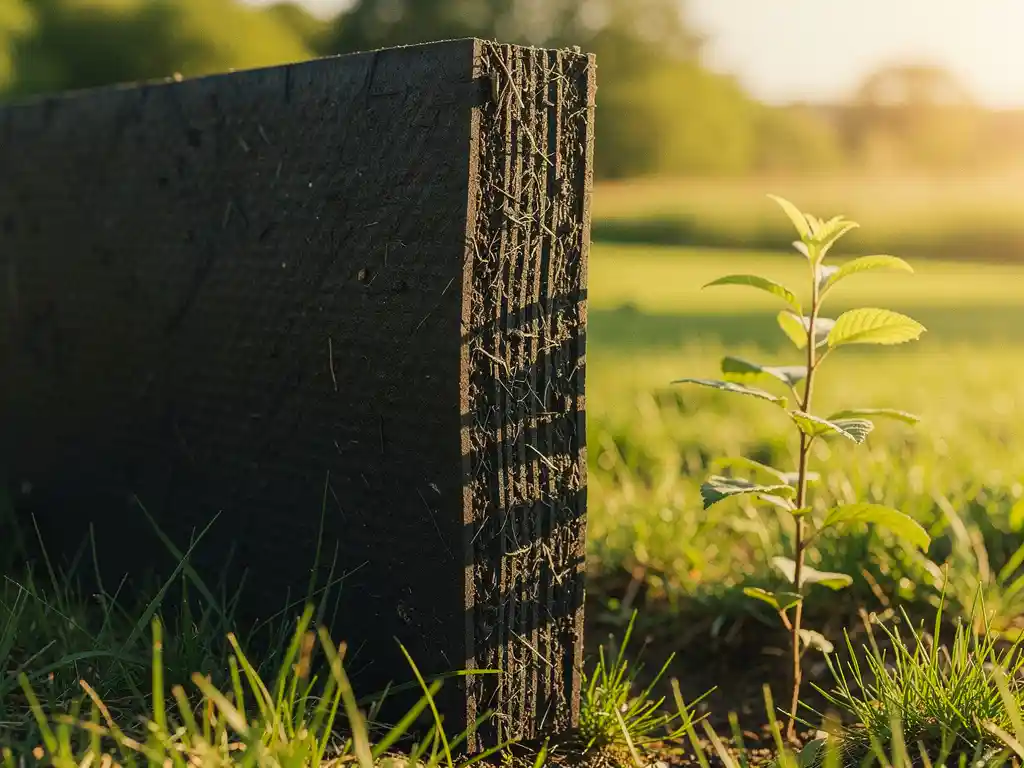
Recycled rubber is one of the most effective sustainable materials available for high-wear applications. It is dense, non-porous, resistant to moisture, and holds up under repeated mechanical stress. Because it is made from reprocessed material, it keeps rubber out of landfills and reduces the environmental cost of producing new rubber from scratch. It does not crack, peel, or degrade quickly, which means products made from it tend to have genuinely long service lives.
Fiber-reinforced rubber compounds
Fiber-reinforced rubber compounds take the durability of recycled rubber further by embedding fiber material into the rubber matrix. This increases tensile strength and resistance to deformation, making the material suitable for environments with extreme loads or constant movement. Products built from fiber-reinforced compounds tend to outlast standard rubber alternatives, which directly supports both lifecycle costing goals and waste reduction targets.
Should businesses prioritize product lifespan over upfront cost?
Yes, businesses should prioritize product lifespan over upfront cost in most cases, because the total cost of ownership over time is almost always more relevant than the purchase price. A cheaper product that fails quickly costs more in replacements, labor, and downtime than a durable product that performs reliably for years. Lifecycle costing makes this calculation concrete and measurable.
Upfront cost is easy to see on a purchase order. Replacement costs, installation labor, operational disruption, and disposal fees are less visible but equally real. When businesses factor in all of these costs over a realistic product lifespan, durable products consistently come out ahead financially, not just environmentally.
There is also a risk dimension to consider. In industrial, commercial, or agricultural environments, product failure is not just a financial inconvenience. It can create safety hazards, damage equipment, or disrupt operations. Investing in longer-lasting materials reduces that risk and the costs that come with it.
At LRP Matting, we build our rubber mats from 100% recycled materials, including our proprietary fiber-reinforced rubber compound (FRC®), specifically because we believe durability and sustainability belong together. Our mats are designed to last under demanding conditions, which means fewer replacements, less waste, and better value over time. If you are looking for flooring that holds up while keeping your environmental impact in check, explore our industrial matting solutions to see what that looks like in practice.
Frequently Asked Questions
How do I calculate the total cost of ownership for a product to compare lifespan value?
To calculate total cost of ownership (TCO), add up the purchase price, installation costs, maintenance expenses, downtime or disruption costs, and disposal or replacement fees over a defined period — say, 10 years. Then divide that total by the number of years the product is in service to get a true annual cost. Comparing that figure across two or more product options almost always reveals that the more durable product is significantly cheaper in the long run, even if its upfront price is higher.
What are the most common mistakes businesses make when evaluating sustainable flooring or matting?
The most common mistake is focusing exclusively on purchase price while ignoring replacement frequency, labor costs, and disposal fees. Another frequent error is equating ‘sustainable’ with any product that contains recycled content, without considering how long it will actually last — a short-lived product with recycled materials can still have a larger environmental footprint than a highly durable alternative. Always evaluate sustainability and value together using a lifecycle lens rather than a single-point-in-time comparison.
How can I tell if a product is genuinely durable before purchasing it?
Look for products that publish independent test data, certifications, or real-world performance specifications — not just marketing language. Ask suppliers for documented service life expectations, warranty terms, and case studies from comparable applications. For flooring and matting specifically, check whether the product has been tested under load conditions, temperature ranges, and traffic levels that match your environment, as performance in controlled lab settings doesn’t always translate directly to demanding real-world use.
Can durable products still be sustainable at end of life, or do they just delay the waste problem?
Genuinely durable products designed with circular economy principles in mind address end-of-life responsibly rather than simply delaying disposal. Materials like recycled rubber can often be reprocessed or recycled again at end of life, keeping them out of landfills entirely. When evaluating a product’s sustainability, ask the manufacturer whether take-back programs, recyclability pathways, or refurbishment options exist — a well-designed durable product should have a clear plan for what happens when it finally does reach the end of its service life.
Are there specific industries or applications where product lifespan has the biggest environmental impact?
Yes — industries with high-traffic, high-wear environments see the greatest environmental gains from durability improvements. Commercial facilities, manufacturing plants, agricultural operations, and logistics centers all replace flooring, matting, and surface protection products frequently, generating substantial cumulative waste and emissions. In these settings, switching to longer-lasting materials doesn’t just reduce environmental impact marginally — it can dramatically cut the volume of waste produced and the frequency of carbon-intensive replacement cycles.
What role does product maintenance play in extending lifespan and sustainability?
Proper maintenance is one of the most cost-effective ways to extend a product’s service life and maximize its sustainability value. Regular cleaning, inspection, and minor repairs can prevent premature degradation and significantly delay the need for full replacement. For rubber matting and flooring specifically, keeping surfaces free of abrasive debris, chemicals, or standing moisture can add years of functional life — which means fewer replacement cycles, less material waste, and a better return on your initial investment.
How does choosing durable products contribute to a company's broader sustainability or ESG goals?
Selecting longer-lasting, sustainably made products creates measurable, reportable outcomes that directly support Environmental, Social, and Governance (ESG) commitments. Reduced waste generation, lower carbon emissions from fewer production and shipping cycles, and decreased consumption of virgin raw materials are all quantifiable metrics that can be tracked and reported. Procurement decisions — including the durability and material composition of the products a business buys — are increasingly recognized as a meaningful lever in corporate sustainability strategies, making product lifespan a boardroom-level concern, not just an operational one.
Related Articles
- Why do floor surfaces wear unevenly?
- What factors have the biggest impact on floor maintenance?
- What makes a sports surface safe?
- How do entrances create floor safety risks?
- How do you reduce impact on a horse's legs during stabling?
- What is the difference between anti-fatigue mats and standard rubber mats?
- What is the best way to protect a loading dock floor?
- What is the safest floor surface for a food processing facility?
- What causes hock sores in stabled horses?
- What is the fastest way to muck out a horse stall?