
Floor surfaces wear unevenly because different areas receive different levels of stress. High-traffic zones, heavy loads, and repeated mechanical pressure all concentrate wear in specific spots rather than spreading it evenly across the surface. The type of flooring material, the equipment used on it, and how well the surface is protected all play a role in how quickly and unevenly that wear develops. Below, we break down the main causes and what you can do about them.
What causes floor surfaces to wear down faster in some spots?
Floor surfaces wear down faster in certain spots because stress is never distributed equally. Wherever load, friction, or impact concentrates repeatedly in the same area, the surface material breaks down faster than in low-use zones. This is true for concrete, rubber, vinyl, wood, and virtually every other flooring type.
The main causes of localized floor wear include concentrated foot traffic, heavy equipment sitting or moving in fixed paths, dropped tools and materials, and chemical exposure in specific areas. Each of these applies force or damage to a limited portion of the floor, leaving other areas relatively untouched. Over time, the contrast between worn and unworn areas becomes more pronounced, affecting both floor durability and safety.
Understanding which factor is driving the wear in your specific space is the first step toward addressing it effectively.
How do foot traffic patterns create uneven wear?
Foot traffic creates uneven wear because people naturally follow the same routes through a space. Entrances, walkways between workstations, checkout counters, and corridors all attract repeated footfall, while corners and edges of a room may go untouched for weeks. This repetition grinds down the surface material in predictable lines and patches.
In commercial and industrial settings, these patterns are often rigid. Workers walk the same path from a locker room to a production line every shift. Customers approach a counter from the same angle every time. Each step adds a small amount of abrasion, and over months and years, that adds up to visible grooves, polish loss, or surface breakdown in those specific zones.
Grit and debris carried in on shoes make this worse. Particles act like sandpaper between the sole and the floor, accelerating surface degradation wherever foot traffic is heaviest. This is one reason entrance areas typically show the most wear in any building.
Does floor material affect how evenly a surface wears?
Yes, floor material has a direct effect on how evenly a surface wears. Harder materials like concrete and stone tend to resist surface abrasion well but can crack or pit under repeated point loads. Softer materials like vinyl or laminate wear more uniformly across the surface but are more vulnerable to scratches and indentations from concentrated pressure.
Concrete floor protection is a common concern in industrial settings precisely because concrete, while strong, is porous and can degrade unevenly when exposed to oil, chemicals, or heavy rolling loads. Sealing or covering high-stress zones helps extend the life of the surface and keeps wear more consistent across the floor.
Industrial flooring made from rubber or composite materials tends to absorb impact and distribute load more evenly than rigid surfaces. This reduces peak stress at any single point, which slows localized wear. The trade-off is that softer materials may compress over time in areas of constant heavy load, so matching the material to the specific demands of your environment matters.
What role does heavy equipment play in floor surface damage?
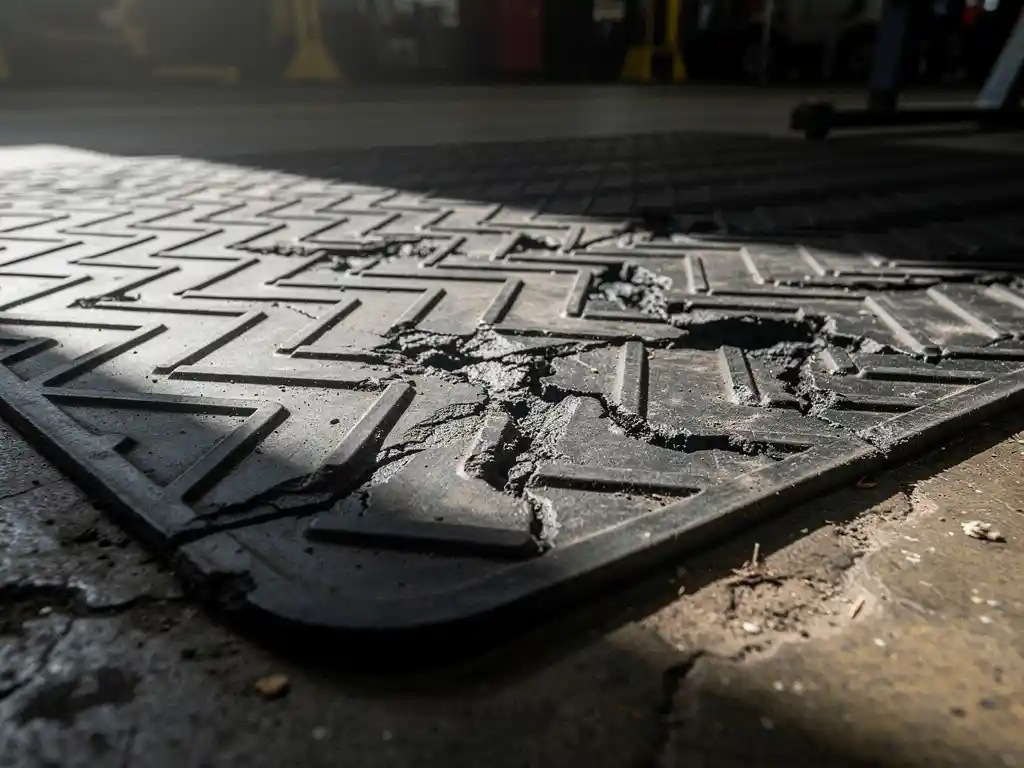
Heavy equipment causes floor surface damage through a combination of static load, dynamic impact, and rolling stress. A forklift, pallet jack, or industrial cart concentrates enormous weight on small wheel contact points, which can crack concrete, gouge softer floors, and compress even resilient materials over time.
The damage is often most severe at points where equipment starts and stops, turns, or idles for extended periods. These locations receive the highest stress and show wear far faster than open travel paths. In manufacturing and warehouse environments, you can often map equipment routes just by looking at where the floor has degraded.
Rolling equipment also carries abrasive particles from one area to another, spreading surface damage beyond the immediate contact zone. Hard wheels on rigid floors are particularly damaging, as they offer little cushioning and focus load into a very small area. Switching to softer wheel materials or placing protective flooring along equipment routes are practical ways to reduce this kind of damage.
Can floor mats prevent uneven wear on surfaces?
Floor mats can effectively prevent uneven wear by acting as a sacrificial layer between the traffic or equipment and the underlying floor. Placing mats in high-stress zones intercepts abrasion, impact, and friction before it reaches the permanent surface, keeping wear more consistent across the floor as a whole.
In practice, this works best when mats are placed at entrances to trap grit and moisture, along high-traffic walkways, at workstations where people stand for long periods, and along equipment travel paths. Each of these placements targets a specific wear mechanism and reduces its impact on the floor below.
Rubber mats are particularly effective for this purpose. Rubber is non-porous, so it does not absorb moisture or contaminants, and it resists cracking or crumbling even under heavy use. Mats made from fiber-reinforced rubber compound offer additional strength, making them a practical choice for demanding industrial environments where standard matting would compress or degrade quickly.
When should uneven floor wear be treated as a safety concern?
Uneven floor wear becomes a safety concern when the surface creates trip hazards, reduces traction, or compromises structural integrity. Raised edges, sunken patches, cracks, and polished slick zones are all direct causes of slips, trips, and falls, which are among the most common workplace injuries across commercial and industrial environments.
You should treat floor wear as an active safety issue when any of the following are present:
- Height differences between worn and unworn sections that can catch a foot or wheel
- Cracks or pitting deep enough to trap debris or cause instability underfoot
- Polished or glazed areas that reduce friction and increase slip risk, especially when wet
- Damaged flooring near machinery, where a stumble could have serious consequences
- Surface degradation that allows contaminants like oil or water to pool in low spots
Regular floor inspections help catch these issues before they become hazards. In high-traffic or high-risk areas, adding protective matting is one of the most practical ways to maintain surface performance and reduce slip risks between major repairs or replacements. At LRP Matting, we offer a range of industrial rubber matting solutions designed to protect floors, improve safety, and hold up under the demands of heavy commercial and industrial use.
Frequently Asked Questions
How often should I inspect my floors for uneven wear?
In high-traffic commercial or industrial environments, a basic visual inspection should be carried out at least once a month, with a more thorough assessment every quarter. Focus on entrances, equipment travel paths, workstation areas, and anywhere heavy loads are regularly placed or moved. Catching early signs of wear — such as surface discoloration, minor cracking, or loss of texture — allows you to intervene with protective matting or sealing before the damage becomes a safety hazard or requires costly repairs.
What's the best way to get started with protecting a floor that's already showing uneven wear?
Start by identifying and mapping the specific zones where wear is most concentrated — entrances, equipment routes, standing workstations, and turning points for forklifts or carts are the most common culprits. Once you know where the stress is occurring, you can prioritize those areas for immediate protection using rubber matting or floor coatings, rather than trying to treat the entire floor at once. Addressing the root cause — whether that’s grit being tracked in, hard equipment wheels, or a lack of surface sealing — will make any protective measure significantly more effective long-term.
Can I use the same type of matting throughout my facility, or do different areas need different solutions?
Different areas typically benefit from different matting solutions because the type of stress varies significantly from zone to zone. Entrance areas need mats that trap grit and moisture, while equipment travel paths require heavy-duty rubber mats that can handle rolling loads and point pressure without compressing. Workstation areas where employees stand for long periods may benefit from anti-fatigue matting that also protects the floor beneath. Matching the mat specification to the specific demands of each zone will give you better protection and longer mat lifespan than applying a one-size-fits-all approach.
Will sealing or coating my concrete floor stop uneven wear from happening?
Sealing or coating concrete significantly slows uneven wear by closing the porous surface that would otherwise absorb oil, moisture, and abrasive particles — but it won’t eliminate wear on its own, especially in zones exposed to heavy rolling equipment or constant foot traffic. Coatings work best as part of a layered approach: seal the surface to improve resistance, then add physical protection like rubber matting in the highest-stress areas. Reapplication schedules matter too — even high-quality coatings wear through in concentrated zones, so plan for periodic recoating in those spots rather than treating it as a one-time fix.
What are the most common mistakes facility managers make when trying to reduce floor wear?
One of the most common mistakes is waiting until wear is visually severe before taking action — by that point, the floor often requires repair rather than just protection. Another frequent error is placing matting only at building entrances while ignoring internal high-stress zones like equipment turning points and fixed workstations. Choosing the wrong mat material is also a recurring issue; lightweight or low-density mats placed under heavy equipment will compress and lose their protective function quickly. Finally, many facilities overlook the role of wheel type on rolling equipment — switching from hard plastic wheels to softer urethane or rubber wheels can dramatically reduce floor damage with minimal investment.
How do I know when uneven floor wear has gone beyond what matting can fix and needs professional repair?
When floor damage includes deep cracking, significant surface depression, spalling concrete, or structural instability, matting can protect the surrounding area but won’t resolve the underlying problem — professional repair is necessary at that point. A practical threshold to watch for is any height differential greater than 6mm (about a quarter inch) between worn and unworn sections, as this creates a meaningful trip hazard that surface-level solutions can’t safely address. If contaminants like oil or water are pooling in low spots created by wear, that’s also a sign the surface has degraded beyond what protective measures alone can manage, and remediation should be prioritized before conditions worsen.
Does the type of footwear worn in a facility affect how quickly floors wear unevenly?
Yes, footwear has a measurable impact on localized floor wear, particularly on softer surfaces like vinyl, rubber, and coated concrete. Hard-soled boots with metal components, cleated soles, or worn-down heels concentrate pressure into very small contact points and act similarly to abrasive particles on the surface. In environments where safety footwear is required, specifying sole materials that are appropriate for the flooring type — and ensuring workers replace worn footwear before the soles become uneven — can meaningfully extend floor life in high-traffic zones.
Related Articles
- What should be included in a commercial floor inspection?
- What causes sports facility floors to wear out?
- How do you maintain a safe surface in a professional athletic facility year-round?
- What is the best flooring for an outdoor athletic facility?
- How do you keep a horse stall dry without using excessive bedding?
- What thickness of rubber mat is best for a horse trailer floor?
- What is the best way to cover an uneven barn floor?
- What makes a floor surface safe for a horse coming out of anesthesia?
- What is the most durable flooring for a professional athletic facility?
- What are the pros of rubber mats in a horse stall?