
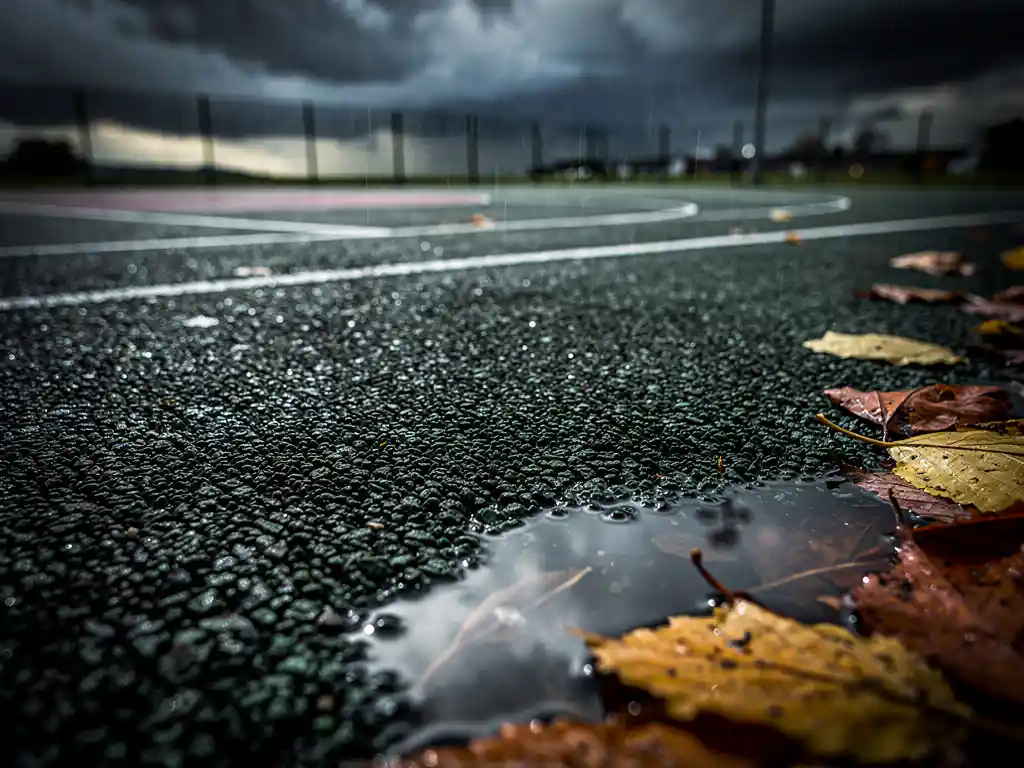
Weather conditions affect outdoor sports surfaces by causing physical degradation through temperature swings, moisture infiltration, UV radiation, and freeze-thaw cycles. These forces break down surface materials over time, reducing grip, structural integrity, and safety for athletes. The impact varies depending on the surface material, but no outdoor sports flooring is completely immune. Below, we cover the most common weather-related questions that sports facility managers and venue operators deal with every day.
How do temperature extremes damage outdoor sports surfaces?
Temperature extremes damage outdoor sports surfaces by causing repeated expansion and contraction of the material. When surfaces heat up significantly in summer and then cool sharply overnight or in winter, the material cycles through stress that gradually weakens its structure. Over time, this leads to cracking, warping, delamination, and surface separation at seams or joints.
Hard surfaces like asphalt and concrete are particularly vulnerable. Asphalt softens in intense heat, making it prone to rutting and indentation under foot traffic or equipment. In freezing temperatures, water that has seeped into small cracks expands as it freezes, widening those cracks from the inside. This freeze-thaw cycle is one of the most damaging forces any outdoor sports surface faces during the winter months.
Synthetic turf and rubber surfaces handle temperature swings better than rigid materials, but they are not immune. Rubber can become brittle in prolonged freezing conditions and may lose some flexibility. Synthetic turf surfaces can reach extremely high surface temperatures in direct sunlight, which accelerates material breakdown and makes the surface uncomfortable or even unsafe for athletes. For athletic facilities in regions with wide seasonal temperature ranges, choosing materials rated for those extremes is a practical first step in long-term sports venue maintenance.
What does rain and moisture do to outdoor sports flooring?
Rain and moisture damage outdoor sports flooring by softening surface materials, promoting mold and algae growth, and undermining the base layers that support the surface. Standing water is particularly harmful because it infiltrates seams, edges, and any existing cracks, accelerating deterioration from below as well as above.
Porous surfaces like natural grass, clay, and some synthetic options absorb water and can become waterlogged. This leads to uneven footing, increased injury risk, and long recovery times after heavy rainfall. Drainage design plays a big role here. Recreational facilities and sports venues with poor drainage see far more weather-related surface damage than those with well-engineered water management systems.
Algae and moss growth are a secondary but serious concern. When moisture sits on a surface consistently, biological growth takes hold. This creates a slip hazard that goes beyond what the original surface design intended. Regular cleaning and the use of non-porous surface materials help reduce this risk significantly. Non-porous rubber flooring, for example, does not absorb or retain moisture, which limits the conditions that algae and mold need to develop.
Which outdoor sports surfaces hold up best in harsh weather?
Rubber and high-quality synthetic surfaces generally hold up best in harsh weather conditions. They resist moisture absorption, tolerate a wider range of temperatures than rigid materials, and maintain their structural properties across seasons. Concrete and asphalt offer durability but are more vulnerable to freeze-thaw damage and surface cracking over time.
Here is a practical comparison of common outdoor sports surface types and their weather resilience:
- Rubber matting: Non-porous, flexible, and resistant to moisture, UV, and temperature variation. Performs well across a range of climates and requires minimal weather-related maintenance.
- Synthetic turf: Drains well and resists biological growth, but can overheat in direct sunlight and may compact or degrade with prolonged UV exposure.
- Asphalt: Affordable and widely used, but softens in heat and cracks under freeze-thaw cycles. Requires regular sealing and resurfacing.
- Concrete: Durable and stable, but highly susceptible to cracking from freeze-thaw stress. Hard underfoot, which increases injury risk when the surface is wet or uneven.
- Natural grass: Poor weather resilience overall. Becomes unusable in wet conditions, dormant in cold climates, and requires intensive maintenance year-round.
For sports facility management teams evaluating surface options, the local climate should be a primary factor in the decision. A surface that performs well in a mild coastal climate may fail quickly in a region with harsh winters or intense summer heat.
How does UV exposure affect outdoor rubber matting over time?
UV exposure affects outdoor rubber matting by breaking down the polymer chains within the rubber compound, causing the surface to fade, dry out, and eventually crack. This process is called UV degradation, and it happens gradually with cumulative sun exposure. The visible signs are surface discoloration, a chalky or dusty texture, and eventually surface brittleness.
The rate of UV degradation depends on the quality of the rubber compound and whether UV stabilizers have been incorporated during manufacturing. Higher-quality rubber formulations, including those made with fiber-reinforced compounds, tend to resist UV breakdown more effectively than standard recycled rubber. They maintain their flexibility and surface integrity longer, which matters for any outdoor athletic facility that expects years of use from its flooring investment.
Practically speaking, UV damage is cumulative and irreversible once it sets in. The surface does not recover on its own. This makes UV resistance a specification worth checking before purchasing outdoor rubber matting for any sports venue or recreational facility. Applying a UV-protective sealant periodically can slow the process on surfaces that do not have built-in UV stabilizers.
What maintenance does an outdoor sports surface need after bad weather?
After bad weather, outdoor sports surfaces need inspection, cleaning, drainage clearance, and any necessary minor repairs before returning to regular use. Acting quickly after a weather event prevents small issues from developing into larger structural problems that require expensive intervention.
Post-storm inspection and cleaning
Start with a visual inspection of the entire surface. Look for standing water, debris buildup, surface cracks, lifted edges, or any areas where the surface has shifted. Clear drainage channels and remove organic debris like leaves and branches, which trap moisture and promote biological growth. Wash the surface with mild detergent and water to remove dirt, algae, and any contaminants left by the weather event.
Addressing minor damage before it spreads
Small cracks or lifted seams should be addressed immediately. Left unattended, water enters these openings, and the next freeze-thaw cycle widens them further. For rubber surfaces, edge adhesive or seam tape can provide a temporary fix until a professional repair can be scheduled. For asphalt or concrete, crack filler applied promptly can prevent the damage from spreading. Sports venue maintenance teams that build post-weather checks into their routine schedule consistently see lower long-term repair costs.
When should outdoor sports surfaces be replaced due to weather damage?
Outdoor sports surfaces should be replaced when weather damage has compromised structural integrity, created persistent safety hazards, or made the surface impossible to maintain cost-effectively. Cosmetic wear is normal and manageable, but certain signs indicate that repair is no longer a practical option.
Consider replacement when you observe any of the following:
- Widespread cracking across large sections of the surface that cannot be sealed effectively
- Persistent uneven areas or soft spots that create trip hazards or affect athletic performance
- Surface delamination or significant lifting that exposes the base layer
- Chronic drainage failure that results in standing water after every rainfall
- Rubber surfaces that have become brittle, chalky, and no longer provide adequate grip or cushioning
- Repair costs that are approaching or exceeding the cost of a new surface installation
The lifespan of an outdoor sports surface depends heavily on material quality, climate exposure, and how consistently it has been maintained. A rubber surface installed with high-quality materials and maintained properly can last significantly longer than a lower-grade alternative exposed to the same weather conditions. When replacement becomes necessary, it is a good opportunity to evaluate whether the original material choice was the right one for your climate and usage level.
At LRP Matting, we manufacture rubber matting built to handle demanding outdoor conditions. Our products are made from 100% recycled rubber, are non-porous, and will not crack, peel, or crumble even under extreme heat or cold. Many of our mats are made with our proprietary FRC® fiber-reinforced rubber compound, which gives them added strength and longevity compared to standard rubber flooring. If you are evaluating surface options for an outdoor sports or recreational space, our sports and recreation matting solutions are worth a closer look.
Frequently Asked Questions
How do I know if my outdoor sports surface damage is from weather or just normal wear and tear?
Weather-related damage tends to follow recognizable patterns: cracking that radiates from seams or low points (freeze-thaw), surface discoloration concentrated in sun-exposed areas (UV), or biological growth in shaded or poorly drained zones (moisture). Normal wear, by contrast, appears more uniformly across high-traffic zones like center courts or goal mouths. If damage is appearing in low-traffic areas or worsening rapidly after seasonal changes, weather is likely the primary cause and the underlying drainage, sealing, or material specification should be evaluated.
Can I install outdoor rubber matting over an existing damaged surface, or does the base need to be repaired first?
The base must be in sound condition before installing new rubber matting over it. Installing over a cracked, uneven, or waterlogged base will transfer those problems to the new surface — causing premature lifting, uneven wear, and drainage issues that shorten the lifespan of your investment. At minimum, fill and level significant cracks, ensure proper drainage is functioning, and confirm the base is structurally stable before laying any new surface material.
What is the best way to protect outdoor sports surfaces during winter when they are not in active use?
The most effective steps are clearing standing water and debris before freezing temperatures arrive, applying a UV and weatherproof sealant where appropriate for the surface type, and covering vulnerable areas with breathable protective covers that prevent moisture accumulation without trapping condensation. For rubber matting specifically, ensuring edges and seams are well-adhered before winter prevents water from infiltrating and expanding during freeze-thaw cycles. Scheduling a post-winter inspection before the facility reopens is equally important to catch any damage early.
How often should outdoor sports surfaces be professionally inspected for weather-related damage?
A professional inspection at least twice a year — once at the end of winter and once at the end of summer — is a practical baseline for most outdoor sports facilities, since these are the seasons that cause the most stress to surface materials. Facilities in climates with particularly harsh winters, heavy rainfall, or intense UV exposure should consider quarterly inspections. Between professional visits, facility staff should perform brief visual checks after every major weather event, looking for standing water, lifted edges, new cracks, or surface discoloration.
Does the color of an outdoor sports surface affect how quickly it degrades from heat and UV exposure?
Yes, surface color has a direct impact on heat absorption and UV degradation. Darker surfaces absorb significantly more solar radiation, which raises surface temperatures and accelerates UV-related breakdown of the material. In high-sun climates, a dark rubber surface can reach temperatures well above ambient air temperature, increasing athlete discomfort and speeding up material fatigue. Lighter-colored surfaces or those with UV-reflective pigments tend to run cooler and experience slower UV degradation, making color a practical specification consideration for outdoor installations in sunny regions.
What common mistakes do sports facility managers make when trying to extend the life of weather-damaged surfaces?
The most common mistake is delaying minor repairs — small cracks and lifted seams are inexpensive to fix but become major structural problems once water infiltrates and freeze-thaw cycles take over. Another frequent error is using the wrong cleaning products: harsh chemicals can strip protective coatings or degrade rubber compounds, accelerating the very breakdown you are trying to prevent. Finally, many facilities overlook drainage maintenance, allowing debris to clog channels so that water pools on the surface after every rain event, compounding moisture damage season after season.
Is it worth investing in higher-quality weather-resistant materials upfront, or is it more cost-effective to replace cheaper surfaces more frequently?
In virtually all outdoor applications, higher-quality weather-resistant materials deliver a better total cost of ownership over time. Lower-grade surfaces may have a smaller upfront price, but they typically require more frequent repairs, more intensive maintenance, and earlier full replacement — all of which add up quickly for a busy sports facility. Premium materials with built-in UV stabilizers, non-porous construction, and reinforced compounds, such as fiber-reinforced rubber, consistently outperform standard alternatives in harsh conditions and reduce the overall lifecycle cost of managing an outdoor sports surface.
Related Articles
- How does surface cushioning affect fatigue?
- How do different facility environments affect floor performance?
- How do you prevent seasonal floor hazards?
- How can you improve traction on existing floors?
- What type of flooring is used in professional sports training facilities?
- How do you clean and maintain a horse trailer floor?
- What is the difference between interlocking and straight edge stall mats?
- What is the best floor surface for a standing workstation?
- How do you protect a concrete floor from heavy machinery?
- How do you reduce leg strain in a horse that spends a lot of time in a stall?