
Floor maintenance plays a direct role in workplace safety by reducing the risk of slip and fall accidents, which are among the most common causes of workplace injuries. When floors are dirty, damaged, or poorly maintained, hazards build up fast, and the risk of someone getting hurt rises significantly. Regular inspection, cleaning, and upkeep keep floors in the condition needed to protect everyone who walks on them. Below, we answer the most common questions about floor safety and what good maintenance actually looks like in practice.
How does poor floor maintenance lead to workplace injuries?
Poor floor maintenance leads to workplace injuries by allowing hazards like spills, surface damage, and worn slip resistance to go unaddressed. When floors are not regularly cleaned or inspected, small problems compound over time. A spill that is not wiped up becomes a slip hazard. A crack that goes unrepaired becomes a trip hazard. The result is a floor that no longer provides the traction and stability people rely on to move safely.
Slip and fall prevention starts with recognizing that most floor-related injuries are not random accidents. They happen because a hazard existed and was not dealt with. Wet surfaces, loose mats, uneven flooring, and contaminated work areas are all preventable with consistent upkeep. The longer maintenance is delayed, the more likely it is that someone will encounter a hazard before it gets fixed.
In industrial and commercial environments, foot traffic is heavy, and the floor takes a lot of punishment. Oils, chemicals, water, and debris accumulate quickly. Without a structured maintenance routine, floor safety deteriorates faster than most people expect.
What types of floor hazards are most commonly overlooked?
The most commonly overlooked floor hazards are surface contamination, gradual wear to slip-resistant coatings or textures, and mat edges that have curled or shifted out of place. These hazards tend to develop slowly, which makes them easy to miss during busy workdays when attention is focused elsewhere.
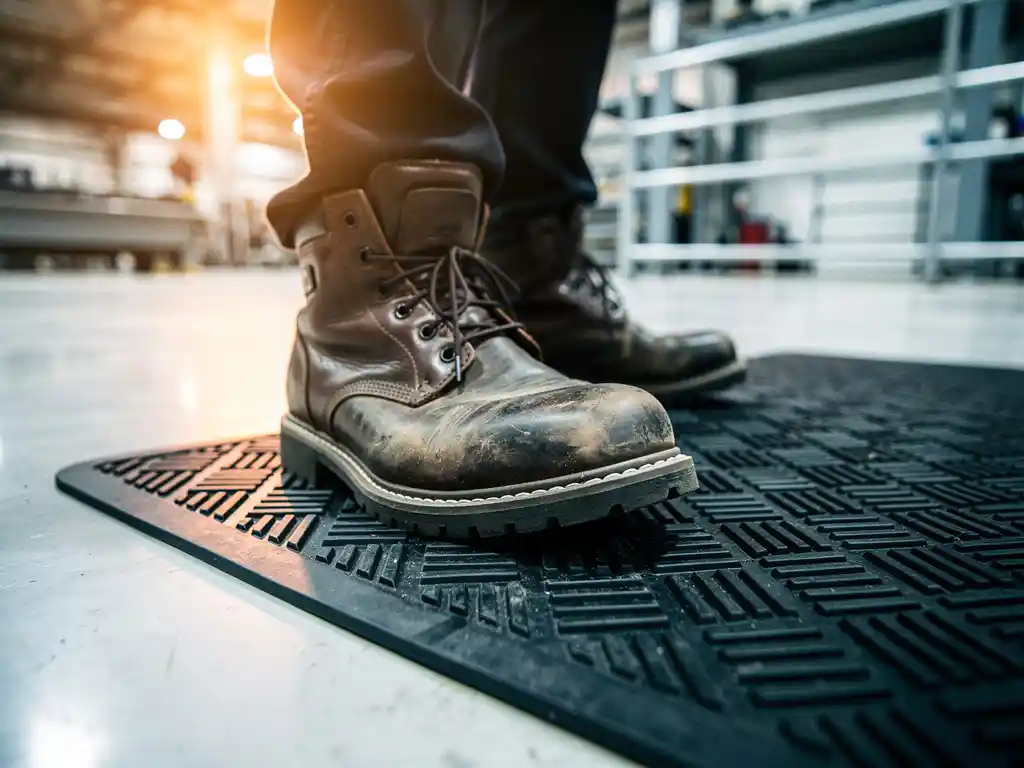
Spills in high-traffic areas are often spotted and cleaned, but thinner films of oil, grease, or dust are harder to see and just as dangerous. A floor that looks clean can still have reduced traction if a thin residue has built up over time. Similarly, rubber mats and anti-fatigue matting that were once firmly in place can shift, curl at the edges, or develop surface wear that reduces their grip.
Other frequently overlooked hazards include:
- Transition zones between different flooring materials where height differences create trip risks
- Drainage grates or floor channels that collect debris and become slippery
- Areas near doorways where water and dirt are tracked in from outside
- Low-light zones where floor damage is harder to spot during walkthroughs
Addressing these hazards requires more than a quick visual scan. A thorough floor safety inspection should be systematic and cover the full surface, not just the most visible areas.
How often should industrial and commercial floors be inspected?
Industrial and commercial floors should be inspected at least once per shift in high-risk or high-traffic environments, and at least daily in lower-risk commercial spaces. The right frequency depends on how much foot traffic the area handles, what substances are present, and how quickly conditions can change.
In manufacturing, food processing, or warehousing environments, floors can go from safe to hazardous within minutes if a spill occurs or a mat shifts. Waiting until the end of the day to check the floor is too long. A quick walkthrough at the start and end of each shift, combined with an immediate response to any reported hazards, is a practical minimum standard.
For commercial spaces like retail stores, gyms, or offices, a daily morning inspection before opening is a good baseline. Wet weather days, cleaning sessions, and high-traffic events should trigger additional checks. Beyond daily inspections, a more detailed floor safety inspection should be scheduled monthly or quarterly to assess surface condition, check for wear, and identify any structural issues that need repair.
Keeping a simple inspection log makes it easier to spot patterns, document hazards, and demonstrate due diligence if an incident ever occurs.
What does a proper floor maintenance routine actually include?
A proper floor maintenance routine includes regular cleaning, hazard inspections, surface condition checks, mat and covering assessments, and timely repairs. It is not just about keeping floors looking clean. It is about making sure the floor continues to perform its safety function every day.
Cleaning and contamination control
Cleaning should match the type of floor and the contaminants present. In industrial settings, this often means degreasing agents and scrubbing equipment. In commercial spaces, mopping with appropriate detergents is usually enough. The goal is to remove anything that reduces traction, including oils, liquids, dust, and debris. Floors should be dried thoroughly after wet cleaning to avoid creating new slip hazards.
Surface and structure assessment
Beyond cleaning, a complete routine includes checking the physical condition of the floor. Look for cracks, chips, uneven surfaces, and any areas where the floor covering has separated or lifted. Check that drainage is working properly and that floor markings or warning indicators are still visible. Assess whether anti-slip surfaces or coatings are still effective, as these wear down with use and may need to be reapplied or replaced.
Does flooring material affect how easy it is to maintain safely?
Yes, flooring material has a significant effect on how easy it is to maintain safely. Some materials are naturally more resistant to contamination, easier to clean, and more durable under heavy use. Others absorb liquids, degrade faster, or require more intensive upkeep to stay safe.
Rubber flooring, for example, is non-porous, which means it does not absorb liquids or harbor bacteria. It can be cleaned with mild detergent and water and will not crack, peel, or crumble even under extreme temperature conditions. This makes it a low-maintenance option that holds its floor safety properties well over time without requiring specialized treatments.
Porous materials like concrete, untreated wood, or certain types of foam can absorb spills and become difficult to fully clean. Over time, contamination builds up beneath the surface, which can degrade the material and create slip risks that are not obvious from the outside. Coated or sealed floors are easier to maintain than bare ones, but the coating itself needs to be monitored and reapplied when it wears through.
In areas where contamination is frequent or heavy loads are common, choosing a material that is inherently easy to clean and resistant to wear reduces the maintenance burden and keeps slip resistance more consistent over time.
When should a floor mat be replaced rather than maintained?
A floor mat should be replaced when it can no longer be restored to a safe, functional condition through cleaning or minor repair. Signs that replacement is needed include persistent curling or bubbling at the edges, significant surface wear that has reduced traction, tears or holes that create trip hazards, and any mat that no longer lies flat despite repeated attempts to secure it.
Maintenance can extend the life of a mat significantly, but it has limits. Cleaning removes surface contamination, but it cannot restore grip to a surface that has worn smooth. Repositioning a mat that keeps shifting buys time, but if the mat has lost its grip backing or has deformed, it will keep moving and remain a hazard.
A practical way to assess whether a mat needs replacing is to ask whether it still does the job it was installed to do. If it was placed to provide cushioning and the material has compressed permanently, it is no longer providing the comfort or fatigue protection it should. If it was placed for slip resistance and the surface texture is gone, it is no longer reducing slip risk. At that point, replacement is the safer and more cost-effective choice than continued maintenance.
Investing in high-quality mats from the start tends to push that replacement timeline further out. At LRP Matting, our rubber mats are built from durable materials, including our proprietary Fiber Reinforced Rubber Compound (FRC®), which gives them the strength to withstand heavy daily use without breaking down quickly. If you work in an environment where floor safety is a priority, take a look at our industrial matting solutions to find options built for demanding conditions.
Frequently Asked Questions
How do I know if my current floor maintenance routine is actually effective?
The clearest indicators are your incident records and near-miss reports. If slip and fall incidents or close calls are occurring, that is a signal your routine has gaps. Beyond incident tracking, you can assess effectiveness by testing surface traction after cleaning, checking whether inspection logs are capturing and resolving hazards in a timely way, and comparing the physical condition of your floors against what they looked like when they were new or last serviced. If floors are deteriorating faster than expected or hazards are being discovered rather than prevented, it is time to revisit the routine.
What is the biggest mistake businesses make when it comes to floor safety?
The most common mistake is treating floor maintenance as a reactive task rather than a proactive one — only cleaning up after a spill is spotted or repairing a hazard after someone has already encountered it. This approach means the hazard window stays open far longer than it should. Building a structured, scheduled routine with assigned responsibilities and documented inspections shifts floor safety from reactive to preventive, which is where the real injury reduction happens.
Can anti-slip coatings or treatments be applied to existing floors, and do they actually work?
Yes, anti-slip coatings and surface treatments can be applied to many existing floor types, including concrete, tile, and sealed wood, and they can be genuinely effective when properly matched to the surface and maintained correctly. The key limitation is that coatings wear down with foot traffic and need to be monitored and reapplied on a regular schedule — a coating that was effective when first applied may offer little protection a year later if it has not been maintained. They work best as part of a broader floor safety strategy rather than as a standalone fix.
How should floor safety responsibilities be assigned in a workplace?
Floor safety responsibilities should be clearly assigned, documented, and understood by everyone involved — not left as a shared assumption that someone else will handle it. In practice, this means designating specific individuals for daily inspections and immediate hazard response, assigning supervisors or facilities staff to monthly or quarterly assessments, and ensuring that all employees know how to report a hazard and that reports will be acted on promptly. When responsibility is vague, hazards get missed because everyone assumes someone else is handling it.
Are there specific cleaning products I should avoid using on slip-resistant flooring or rubber mats?
Yes — harsh solvents, bleach-based cleaners used at high concentrations, and oil-based cleaning products can degrade rubber flooring and strip anti-slip surfaces of their texture and grip over time. For rubber mats and slip-resistant flooring, mild detergent and water is typically the safest and most effective cleaning method. Always check the manufacturer’s care guidelines for your specific flooring material, as using the wrong product can accelerate wear and actually reduce safety rather than improve it.
How do seasonal or weather changes affect floor safety, and what adjustments should be made?
Seasonal changes significantly affect floor safety, particularly during wet, icy, or muddy conditions when more moisture and debris is tracked indoors. Entranceways, lobby areas, and any transition zones from outside to inside become much higher-risk during these periods. Practical adjustments include adding or upgrading entrance matting during wet seasons, increasing inspection frequency on rainy or snowy days, using absorbent mats in high-traffic entry points, and ensuring drainage in outdoor-adjacent areas is clear and functioning. Proactively scaling up your maintenance response before conditions worsen is far more effective than reacting after incidents occur.
What documentation should businesses keep related to floor safety and maintenance?
At minimum, businesses should maintain inspection logs that record the date, areas checked, hazards identified, and corrective actions taken. Repair and maintenance records, mat replacement logs, and any incident or near-miss reports related to floor hazards should also be kept. This documentation serves two important purposes: it helps you identify recurring problem areas so you can address root causes, and it demonstrates due diligence in the event of a workplace injury claim or regulatory inspection. Digital logs or simple spreadsheets both work well, as long as records are consistent and up to date.
Related Articles
- How does surface cushioning affect fatigue?
- How do professional equine facilities improve horse welfare?
- How can flooring materials be reused or recycled?
- How do you protect a sports facility floor during the off-season?
- What type of flooring is used in professional sports training facilities?
- What flooring is used in equine surgery facilities?
- How do you keep a horse stall floor from getting slippery when wet?
- What is the best flooring for a horse barn aisle?
- How do you reduce leg strain in a horse that spends a lot of time in a stall?
- What flooring works best in an outdoor or covered sports venue?