
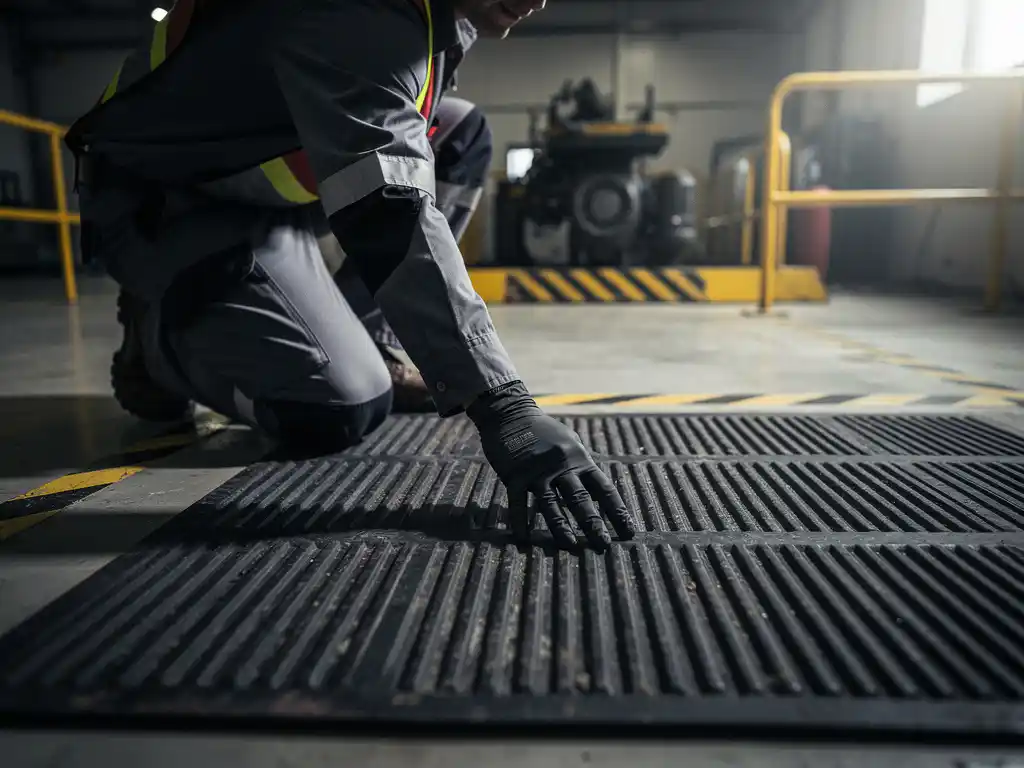
To perform a floor safety assessment, walk through your facility and systematically check for slip, trip, and fall hazards — including wet or contaminated surfaces, uneven flooring, poor drainage, and inadequate matting. Document what you find, measure slip resistance where needed, and compare your findings against relevant safety standards. This process applies to any commercial, industrial, or agricultural facility where floor conditions directly affect the safety of people or animals. The sections below cover each step in detail, from spotting hazards to knowing how often to repeat the process.
What are the key hazards to look for during a floor safety assessment?
The main floor hazards to identify during a safety assessment are slippery surfaces, trip hazards, poor drainage, inadequate lighting, and surface deterioration. These are the conditions most likely to cause slip and fall incidents, which remain one of the leading causes of workplace injuries across industries.
When walking through a space, pay close attention to the following:
- Wet or oily surfaces caused by spills, cleaning processes, or condensation
- Uneven flooring such as cracked concrete, raised edges, or warped panels
- Transitions between floor types where grip levels change suddenly
- Worn or damaged matting that has curled edges or lost its anti-slip texture
- Poor drainage in wet work areas that allows water to pool
- Cluttered walkways where materials or equipment block safe movement
- Inadequate lighting that prevents people from seeing floor conditions clearly
It helps to think about the activities that take place in each area. A loading dock, for example, faces different hazards than a food processing floor or a livestock barn. Tailoring your hazard checklist to the specific environment makes the assessment more useful and actionable.
What areas of a facility should be included in a floor safety inspection?
A thorough floor safety inspection should cover every area where people walk, work, or move equipment — including entrances, corridors, workstations, wet zones, loading areas, and stairways. No area should be excluded simply because it seems low-risk, since many slip and fall incidents happen in places that are not considered high-priority.
In practice, certain areas tend to carry higher risk and deserve extra attention:
- Building entrances and lobbies where outdoor moisture is tracked inside
- Kitchens, washrooms, and wet processing areas where spills and condensation are frequent
- Assembly lines and manufacturing floors where oils, coolants, or debris can accumulate
- Loading docks and receiving areas exposed to weather and heavy traffic
- Stairways and ramps where changes in elevation increase fall risk
- Animal housing areas such as dairy barns or stables where manure and moisture affect traction
It is also worth inspecting areas that are used less frequently. Storage rooms and emergency exit routes are often overlooked, but they need to be safe when someone needs to move through them quickly.
How do you measure slip resistance on a floor surface?
Slip resistance on a floor surface is measured using a device called a tribometer or slip meter, which calculates the coefficient of friction (COF) between a test foot and the floor surface. A higher COF indicates better traction. Most safety standards recommend a minimum COF of 0.5 for pedestrian surfaces, though the required value varies by environment and application.
There are several methods used to measure slip resistance:
- Pendulum test: A widely used method in which a weighted rubber foot swings across the floor surface. The result is expressed as a Pendulum Test Value (PTV) and is recognized in many international standards.
- Drag sled test: A flat rubber pad is pulled across the surface under a known load, and the friction force is measured. This method is common in the United States.
- Digital tribometers: Portable electronic devices that simulate walking conditions and provide real-time COF readings.
It is important to test floors under the conditions in which they are actually used. A dry concrete floor may score well, but the same floor, when wet or contaminated with oil, may fall well below safe thresholds. Testing under realistic conditions gives you a much more accurate picture of actual slip risk.
What standards and regulations apply to floor safety assessments?
Floor safety assessments in the United States are primarily guided by OSHA regulations, specifically the General Duty Clause and standards under 29 CFR 1910 for general industry, which require employers to keep walking and working surfaces free of hazards. Additional guidance comes from ANSI/NFSI B101 standards, which address measurement and labeling of slip resistance for pedestrian surfaces.
Depending on your industry, other standards may also apply:
- ASTM International publishes test methods for measuring slip resistance, including ASTM E1911 and ASTM F1677, which are referenced in many facility safety programs.
- ADA (Americans with Disabilities Act) guidelines include requirements for accessible surfaces, which overlap with slip resistance considerations.
- USDA and FDA regulations apply to food processing environments, where floor hygiene and safety standards are strictly defined.
- State-level OSHA programs may add requirements beyond federal minimums, so it is worth checking the rules specific to your state.
Staying current with applicable standards is an ongoing responsibility. Regulations are updated periodically, and in 2026, facilities should verify that their assessment procedures align with the most recent published guidance from OSHA and ANSI.
How does rubber matting address risks identified in a floor safety assessment?
Rubber matting directly addresses several of the most common risks identified during a floor safety assessment, including slippery surfaces, hard flooring that causes fatigue, and areas prone to contamination or moisture. Placing the right mat in the right location can significantly reduce slip and fall risk without requiring major structural changes to the floor itself.
Here is how rubber matting helps with specific hazards:
- Slip prevention: Rubber mats with textured surfaces or drainage channels increase traction in wet or oily areas, reducing the risk of slipping.
- Fatigue reduction: Anti-fatigue mats cushion hard surfaces and reduce physical strain on workers who stand for long periods, which indirectly improves alertness and reduces accident risk.
- Contamination control: Entrance and scraper mats trap dirt, moisture, and debris before it spreads across a facility, keeping interior floors cleaner and safer.
- Surface protection: In areas where equipment is moved or heavy loads are handled, rubber matting protects the underlying floor from damage that could create uneven surfaces over time.
Rubber matting is not a substitute for addressing the root cause of a hazard, but it is a practical, cost-effective layer of protection that complements other safety measures. It works particularly well in areas where hazards are difficult to eliminate entirely, such as wet processing zones or high-traffic entrances.
How often should a floor safety assessment be repeated?
A floor safety assessment should be repeated at least once a year as a formal, documented review. However, informal checks should happen much more frequently, with supervisors or safety officers walking key areas on a weekly or even daily basis depending on the level of risk in the environment.
Several situations should trigger an unscheduled assessment:
- After a slip, trip, or fall incident, even a minor one
- When new equipment is installed or floor layouts change
- After renovation or repair work that affects flooring
- When seasonal conditions change, such as increased moisture in winter months
- When new activities or processes are introduced that change the type of contamination on the floor
The frequency should also reflect the risk level of the environment. A food processing plant or a livestock facility deals with constant moisture and organic contamination, so more frequent checks are warranted compared to a dry office environment.
At LRP Matting, we offer a wide range of rubber matting solutions designed to address the risks that floor safety assessments commonly uncover. Whether you are dealing with wet industrial floors, high-traffic commercial entrances, or livestock housing areas, our mats are built from high-quality rubber and, in many cases, our proprietary FRC® material for extra durability. If your assessment has identified areas that need better traction, drainage, or surface protection, explore our industrial matting solutions to find the right fit for your facility.
Frequently Asked Questions
How do I get started if I've never done a floor safety assessment before?
Start by creating a simple checklist based on the hazard categories covered in this post — slippery surfaces, uneven flooring, drainage issues, lighting, and matting condition — then walk through your facility zone by zone and document what you find. You don’t need specialized equipment for a first assessment; a thorough visual inspection paired with a written record is a solid starting point. Once you’ve identified your highest-risk areas, you can prioritize where to invest in slip resistance testing or corrective measures like rubber matting.
What's the difference between a floor safety assessment and a regular workplace safety inspection?
A general workplace safety inspection covers a broad range of hazards — electrical, chemical, ergonomic, fire, and more — while a floor safety assessment focuses specifically on walking and working surfaces and the conditions that lead to slip, trip, and fall incidents. Because slips and falls are one of the leading causes of workplace injuries, floor safety often warrants its own dedicated review rather than being lumped into a general walkthrough. Treating it as a standalone process ensures it gets the depth and attention it requires.
Can I conduct a floor safety assessment myself, or do I need to hire a professional?
For most facilities, an internal safety officer or trained supervisor can conduct a competent floor safety assessment using a structured checklist and basic documentation tools. However, if your facility operates under strict regulatory requirements — such as food processing, healthcare, or heavy industrial environments — or if you’ve had recurring incidents, bringing in a certified slip resistance testing professional or safety consultant adds credibility and ensures your measurements meet OSHA and ANSI standards. A hybrid approach works well for many businesses: conduct internal assessments regularly and schedule a professional audit annually or after major changes.
What should I do if my floor tests below the minimum recommended coefficient of friction?
If a surface tests below the 0.5 COF threshold — or the specific minimum for your environment — treat it as an immediate corrective action item rather than a note for future review. Short-term fixes include placing rubber matting or anti-slip tape in the affected area and increasing the frequency of cleaning to reduce contamination. Longer-term solutions may involve applying anti-slip floor coatings, resurfacing the floor, or improving drainage infrastructure. Document the low reading, the corrective actions taken, and schedule a follow-up test to confirm the improvement.
How do I choose the right type of rubber matting for the hazards identified in my assessment?
Match the mat type to the specific hazard: drainage mats with open grid patterns work best in wet or oily industrial areas because they channel liquid away from the walking surface, while scraper or wiper mats are ideal at building entrances to capture moisture and debris. Anti-fatigue mats are the right choice for standing workstations where worker fatigue is a contributing risk factor. For specialized environments like livestock housing or food processing areas, look for mats made from durable, chemical-resistant materials — such as LRP Matting’s FRC® rubber — that can withstand heavy use and frequent cleaning without degrading.
Are there common mistakes facilities make when conducting floor safety assessments?
One of the most common mistakes is only assessing floors under dry, ideal conditions rather than testing them in the state they’re actually used in — wet, oily, or contaminated surfaces can perform drastically differently than clean, dry ones. Another frequent error is treating the assessment as a one-time compliance exercise rather than an ongoing safety practice, which means hazards that develop between annual reviews go unaddressed. Facilities also often overlook low-traffic areas like storage rooms and emergency exits, which can be just as dangerous as high-traffic zones when someone needs to move through them quickly under pressure.
How should I document and track findings from a floor safety assessment?
Use a standardized form or digital checklist that records the location, hazard type, severity rating, photographic evidence, and recommended corrective action for each finding. Assign a responsible person and a target completion date to every action item so findings don’t stall after the walkthrough. Keep past assessments on file so you can track whether conditions are improving, identify recurring problem areas, and demonstrate due diligence if a safety incident ever leads to a regulatory review or legal claim.
Related Articles
- How does dirt affect slip resistance?
- What are the most common causes of slip and fall accidents?
- Why do wet floors become dangerous?
- What is the best rubber mat thickness for a horse stall?
- How do you know when a horse trailer floor needs replacing?
- How do you level a horse stall floor before laying mats?
- What type of flooring reduces the risk of slip and fall accidents in a factory?
- Why is my horse stiff after being in the stall overnight?
- What are the pros of rubber mats in a horse stall?
- How do you cover a large factory floor area with anti-fatigue matting?