
Most facility floors should be inspected at least once a month, but high-traffic or high-risk areas often require weekly or even daily checks. The right frequency depends on the type of area, the volume of foot traffic, the nature of the work being done, and the flooring material in use. Below, we answer the most common questions about floor safety inspections so you can build a routine that actually works.
What are the signs that a facility floor needs immediate inspection?
A facility floor needs immediate inspection when there are visible signs of damage, contamination, or wear that could create a safety hazard. This includes cracks, uneven surfaces, pooling liquids, peeling mats, worn anti-slip coatings, or any area where a person has slipped, tripped, or nearly fallen. These warning signs point to active floor hazards that should not wait for a scheduled review.
Beyond obvious physical damage, there are subtler signals worth watching for. A floor that squeaks, flexes, or feels soft underfoot may have structural issues beneath the surface. Mats or tiles that shift when stepped on are a slip and fall risk waiting to happen. Discoloration or staining can indicate moisture penetration, which weakens flooring materials over time and reduces slip resistance.
Any near-miss incident or employee complaint about floor conditions should also trigger an unscheduled inspection. Waiting for a formal review cycle after someone raises a concern is not a practical approach to floor safety. Treat those reports as early warnings and act on them quickly.
How often should different facility areas be inspected?
Inspection frequency should match the risk level and traffic volume of each area. High-traffic zones like entrances, loading docks, and production floors benefit from daily visual checks, while lower-traffic administrative or storage areas may only need monthly reviews. A tiered inspection schedule helps you allocate attention where it matters most without overwhelming your team.
Here is a practical breakdown by area type:
- Entrances and exits: Daily checks, especially in wet weather when slip risks spike
- Production and assembly floors: Daily or weekly, depending on the nature of operations and exposure to oils, water, or debris
- Warehouses and loading docks: Weekly inspections, with daily spot checks around high-use equipment paths
- Restrooms and wet areas: Multiple times per day for cleanliness and slip resistance
- Break rooms and cafeterias: At least daily, given the frequency of spills
- Administrative areas: Monthly, unless there are known issues with flooring condition
Seasonal changes are also worth factoring in. Winter months bring tracked-in moisture and salt, which accelerates floor wear and reduces traction. During those periods, increasing inspection frequency in entrance areas is a straightforward way to reduce floor hazards before they cause problems.
What does a proper floor inspection checklist include?
A proper floor safety inspection checklist covers surface condition, slip resistance, mat and covering integrity, drainage function, lighting, and signage. The goal is to identify any floor hazard that could lead to a slip, trip, or fall before it results in an injury. A thorough checklist gives inspectors a consistent framework and creates a written record of what was was found and when.
Key items to include on your checklist:
- Surface integrity: Look for cracks, holes, warping, raised edges, or uneven joints
- Slip resistance: Check for worn anti-slip coatings, smooth patches, or contamination from oils and liquids
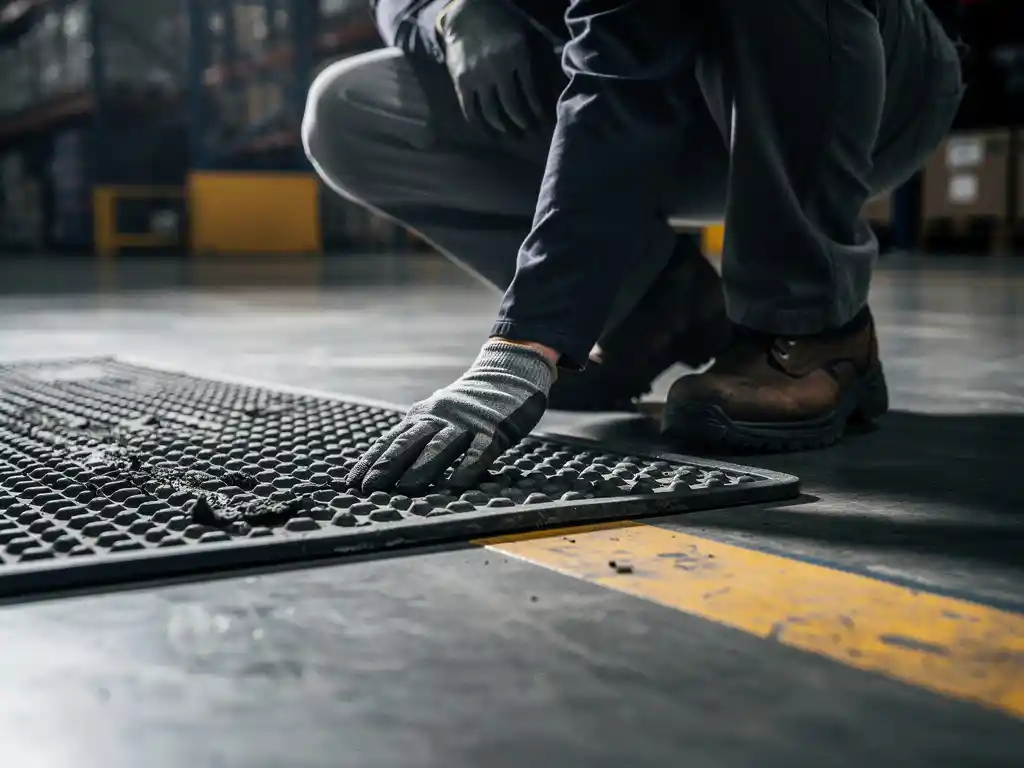
- Mat condition: Inspect rubber mats and floor coverings for curling edges, tears, shifting, or excessive compression
- Drainage: Confirm that drains are clear and water is not pooling in wet areas
- Cleanliness: Note any spills, debris, or buildup that creates a slip or trip hazard
- Lighting: Poor lighting makes floor hazards harder to see and increases fall risk
- Signage: Verify that wet floor signs and hazard markers are available and in use when needed
- Previous repair follow-up: Confirm that issues flagged in the last inspection were actually addressed
Digital checklists or inspection apps make it easier to log findings in real time, attach photos, and assign follow-up tasks. Paper forms work too, but they require a reliable filing system to be useful over time.
Who should be responsible for conducting floor inspections?
Floor inspections should be a shared responsibility, with frontline staff handling routine visual checks and a designated safety officer or facilities manager conducting formal periodic inspections. Relying on one person alone creates gaps. A layered approach means floor hazards get caught at multiple levels before they escalate.
In practice, this means:
- Frontline employees report hazards as they encounter them during their regular work, and conduct informal visual checks at the start of each shift
- Supervisors do a more structured walkthrough of their area on a weekly or biweekly basis
- Facilities or safety managers conduct comprehensive formal inspections monthly or quarterly and maintain inspection records
- Third-party auditors may be brought in annually or after a significant incident to provide an objective floor safety assessment
Training matters here. Everyone involved in inspections should know what to look for, how to document findings, and who to notify when a hazard is found. A well-trained team catches problems faster and responds more consistently.
How does flooring material affect inspection requirements?
Different flooring materials wear, age, and respond to contamination in different ways, which directly affects how often and what you need to inspect. Concrete, vinyl, rubber, tile, and epoxy coatings each have their own failure patterns and maintenance needs. Knowing what your floor is made of helps you inspect it more effectively.
Concrete floors, for example, are durable but can develop hairline cracks that widen over time or become slippery when sealed surfaces wear down. Vinyl and laminate floors are prone to edge lifting and moisture damage, which creates both trip hazards and slip risks. Epoxy-coated floors can delaminate or lose their anti-slip texture with heavy use or chemical exposure.
Rubber flooring behaves differently. It is non-porous, which means it does not absorb liquids or harbor bacteria, and it maintains its surface texture longer than many other materials. That said, rubber mats and flooring still need regular inspection for signs of compression, edge curling, or surface contamination that reduces traction. The inspection questions are the same; the failure modes are just different.
If your facility uses multiple flooring types across different zones, it helps to tailor your inspection checklist to each material rather than using a one-size-fits-all approach. What counts as normal wear on one surface may be a warning sign on another.
What should happen after a floor inspection finds damage?
After a floor inspection identifies damage or a hazard, the immediate priority is to control the risk, then document the finding, then arrange a repair or replacement. Acting in that order protects people first and creates a clear paper trail for follow-up. Skipping straight to scheduling a repair without first addressing the immediate hazard is a common mistake that leaves risk unmanaged in the interim.
Here is a straightforward process to follow:
- Control the hazard immediately: Cordon off damaged areas, place wet floor signs, or remove compromised mats until a fix is in place
- Document the finding: Record the location, nature of the damage, and the date it was found, ideally with photos
- Assign responsibility: Identify who will handle the repair and set a clear deadline
- Complete the repair: Fix, replace, or resurface the damaged area as appropriate to the material and severity
- Verify the fix: Do a follow-up check to confirm the repair was completed correctly and the hazard is gone
- Update your records: Close out the inspection finding with notes on what was done and when
If inspections repeatedly flag the same area or the same type of damage, that pattern is telling you something. Recurring floor hazards usually point to an underlying issue, whether that is a drainage problem, heavy equipment traffic, inadequate matting, or a flooring material that is simply not suited to the demands of the space. Addressing the root cause is more effective than patching the same spot every few months.
At LRP Matting, we work with facilities across industrial, commercial, and agricultural settings to find flooring solutions that hold up to real-world conditions. If inspections keep flagging the same problem areas, it may be time to look at whether your current flooring is the right fit for the job. Explore our industrial matting solutions to see what a better-matched floor covering can do for your facility’s safety and durability.
Frequently Asked Questions
How do I get started building a floor inspection program from scratch?
Start by mapping out every area of your facility and assigning a risk tier to each one based on traffic volume, the type of work performed, and the flooring material in use. From there, create a tiered inspection schedule, build a checklist tailored to each area, and assign clear ownership for each inspection level. Roll it out in phases if needed — starting with your highest-risk zones first ensures the most critical areas are covered while you scale the program.
What is the difference between a visual inspection and a formal floor safety audit?
A visual inspection is a routine, quick walkthrough focused on spotting obvious hazards like spills, damaged mats, or surface cracks — typically done daily or weekly by frontline staff or supervisors. A formal floor safety audit is a comprehensive, documented evaluation that assesses slip resistance levels, structural integrity, compliance with safety standards, and the effectiveness of your overall inspection program. Both are necessary: visual checks catch immediate hazards, while audits identify systemic issues and gaps in your safety approach.
Can floor inspections help reduce workers' compensation claims?
Yes, consistently documented floor inspections are one of the most effective ways to reduce slip, trip, and fall incidents — which are among the leading causes of workplace injuries and workers’ compensation claims. Beyond preventing injuries, a well-maintained inspection record also demonstrates due diligence, which can be valuable if a claim is ever disputed. Facilities that maintain regular inspection logs and act promptly on findings typically see measurable reductions in incident frequency over time.
What are the most common mistakes facilities make with floor safety inspections?
The most common mistakes are treating inspections as a checkbox exercise rather than an active hazard-hunting process, failing to follow up on flagged issues in a timely manner, and using a generic checklist that does not account for the specific flooring materials or operations in each area. Another frequent error is relying on a single person to handle all inspections, which creates blind spots and single points of failure. Building a layered inspection system with clear accountability at each level addresses most of these pitfalls.
How do I know if my current flooring material is no longer suitable for my facility's conditions?
If the same areas are repeatedly flagged during inspections for the same types of damage — such as recurring delamination, persistent slip hazards, or constant pooling — that is a strong signal that the flooring material is not matched to the demands of the space. Other indicators include accelerated wear compared to manufacturer expectations, difficulty maintaining adequate slip resistance despite regular cleaning, and flooring that requires frequent patching or repair. In these cases, switching to a material better suited to the specific environment is a more cost-effective long-term solution than ongoing reactive maintenance.
Are there any regulatory or compliance standards that govern floor inspection frequency?
In the United States, OSHA’s General Industry standards (29 CFR 1910.22) require that walking and working surfaces be kept clean, dry, and in good repair, but they do not prescribe a specific inspection frequency — that is left to the employer’s judgment based on conditions. Industry-specific standards, such as those from the FDA for food processing facilities or ANSI standards for slip resistance, may impose additional requirements depending on your sector. It is worth reviewing the standards applicable to your industry and consulting with a safety professional to ensure your inspection program meets or exceeds those benchmarks.
What role does lighting play in floor safety, and should it be part of the inspection process?
Lighting is a critical but often overlooked factor in floor safety — inadequate lighting makes it significantly harder for workers to spot hazards like spills, uneven surfaces, or raised mat edges before they cause a fall. Yes, lighting should absolutely be included in your floor inspection process, particularly in stairwells, loading docks, parking areas, and any transition zones between indoor and outdoor spaces. During inspections, note any burned-out fixtures, shadowed areas near floor-level hazards, or zones where glare from overhead lights makes wet surfaces harder to detect.
Related Articles
- What factors influence animal comfort in housing facilities?
- Why do some floor surfaces become polished over time?
- What affects the lifespan of sports flooring?
- What makes a sports surface safe?
- How do entrances create floor safety risks?
- How do you stop floor damage in a high-traffic shipping and receiving area?
- What is the best flooring for a horse wash rack?
- What type of flooring reduces the risk of slip and fall accidents in a factory?
- What flooring do professional equestrian facilities use in their stalls?
- How do you insulate a horse stall floor in winter?