
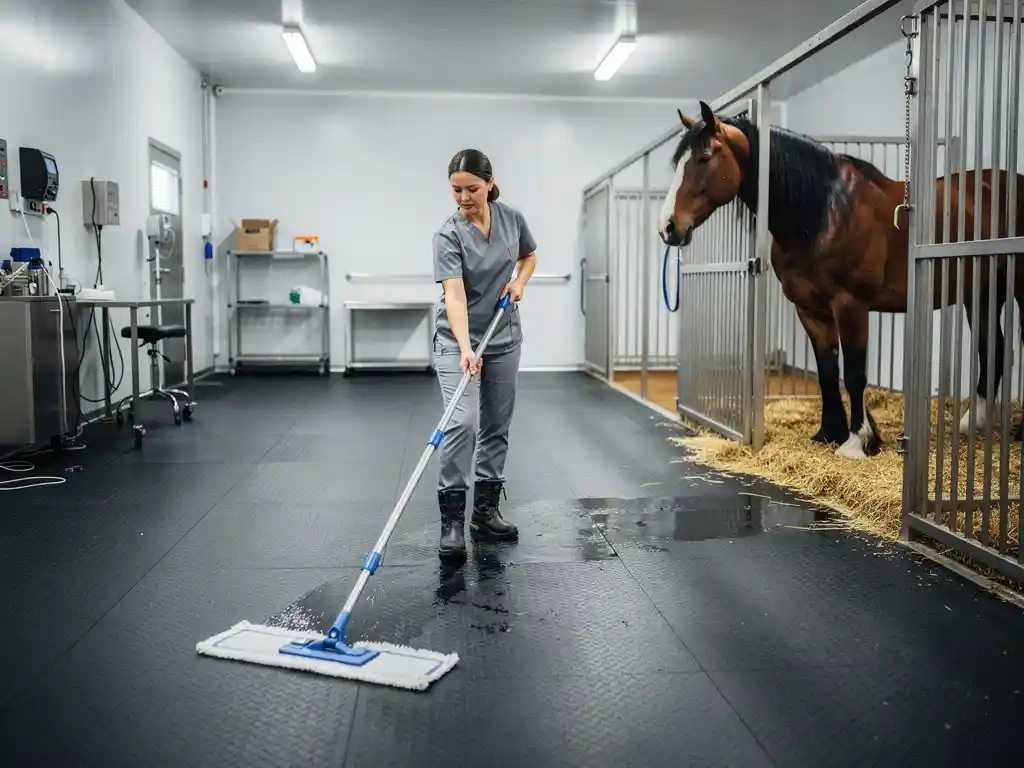
Keeping a large-animal veterinary floor hygienic means choosing the right flooring material, cleaning it regularly with appropriate disinfectants, and ensuring the surface does not trap bacteria or moisture. Rubber flooring is widely considered the best option for large-animal veterinary facilities because it is non-porous, easy to clean, and resistant to the heavy physical demands of these environments. Clean the floor daily with warm water and a veterinary-grade disinfectant, and schedule a thorough deep clean at least once a week, or after any procedure involving blood, bodily fluids, or infectious animals.
Why does veterinary floor hygiene matter for large animals?
Poor floor hygiene in large-animal veterinary facilities creates a direct risk of infection, disease transmission, and injury for both animals and staff. Pathogens such as bacteria, fungi, and viruses can survive on contaminated surfaces for extended periods. A dirty floor is not just an aesthetic problem—it is a genuine health hazard that can compromise treatment outcomes and put everyone in the space at risk.
Large animals such as horses, cattle, and other livestock are particularly vulnerable to floor-borne contamination. Open wounds, post-surgical sites, and compromised immune systems make them easy targets for opportunistic infections. At the same time, wet or soiled floors dramatically increase the risk of slips and falls, which can be dangerous for animals weighing hundreds of kilograms and for the veterinary staff working alongside them.
Beyond animal welfare, hygiene standards in veterinary settings are also a regulatory and professional obligation. Facilities that fail to maintain clean, safe flooring risk non-compliance with health and safety guidelines, damage to their professional reputation, and increased liability. Good floor hygiene is simply part of running a responsible veterinary practice.
What type of flooring is best for large-animal veterinary facilities?
Rubber flooring is the best option for large-animal veterinary facilities. It is non-porous, meaning it does not absorb fluids or harbor bacteria the way concrete or wood can. It provides cushioning that reduces stress on joints, offers reliable grip to prevent slipping, and withstands the kind of heavy, repeated use that comes with large-animal care.
Why concrete alone falls short
Bare concrete is common in older veterinary facilities, but it has real drawbacks. It is hard on animals’ joints, especially during long procedures or recovery periods. It is also porous, which means urine, blood, and other fluids can seep in and become nearly impossible to fully sanitize. Over time, concrete develops cracks and surface damage that create additional harborage points for bacteria.
What rubber flooring brings to the table
Rubber mats installed over concrete give you the structural stability of a hard floor with the added benefits of cushioning, grip, and hygiene. The non-porous surface means cleaning products can actually do their job—there is nowhere for pathogens to hide. Rubber also provides thermal insulation, which helps keep animals comfortable during recovery, and its natural shock-absorbing properties reduce physical impact on hooves and joints.
For veterinary facilities with irregular layouts or treatment areas of unusual dimensions, made-to-measure rubber mats are a practical solution. Custom-cut mats reduce the number of seams in any given area, which directly limits the number of places where fluids and debris can accumulate and become difficult to clean.
How do you properly clean and disinfect a large-animal veterinary floor?
Properly cleaning and disinfecting a large-animal veterinary floor involves three steps: remove solid waste and debris first, wash the surface with warm water and a neutral detergent, then apply a veterinary-approved disinfectant and allow adequate contact time before rinsing. Skipping any of these steps significantly reduces the effectiveness of the process.
Step-by-step cleaning process
- Remove solid waste — Scrape or shovel away manure, bedding, and any visible debris before applying any liquid.
- Pre-rinse — Use water to loosen and flush away remaining organic material. Organic matter neutralizes many disinfectants, so this step is not optional.
- Wash with detergent — Apply a mild, veterinary-safe detergent and scrub the surface thoroughly, paying attention to edges, seams, and corners.
- Rinse thoroughly — Remove all detergent residue before applying disinfectant. Soap residue can interfere with disinfectant performance.
- Apply disinfectant — Use a product appropriate for the pathogens present in your facility. Follow the manufacturer’s recommended contact time—do not wipe or rinse too early.
- Final rinse and dry — Rinse the surface and allow it to dry or drain fully before animals re-enter the space.
Always check that the disinfectant you use is compatible with rubber flooring. Most veterinary-grade disinfectants work well with rubber surfaces, but highly concentrated bleach solutions or solvent-based products can degrade rubber over time if used repeatedly without dilution.
What makes rubber mats easier to keep hygienic than other flooring?
Rubber mats are easier to keep hygienic than other flooring options because their non-porous surface prevents fluids from being absorbed into the material. Bacteria, viruses, and fungi need a place to live and multiply—a sealed, non-absorbent surface gives them nowhere to go, making cleaning far more effective and reliable than on porous materials such as concrete or timber.
The surface texture of rubber mats also plays a useful role. Well-designed rubber flooring features drainage channels or surface patterns that direct liquids away from the main standing area, reducing pooling and the wet conditions in which bacteria thrive. This is especially useful in wash bays, examination areas, and recovery stalls where large volumes of water and fluid are regularly present.
Rubber is also chemically stable, meaning it holds up well against the cleaning products and disinfectants used in veterinary environments. It will not crack, peel, or crumble under repeated exposure to cleaning agents or temperature changes, which means the surface stays smooth and intact—no new crevices forming over time where pathogens could shelter.
How do you prevent slips and injuries on wet veterinary floors?
Preventing slips and injuries on wet veterinary floors starts with choosing a flooring surface that provides reliable grip even when wet. Rubber mats with textured, anti-slip surfaces maintain traction under wet conditions far better than smooth concrete or sealed tiles. Proper drainage design, good housekeeping habits, and appropriate footwear for staff all contribute to a safer environment.
Surface grip and drainage
The texture of the floor surface is the first line of defense against slipping. Anti-slip rubber mats create friction between the surface and the animal’s hooves or the handler’s footwear, even when water, urine, or other fluids are present. Mats with built-in drainage holes or grooved surfaces actively channel liquid away, keeping the standing area as dry as possible during and after procedures.
Reducing movement hazards
Large animals that feel unstable on a slippery floor will often panic, increasing the risk of injury to themselves and to staff. A rubber surface that gives animals confident footing reduces stress and makes them easier to handle. This is relevant not just in examination areas but also in alleyways, wash bays, and any transitional space where animals move between locations within the facility.
Staff footwear matters too. Even the best anti-slip flooring is less effective if handlers are wearing worn-out boots with poor tread. Combining a high-grip floor surface with appropriate footwear and sensible movement practices around large animals provides the most reliable protection against slip-related incidents.
How often should large-animal veterinary flooring be deep cleaned?
Large-animal veterinary flooring should be deep cleaned at least once a week under normal operating conditions, with a full clean after any procedure involving blood, bodily fluids, or an animal with a known or suspected infectious condition. High-traffic areas such as examination rooms and recovery stalls may need deep cleaning more frequently, depending on the volume of animals passing through.
Daily maintenance cleaning—removing waste, rinsing surfaces, and applying a routine disinfectant—keeps the floor in a manageable state between deep cleans. But daily cleaning alone is not sufficient to address biofilm buildup, residual organic matter in seams, or the gradual accumulation of contamination that can occur in busy facilities. A scheduled weekly deep clean helps ensure that nothing is missed over time.
After any biosecurity event—such as treating an animal with a highly contagious disease—the affected area should be deep cleaned and disinfected immediately, regardless of the regular schedule. In these situations, it is worth consulting a veterinary infection control specialist to confirm that the products and methods used are appropriate for the specific pathogen involved.
If you are fitting out or upgrading a large-animal veterinary facility and want flooring that makes this whole process easier, we can help. At LRP Matting — the natural solution, we have been manufacturing high-quality rubber mats since 1971, and we understand the practical demands of animal care environments. Our mats are non-porous, anti-slip, and built to last in exactly the kind of heavy-use settings veterinary facilities represent. We also offer custom rubber matting solutions cut to any size or shape, so your floor fits your space precisely—fewer seams, easier cleaning, and a better result overall.
Frequently Asked Questions
Can rubber mats be used in outdoor or partially covered large-animal areas?
Yes, rubber mats can be used in outdoor and semi-covered areas such as wash bays, loading ramps, and covered yards. Look for mats specifically rated for outdoor use, as prolonged UV exposure can degrade some rubber compounds over time. Drainage design becomes even more important in outdoor settings, so choose mats with grooved or perforated surfaces that allow rainwater and runoff to clear quickly.
How do I know if my disinfectant is actually effective against the pathogens in my facility?
Check the product’s label for its spectrum of activity—reputable veterinary-grade disinfectants will list the specific bacteria, viruses, and fungi they are effective against, along with the required contact time and dilution rate. If your facility has dealt with a specific pathogen such as MRSA, Salmonella, or ringworm, verify that your chosen disinfectant is tested and proven against that organism. When in doubt, consult a veterinary infection control specialist who can recommend products matched to your actual biosecurity risks.
What is biofilm, and why is it a problem on veterinary floors?
Biofilm is a thin, protective layer that communities of bacteria form on surfaces when they are not fully removed by routine cleaning. It acts as a shield that makes the bacteria inside significantly harder to kill with standard disinfectants, even when the floor looks visually clean. This is one of the key reasons daily cleaning alone is not enough—weekly deep cleaning with proper scrubbing and adequate disinfectant contact time is necessary to break down and remove biofilm before it becomes established.
How do I get started with replacing or upgrading the flooring in an existing veterinary facility without disrupting operations?
The most practical approach is to upgrade one area at a time, starting with the highest-risk or highest-traffic zones such as examination rooms or recovery stalls. Rubber mats installed over existing concrete require no adhesive or specialist installation in most cases, meaning the transition can be done quickly with minimal downtime. Custom-cut mats are especially useful in this context because they can be fitted precisely to an existing space without the need for structural changes.
Are there any cleaning products I should never use on rubber veterinary flooring?
Avoid undiluted bleach solutions, solvent-based cleaners, and products containing strong oxidising agents, as these can break down rubber compounds over time, causing the surface to become brittle, sticky, or cracked. Pine oil-based disinfectants should also be used with caution, as they can be toxic to some animals and may leave residues on the floor. Always check the disinfectant manufacturer’s guidance on material compatibility and dilute products to the recommended concentration rather than using them at full strength.
How long do rubber mats typically last in a large-animal veterinary setting, and what are the signs they need replacing?
High-quality rubber mats in a well-maintained veterinary facility can last 10 to 20 years, depending on the volume of use and the cleaning products applied. Signs that a mat needs replacing include visible surface cracking, significant compression loss (where the mat no longer springs back underfoot), persistent odour that does not clear after thorough cleaning, or any lifting or curling at the edges that creates a trip hazard. Replacing mats promptly when these signs appear is important, as a degraded surface reintroduces the hygiene and safety risks that good flooring is designed to prevent.
Do rubber mats need to be secured to the floor, and is there a risk of them shifting under large animals?
In most large-animal settings, the weight and size of the mats themselves—combined with the weight of the animals standing on them—is sufficient to keep them in place without adhesive. However, in areas where animals move quickly or where mats cover ramps and transitions, interlocking edge designs or anti-slip backing can provide additional stability. If you are using custom-cut mats sized precisely to your space, a snug fit against walls and fixed fixtures further reduces any risk of movement.
Related Articles
- How does floor design affect physical strain in the workplace?
- What flooring improvements can increase workplace comfort?
- How often should facility floors be inspected?
- What flooring is best for a large animal veterinary wash area?
- How do you protect a sports facility floor during the off-season?
- How do you stop floor damage in a high-traffic shipping and receiving area?
- How do you protect a newly installed floor in a busy facility?
- What should you put on a concrete barn floor to protect your horse?
- How do you keep a sports facility floor safe in wet conditions?
- How do you fit flooring in an irregularly shaped sports facility area?