

Commercial flooring durability depends on a combination of material choice, traffic volume, environmental conditions, installation quality, and how consistently the floor is maintained. No single factor determines lifespan on its own. Heavy-duty environments like warehouses, factories, and retail spaces put floors under constant stress, which makes understanding each of these factors genuinely useful for anyone responsible for managing or specifying commercial flooring. Below, we break down the most common questions around floor wear and surface performance.
What materials last longest in commercial flooring?
The materials that last longest in commercial flooring are concrete, natural stone, ceramic tile, and high-quality rubber. Each of these offers strong resistance to floor wear, heavy loads, and repeated cleaning. The right choice depends on the specific environment, since a material that performs well in a dry warehouse may not hold up as well in a wet processing area.
Concrete is one of the most widely used options in industrial flooring because of its compressive strength and low cost over time. However, bare concrete is porous and can crack under impact or thermal stress, which is why surface treatments and protective overlays are often applied. Ceramic and porcelain tiles are durable in moderate-traffic commercial spaces but can chip or crack under heavy point loads. Natural stone offers excellent longevity but requires sealing and careful maintenance.
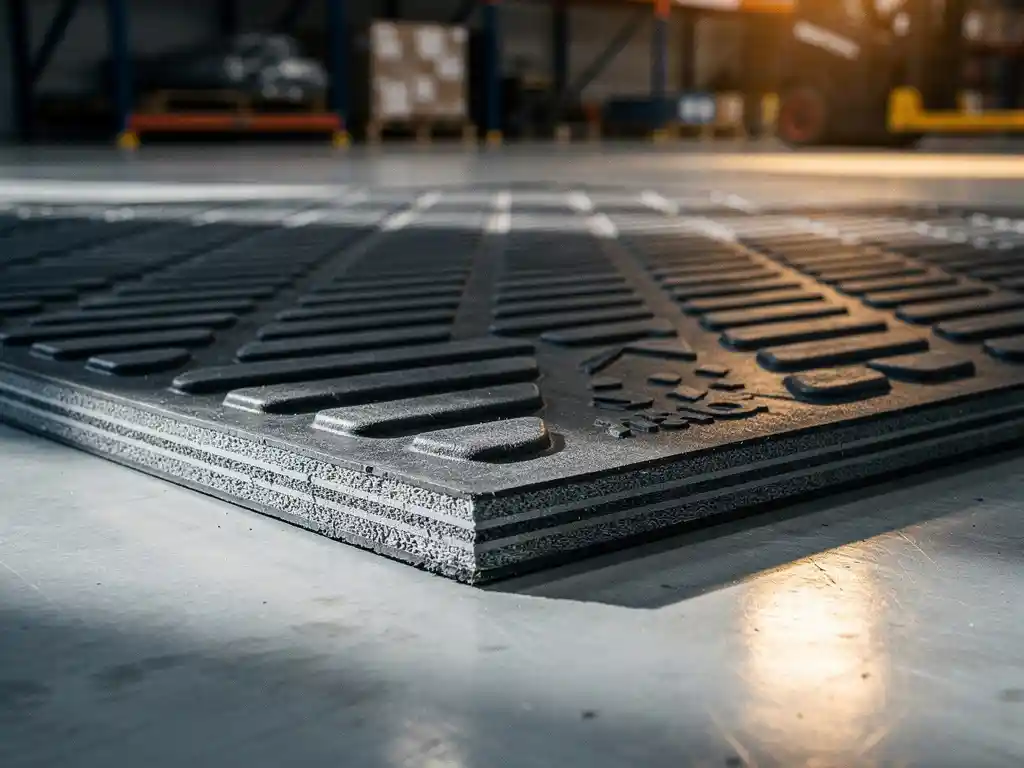
Rubber flooring is a practical choice in areas where comfort, slip resistance, and impact absorption matter alongside durability. Rubber is non-porous, resistant to moisture, and holds up well under repeated foot traffic and equipment movement. In industrial and commercial settings, it is often used as a surface layer over concrete to extend the life of the base floor while improving safety and ergonomics at the same time.
How does foot traffic volume affect flooring lifespan?
Foot traffic volume is one of the most direct drivers of floor wear. The more people and equipment move across a surface, the faster the top layer degrades. High-traffic zones like entrances, corridors, checkout areas, and production lines experience concentrated wear that can significantly shorten the effective lifespan of any flooring material.
Abrasion is the primary mechanism. Shoe soles, cart wheels, pallet jacks, and forklifts all create friction against the floor surface with every pass. Over time, this friction removes protective coatings, scratches the surface, and eventually compromises the structural integrity of the material beneath. Softer flooring types show this degradation faster than harder ones.
Traffic patterns also matter. A floor that sees evenly distributed movement lasts longer than one where traffic is funneled through a narrow path. Identifying high-wear zones and applying additional protection in those areas, whether through matting, coatings, or more durable materials, is a straightforward way to extend overall floor lifespan without replacing everything at once.
What environmental conditions damage commercial floors the most?
The environmental conditions that cause the most damage to commercial floors are moisture, chemical exposure, extreme temperatures, and UV light. These factors accelerate surface degradation, weaken adhesives, and in some cases cause structural damage to the flooring material itself. Industrial flooring in particular is often exposed to several of these conditions simultaneously.
Moisture and chemical exposure
Standing water and repeated wet cleaning can penetrate porous flooring materials, leading to swelling, mold growth, and delamination of surface layers. In food processing, healthcare, or manufacturing environments, chemical spills add another layer of risk. Harsh cleaning agents, oils, solvents, and acids can break down coatings and degrade the base material over time. Choosing flooring with low porosity and chemical resistance is a practical way to reduce this risk.
Temperature extremes and UV exposure
Flooring in spaces with significant temperature swings, such as loading docks, cold storage facilities, or outdoor-adjacent areas, faces repeated expansion and contraction cycles. This stresses joints, adhesives, and the material itself. UV exposure from natural or artificial light can cause fading and surface brittleness in certain materials. Rubber flooring, for example, performs well across a wide temperature range and does not crack or crumble even under sustained heat or cold.
Does installation quality affect how long commercial flooring lasts?
Yes, installation quality has a direct and significant effect on how long commercial flooring lasts. Even the most durable material will fail prematurely if it is not installed correctly. Poor subfloor preparation, incorrect adhesive application, inadequate expansion gaps, and improper seam placement are among the most common installation errors that shorten floor lifespan.
Subfloor condition is particularly important. A surface that is uneven, damp, or contaminated prevents proper bonding and creates stress points where the flooring can crack, lift, or separate. In industrial flooring installations, the subfloor often needs to be leveled, cleaned, and primed before any surface material is applied.
Seam placement also matters more than most people expect. Every seam is a potential weak point where moisture can infiltrate and where wear concentrates. Choosing larger format flooring materials, or products specifically designed to minimize seam count, reduces these vulnerabilities and results in a more resilient installation overall.
How does maintenance routine impact commercial flooring durability?
A consistent maintenance routine has a major impact on commercial flooring durability. Floors that are cleaned regularly, inspected for damage, and treated with appropriate protective products last noticeably longer than those that are neglected. Maintenance does not just keep floors looking good, it actively slows the rate of surface degradation.
Dirt, grit, and debris act as abrasives underfoot. Every time someone walks across a floor covered in fine particles, those particles grind against the surface and accelerate wear. Regular sweeping and mopping remove this abrasive layer before it causes damage. In high-traffic commercial environments, this alone can meaningfully extend surface performance.
Protective treatments such as sealers, wax coatings, and surface films add a sacrificial layer that absorbs wear before it reaches the base material. These need to be reapplied on a schedule based on traffic volume. Inspecting floors regularly for cracks, chips, or lifting edges allows small problems to be addressed before they develop into larger, more expensive repairs.
When should commercial flooring be replaced versus repaired?
Commercial flooring should be repaired when damage is localized, structurally contained, and does not compromise safety or hygiene. Replacement becomes the better option when damage is widespread, when the surface can no longer be cleaned effectively, or when the floor poses a genuine slip or trip hazard that repairs cannot reliably fix. The decision comes down to the extent of damage, the cost of ongoing repairs, and the operational risks of leaving the floor in its current state.
Localized cracks, small chips, or isolated areas of surface wear are typically good candidates for repair. Patching compounds, surface coatings, and section replacements can restore function without the cost and disruption of a full installation. However, if the subfloor is compromised, if moisture has penetrated widely, or if the surface has degraded to the point where it cannot be made safe, repair becomes a short-term fix that delays an inevitable replacement.
From a cost perspective, repeated repairs on an aging floor can quickly add up to more than a single replacement would have cost. Tracking repair frequency and cost over time gives a clearer picture of when the tipping point has been reached. In industrial flooring environments, downtime costs during replacement are also a factor, which is why choosing durable materials from the outset reduces the frequency of this decision altogether.
At LRP Matting, we work with businesses across commercial and industrial environments to find matting solutions that protect existing floors, reduce wear in high-traffic zones, and extend the time between major flooring investments. If you are looking at ways to improve surface performance without a full floor replacement, our commercial matting solutions are worth a look.
Frequently Asked Questions
How do I know which flooring material is right for my specific commercial environment?
Start by mapping out the actual conditions your floor faces daily: traffic volume, moisture exposure, chemical contact, load weights, and temperature range. From there, match those conditions to material strengths — for example, rubber matting over concrete works well in high-impact, wet, or ergonomically demanding environments, while ceramic tile suits moderate-traffic dry spaces. If you are unsure, consulting a commercial flooring specialist before specifying materials can prevent costly mismatches down the line.
What are the most common mistakes businesses make that shorten their floor's lifespan?
The most frequent mistakes are neglecting subfloor preparation before installation, using the wrong cleaning products for the flooring material, and ignoring early signs of wear until they become structural problems. Another common error is applying a one-size-fits-all maintenance schedule regardless of traffic intensity — high-traffic zones need more frequent attention than low-use areas. Addressing these proactively is far less expensive than emergency repairs or premature full replacements.
Can matting really make a measurable difference in how long a commercial floor lasts?
Yes, strategically placed matting is one of the most cost-effective ways to extend floor lifespan in high-wear zones. Entrance matting alone can capture up to 80% of the dirt and moisture tracked in from outside, which directly reduces the abrasive particles grinding against your floor surface with every footstep. In corridors, production lines, and checkout areas, anti-fatigue and protective matting absorbs impact and friction before it reaches the base floor, effectively slowing surface degradation in the zones that take the most punishment.
How often should protective coatings and sealers be reapplied on commercial floors?
Reapplication frequency depends on traffic volume and the type of coating used, but a general guideline for high-traffic commercial environments is every 6 to 12 months for wax or surface film treatments, and every 2 to 5 years for penetrating sealers on stone or concrete. The most reliable indicator is visual inspection — if the surface has lost its sheen, shows visible scratches through the coating layer, or is no longer repelling liquids effectively, it is time to reapply. Always follow the manufacturer’s specifications for the specific product being used.
What should I do if my commercial floor is showing uneven wear in specific zones?
Uneven wear is a clear signal that traffic is concentrated in those areas and that the current surface protection is insufficient for the load those zones are carrying. The first step is to identify whether the wear is purely surface-level or has begun to compromise the material beneath. For surface wear, adding protective matting, applying a targeted coating, or upgrading the flooring material in that zone specifically can resolve the issue without a full replacement. Redistributing traffic flow where operationally possible — for example, by repositioning equipment or adjusting pedestrian routes — can also reduce the pressure on a single area.
Is it worth investing in more expensive flooring materials upfront, or is it better to replace cheaper floors more frequently?
In most commercial and industrial settings, higher upfront material investment pays off over time when you factor in total cost of ownership — including maintenance, repairs, downtime during replacement, and safety liability. A cheaper floor that needs replacing every five years will typically cost more over a 20-year period than a durable material installed correctly from the start. That said, the calculation changes depending on how long you plan to occupy the space and whether operational disruption during replacement carries significant cost for your business.
How can I build a maintenance schedule that actually gets followed consistently in a busy commercial environment?
The most effective approach is to make the schedule as simple and specific as possible — assign clear tasks, frequencies, and responsible parties rather than relying on general guidelines. Tie daily sweeping and mopping to existing shift routines so it becomes a habit rather than an added task. For periodic treatments like sealer reapplication or deep cleaning, schedule them during planned downtime or low-traffic periods and log them the same way you would any other equipment maintenance. Consistent documentation also helps you spot when a floor is deteriorating faster than expected, which is an early warning sign worth acting on.
Related Articles
- What makes a flooring material sustainable?
- How does flooring affect workplace comfort?
- What are the hidden costs of poor horse stall flooring?
- What is the best flooring solution for a temporary work site?
- How do you stop floor damage in a high-traffic shipping and receiving area?
- How do you fit stall mats to a non-standard stall size?
- What causes concrete floors to crack and chip in industrial facilities?
- How do you prevent floor damage from forklifts in a warehouse?
- How do anti-fatigue mats reduce workplace injury claims?
- What causes sports facility floors to deteriorate so quickly?