

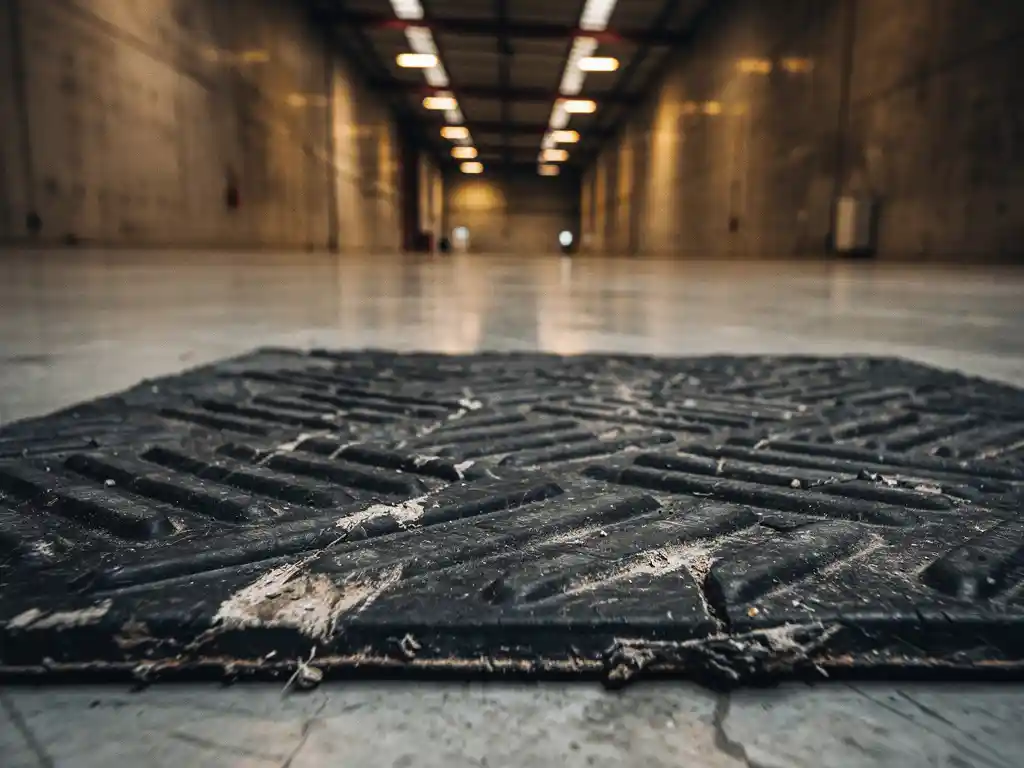
Heavy traffic areas significantly shorten floor lifespan by accelerating surface wear, causing structural damage, and breaking down protective coatings faster than low-traffic zones. The harder the floor material and the more foot traffic it handles, the quicker that degradation adds up. Below, we answer the most common questions about how traffic affects floors and what you can do about it.
What types of damage does heavy foot traffic cause to floors?
Heavy foot traffic causes several types of damage: surface abrasion, coating breakdown, joint and seam stress, and subsurface compression. Each type wears down the floor in a different way, and in high-traffic commercial or industrial environments, all of them tend to happen at the same time.
Surface abrasion is the most visible form. Dirt, grit, and debris act like sandpaper underfoot, gradually scratching and dulling the floor surface. Protective coatings, sealers, and finishes take the first hit, and once those are gone, the base material itself starts to degrade.
Joint and seam stress is a bigger problem in tiled or modular flooring. Repeated pressure causes tiles to shift slightly, which loosens adhesive bonds and eventually leads to cracking or lifting at the edges. In facilities with heavy equipment or rolling loads, subsurface compression can also become a factor, where the material beneath the floor compacts unevenly and causes visible dips or soft spots over time.
How much does heavy traffic shorten floor lifespan?
Heavy traffic can reduce floor lifespan by anywhere from 30% to 60% compared to the same material installed in a low-traffic area. The exact reduction depends on the flooring type, the volume and nature of traffic, and how consistently the floor is maintained. Without preventive maintenance, the gap widens considerably.
A commercial vinyl floor rated for 10 to 15 years in a moderate office environment might need replacement in 5 to 7 years in a busy retail space or industrial corridor. Concrete fares better in raw durability terms but still suffers surface degradation without sealers and regular care. The cost of early replacement is substantial, which is exactly why facility management teams invest in protective measures before wear becomes irreversible.
Which flooring materials hold up best in high-traffic environments?
The flooring materials that hold up best in high-traffic environments are polished concrete, porcelain tile, luxury vinyl tile (LVT), and rubber flooring. Each has strengths depending on the specific demands of the space, including load type, moisture exposure, and slip risk.
- Polished concrete is extremely durable and handles heavy loads well, but it can be hard underfoot and slippery when wet without the right surface treatment.
- Porcelain tile resists scratching and moisture effectively, making it a strong choice for commercial kitchens, entryways, and public restrooms.
- Luxury vinyl tile (LVT) offers a balance of durability, comfort, and cost, though it can show wear in very high-traffic zones if the wear layer is thin.
- Rubber flooring is particularly well suited to industrial and commercial environments because it absorbs impact, resists moisture, and provides natural slip resistance without additional treatments.
No single material is universally superior. The right choice depends on what the floor needs to handle daily, whether that is foot traffic, rolling equipment, chemical exposure, or a combination of all three.
Do rubber mats actually protect floors in high-traffic areas?
Yes, rubber mats do protect floors in high-traffic areas, and they do so in a practical, measurable way. They act as a buffer between foot traffic and the floor surface, absorbing impact and reducing the abrasion caused by dirt and grit being ground into the floor underfoot. This directly extends the life of the surface beneath.
Beyond surface protection, rubber mats also help manage moisture. Because rubber is non-porous, it does not absorb water or cleaning fluids, which means wet conditions at entrances or near equipment are contained rather than spread across the floor. This reduces the risk of water damage to the underlying surface and lowers slip risk at the same time.
In industrial and commercial settings, mats placed over concrete or coated floors can significantly reduce the frequency of resurfacing and recoating, which translates directly into lower floor maintenance costs over time. The protection is not just cosmetic; it delays real structural wear.
Where should rubber mats be placed to reduce floor wear most effectively?
Rubber mats reduce floor wear most effectively when placed at entry points, transition zones, and areas with concentrated foot traffic or stationary work activity. These are the spots where floors take the most punishment and where protection delivers the biggest return.
- Entrances and exits are where the most dirt and moisture enter a building. Mats here trap debris before it gets ground into the main floor surface.
- Corridors and walkways with high daily foot volume benefit from runner-style matting that protects the floor along the full path of travel.
- Workstations and assembly areas where employees stand for extended periods concentrate wear in a small zone. Matting here protects the floor and reduces fatigue at the same time.
- Loading docks and transition zones between indoor and outdoor surfaces experience heavy traffic from both foot and wheeled equipment, making durable matting especially practical there.
Placement strategy matters as much as mat quality. A well-placed mat in a high-impact zone does more for floor maintenance than a mat positioned somewhere traffic rarely passes.
How do you know when a floor has reached the end of its lifespan?
A floor has reached the end of its lifespan when surface damage can no longer be repaired cost-effectively, structural integrity is compromised, or safety risks can no longer be managed through routine maintenance. Visible signs include deep cracking, persistent lifting or buckling, uneven surfaces, and a finish that cannot be restored through standard floor maintenance.
Some signs are easier to spot than others. If the floor has been recoated or resurfaced multiple times and the results are lasting for shorter and shorter periods, that is a reliable indicator that the base material is worn through. Persistent moisture intrusion, soft spots underfoot, or tiles that keep coming loose despite re-adhesion are also strong signals.
From a facility management perspective, the practical test is cost. When ongoing repair and maintenance costs approach or exceed the cost of replacement, replacement becomes the more rational choice. At that point, it also makes sense to evaluate whether the new floor will have adequate protection in place from the start, so the same problems do not repeat on the same timeline.
At LRP Matting, we help facilities get more life out of their floors by providing high-quality rubber matting built for exactly these kinds of high-demand environments. Whether you are managing a manufacturing floor, a commercial space, or a busy public facility, our mats are made from 100% recycled rubber and engineered to take the daily punishment so your floor does not have to. If you want to explore options for your specific space, take a look at our commercial matting solutions to find the right fit.
Frequently Asked Questions
How often should rubber mats be replaced in high-traffic areas?
Rubber mats in high-traffic areas typically last 3 to 7 years depending on traffic volume, load type, and how well they are maintained. Signs that a mat needs replacing include visible surface cracking, permanent compression that no longer springs back, curling edges that create a trip hazard, or a surface that no longer effectively traps dirt and moisture. Replacing mats proactively is far more cost-effective than waiting until floor damage underneath becomes visible.
Can rubber mats cause damage to the floor surface beneath them?
In most cases, rubber mats do not damage floors, but there are a few conditions to watch for. Some low-quality rubber compounds contain plasticizers that can leach into vinyl or coated floors over time, causing discoloration or surface softening. To avoid this, choose mats made from 100% recycled rubber without added plasticizers, and ensure the floor beneath is clean and dry before placement to prevent trapped moisture from causing issues.
What is the most cost-effective way to extend floor lifespan in a high-traffic commercial space?
The most cost-effective approach combines three strategies: strategic mat placement at high-impact zones, a consistent cleaning schedule to prevent abrasive grit buildup, and periodic recoating or resealing before the protective layer fully breaks down rather than after. Addressing wear early is significantly cheaper than full resurfacing or replacement. For most commercial facilities, investing in entrance matting alone can reduce interior floor maintenance costs by reducing the volume of dirt and moisture tracked across the main surface.
Does the type of footwear or equipment used in a space affect how quickly floors wear out?
Yes, significantly. Hard-soled shoes, steel-tipped boots, and high heels concentrate pressure into a very small surface area and accelerate surface scratching far more than soft-soled footwear. Rolling equipment such as pallet jacks, carts, and forklifts with hard plastic or metal wheels can cause deep gouging and subsurface compression, especially on vinyl and coated concrete floors. If your space involves heavy equipment traffic, prioritizing harder flooring materials and placing durable mats along equipment travel paths is a practical way to manage that added wear.
Is it worth recoating or resealing a floor before all visible wear appears, or should I wait until damage is obvious?
Recoating or resealing before visible damage appears is almost always the better choice. Once the protective coating is fully worn through, the base material itself begins to absorb damage, making restoration more difficult, more expensive, and sometimes impossible without full resurfacing. Scheduling recoating based on traffic volume and manufacturer recommendations — rather than waiting for obvious wear — keeps the floor in a repairable state and significantly extends its overall lifespan.
How do I choose the right thickness of rubber mat for my specific environment?
Mat thickness should match the intensity of use and the type of load the mat needs to handle. For standard foot traffic in commercial or retail environments, mats in the 3/8 to 1/2 inch range typically provide adequate cushioning and protection. For industrial settings with heavy equipment, prolonged standing, or significant impact loads, thicker mats in the 3/4 to 1 inch range offer better compression resistance and fatigue relief. It is also worth considering whether the mat needs to sit flush with surrounding flooring to avoid creating a trip hazard, particularly in high-footfall public spaces.
What cleaning and maintenance routine works best for rubber mats in commercial settings?
For most commercial rubber mats, a routine of daily dry sweeping or vacuuming to remove surface debris, combined with weekly damp mopping using a neutral pH cleaner, is sufficient to maintain performance and hygiene. Avoid harsh solvents or bleach-based cleaners, as these can degrade the rubber compound over time and reduce the mat’s grip and resilience. For mats in food service or healthcare environments where sanitation standards are higher, more frequent wet cleaning with an appropriate disinfectant is recommended, always followed by allowing the mat to dry fully before repositioning.
Related Articles
- How do you design a safer livestock facility?
- How can you improve traction on existing floors?
- How do you protect a concrete floor in a cold storage facility?
- What is the easiest floor to disinfect in an animal clinic?
- What is the difference between anti-fatigue mats and standard rubber mats?
- What is the best way to protect a loading dock floor?
- How do you make a warehouse floor less slippery?
- How do you keep a horse stall floor from getting slippery when wet?
- How do you make a paddock safer for horses in wet weather?
- Is concrete a good floor for a horse stall?