

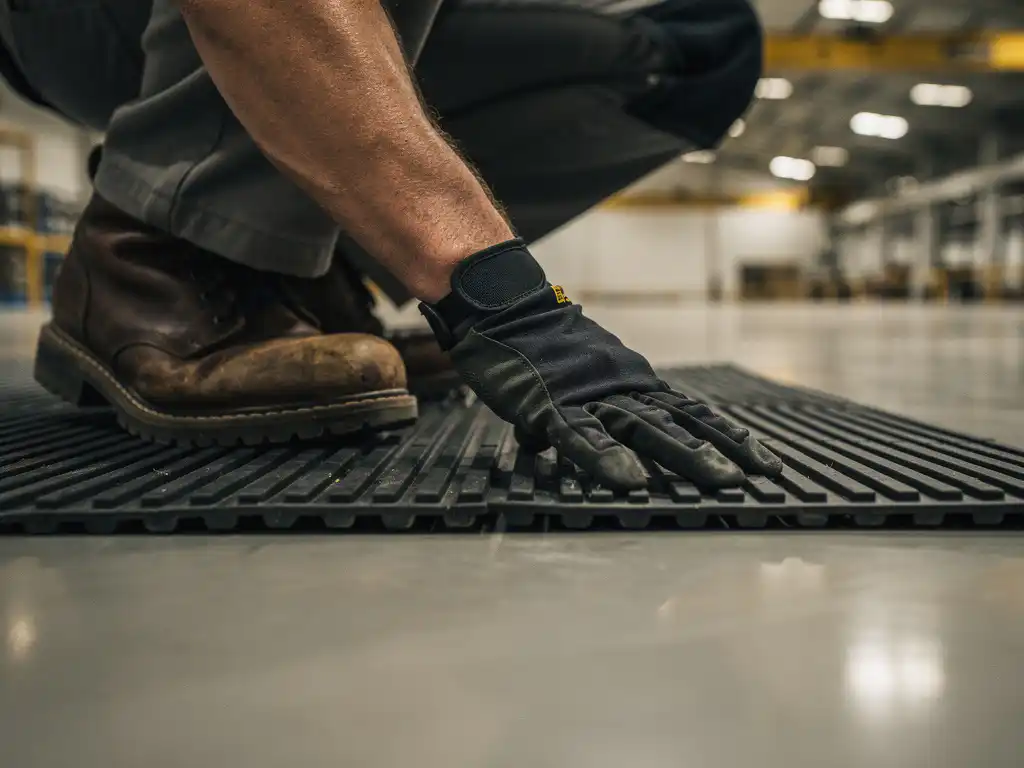
The most effective way to extend the lifespan of facility floors is to protect high-traffic and high-impact areas with floor mats or protective coverings, and to follow a consistent maintenance routine. Floors wear out primarily because of repeated mechanical stress, moisture, and chemical exposure, all of which accelerate surface degradation over time. Addressing those root causes through preventive maintenance is far more cost-effective than replacing damaged flooring. Below, we break down the most common questions facility managers ask about keeping floors in good shape for the long run.
What causes facility floors to wear out faster?
Facility floors wear out faster when they are exposed to repeated heavy loads, abrasive foot traffic, moisture, and chemical spills without adequate protection. These factors break down the surface layer of the flooring material over time, leading to cracking, staining, and structural deterioration that significantly shortens the floor’s usable life.
In most commercial and industrial settings, the main culprits are:
- Heavy foot traffic that grinds dirt and debris into the floor surface
- Equipment and machinery that concentrate load onto small contact points
- Moisture and liquid spills that seep into porous materials and cause swelling, staining, or mold
- Chemical exposure from cleaning agents, oils, or industrial fluids that degrade surface coatings
- Temperature fluctuations that cause expansion and contraction, leading to cracks over time
Understanding which of these factors is most active in your specific facility helps you prioritize the right preventive maintenance strategies before damage accumulates.
How do rubber mats protect floors from damage?
Rubber mats protect floors by acting as a physical barrier between the floor surface and the forces that cause wear. They absorb impact, reduce friction, and prevent direct contact with moisture, debris, and heavy loads. This barrier effect dramatically slows the rate of floor degradation, particularly in areas that see constant use.
The protective benefits work on several levels. First, rubber absorbs the shock of foot traffic and equipment movement, so the energy that would otherwise transfer into the floor is dissipated through the mat instead. Second, because rubber is non-porous, it prevents liquids from pooling directly on the floor surface, reducing the risk of moisture damage and staining. Third, mats trap dirt and debris at the point of entry, which means less abrasive material is tracked across the floor throughout the day.
Beyond floor protection, rubber matting also reduces slip risks for workers, which makes it a practical choice for facility maintenance and workplace safety at the same time. That combination of surface protection and safety improvement is what makes rubber matting a popular long-term investment in facility management.
Which areas of a facility need floor protection most?
The areas that need floor protection most are entry points, loading zones, production lines, and any location where workers stand for extended periods or where heavy equipment operates. These zones experience the highest concentration of wear, moisture, and mechanical stress, making them the fastest to deteriorate without intervention.
Here is a practical breakdown by area type:
- Entrances and corridors: High foot traffic brings in moisture and debris from outside, which is abrasive to floor surfaces
- Loading docks and receiving areas: Heavy pallet jacks, forklifts, and constant movement create concentrated impact stress
- Assembly lines and workstations: Workers standing in fixed positions for long periods create repetitive pressure points on the floor
- Wet areas such as kitchens, washrooms, and chemical handling zones: Moisture and chemical exposure are accelerated here
- Machinery footprints: Vibration and concentrated weight from equipment can crack or indent flooring over time
A simple walk-through of your facility with a floor maintenance checklist will usually reveal where wear patterns are already forming, which makes it straightforward to prioritize where protection is most needed.
What’s the difference between standard and custom-sized matting?
Standard-sized mats come in fixed dimensions and are designed to fit common use cases quickly and affordably. Custom-sized matting is cut or manufactured to match the exact dimensions of a specific space, which reduces the number of seams, improves coverage, and creates a cleaner, more professional result in areas with irregular layouts.
For many facilities, standard sizes work well in straightforward spaces like hallways, doorways, and workstations with typical footprints. They are easy to order, replace, and stock. However, standard mats often leave gaps in irregular or large areas, and multiple smaller mats placed side by side create seams where dirt and moisture can accumulate, which can actually increase floor maintenance demands rather than reducing them.
Custom-sized matting solves this by covering the entire area with fewer or no seams. Fewer seams mean less dirt trapping, easier cleaning, and a more consistent level of floor protection across the whole surface. For large commercial flooring projects or facilities with unique layouts, custom matting is often the more practical and cost-effective choice over time, even if the upfront cost is slightly higher.
How do you maintain rubber floor mats to keep them effective?
To keep rubber floor mats effective, clean them regularly with mild detergent and water, inspect them for signs of curling or surface damage, and allow them to dry fully before replacing them. Consistent maintenance preserves the mat’s grip, appearance, and protective function, which directly supports your broader floor maintenance goals.
A practical rubber mat maintenance routine looks like this:
- Daily: Sweep or shake out loose debris from the mat surface
- Weekly: Scrub with a mild detergent and rinse thoroughly with water
- Monthly: Inspect the underside for moisture buildup, and check edges for curling that could create a trip hazard
- Periodically: Rotate mats in high-traffic areas to distribute wear more evenly
Avoid using harsh solvents or bleach-based cleaners on rubber mats, as these can degrade the material over time. Rubber is naturally non-porous and does not absorb moisture, which makes it easy to clean without specialized equipment. Keeping mats clean also means they continue to trap dirt effectively rather than redistributing it across the floor surface.
When should you replace floor mats instead of cleaning them?
You should replace floor mats when they show signs of permanent deformation, significant surface wear, curling edges that cannot be flattened, or a loss of grip that cleaning cannot restore. At that point, the mat is no longer providing reliable floor protection or safety, and continuing to use it may actually increase maintenance costs and slip risks.
Specific signs that indicate it is time to replace rather than clean include:
- Edges that curl upward and create trip hazards even after being weighted down
- Visible surface cracking, tearing, or crumbling of the mat material
- A smooth or slick surface where texture has worn away, reducing traction
- Persistent odor that does not clear after thorough cleaning
- Mats that shift or slide despite having a non-slip backing, indicating the backing has worn out
The lifespan of a rubber mat depends heavily on the quality of the material and the intensity of use. High-quality rubber mats made from durable compounds will outlast cheaper alternatives significantly, which is why investing in better materials upfront often reduces long-term replacement and maintenance costs. At LRP Matting, we manufacture our mats from 100% recycled rubber and, in many cases, from our proprietary Fiber Reinforced Rubber Compound (FRC®), which gives them extra strength and resistance to the kind of wear that sends cheaper mats to the bin prematurely. If you are looking for commercial matting solutions that hold up under real-world conditions, we are happy to help you find the right fit for your facility.
Frequently Asked Questions
How do I calculate how many mats I need for my facility?
Start by mapping out your facility’s highest-traffic and highest-risk zones — entrances, loading docks, workstations, and wet areas — and measure each space accurately. For standard layouts, match those measurements to available standard mat sizes; for irregular or large areas, custom-sized matting will give you better coverage with fewer gaps. As a general rule, it’s better to slightly over-cover an area than to leave unprotected gaps where wear can still accumulate.
Can rubber mats be used on all types of flooring surfaces?
Rubber mats are compatible with most commercial and industrial flooring types, including concrete, tile, vinyl, and hardwood, but there are a few considerations depending on the surface. On polished or sealed floors, always verify that the mat’s non-slip backing won’t react with or stain the finish — some rubber compounds can transfer pigment onto light-colored surfaces over time. When in doubt, ask your mat supplier about backing materials that are safe for your specific floor type before committing to a large order.
What's the most common mistake facility managers make when buying floor mats?
The most common mistake is prioritizing upfront cost over material quality, which leads to mats that wear out, curl, or lose traction far sooner than expected — ultimately costing more in replacements than a better mat would have. Another frequent error is buying standard sizes for spaces that actually need custom coverage, leaving gaps at edges and seams where dirt and moisture continue to damage the floor. Taking time to assess your specific traffic patterns and floor dimensions before purchasing will almost always result in a better long-term outcome.
How do temperature and seasonal changes affect floor mats and the floors beneath them?
Extreme temperature swings can cause rubber mats to stiffen in cold environments or become slightly more pliable in intense heat, which can affect their grip and lay-flat performance over time. Beneath the mat, seasonal moisture — from rain, snow, and humidity — is one of the biggest accelerators of floor degradation, especially in entrance areas. Choosing mats with adequate drainage or moisture-trapping capacity for your climate, and increasing inspection frequency during wet seasons, helps keep both the mat and the floor in better condition year-round.
Is it worth investing in anti-fatigue matting at workstations, or do standard rubber mats do the same job?
Standard rubber mats and anti-fatigue mats serve different primary purposes: standard mats are optimized for floor protection and traction, while anti-fatigue mats are engineered specifically to reduce physical strain on workers who stand for long periods. In workstation environments where employees stand for extended shifts, anti-fatigue matting delivers measurable benefits in worker comfort and productivity that a flat rubber mat cannot replicate. For most facilities, the best approach is to use anti-fatigue matting at fixed workstations and standard protective rubber matting in transit zones, loading areas, and entrances.
How can I build a floor maintenance schedule that actually gets followed by my team?
The most effective floor maintenance schedules are simple, visual, and tied to existing routines — for example, pairing daily mat sweeping with an end-of-shift cleanup that staff already perform. Create a one-page checklist broken down by daily, weekly, and monthly tasks, assign clear ownership for each task, and post it in the relevant areas of the facility so it’s always visible. Tracking completion with a simple sign-off sheet also makes it easy to identify gaps before they become costly floor damage.
What should I look for in a mat supplier to make sure I'm getting a quality product?
Look for suppliers who are transparent about their materials — specifically whether mats are made from virgin rubber, recycled rubber, or a reinforced compound, as this directly impacts durability and performance. A reputable supplier should be able to provide product specifications, load ratings, and guidance on which mat type suits your specific application rather than offering a one-size-fits-all recommendation. Custom sizing capability, clear warranty terms, and the ability to supply consistent replacements over time are also strong indicators that a supplier can support your facility’s long-term floor protection strategy.
Related Articles
- Why does product lifespan matter for sustainability?
- What should be included in a commercial floor inspection?
- What is the best rubber mat thickness for a horse stall?
- How do you design a safe flooring layout for an equine hospital?
- What flooring is best for a large animal veterinary wash area?
- How do you make a horse trailer safer for loading and unloading?
- How do you cover an irregularly shaped horse stall floor?
- How do you reduce re-injury risk in a horse recovery stall?
- What type of floor is easiest to keep clean in a horse barn?
- Can a hard barn floor cause tendon damage in horses?