
Regular maintenance extends the life of sports flooring by preventing small issues from turning into major damage. Cleaning removes abrasive particles and moisture that break down rubber over time, while routine inspections catch wear early before it spreads. For rubber sports flooring in particular, a consistent maintenance routine can significantly extend the functional lifespan of the surface. Below, we answer the most common questions about keeping sports flooring in top condition.
What types of damage shorten sports flooring lifespan?
The types of damage that most shorten sports flooring lifespan are surface abrasion, moisture penetration, chemical degradation, and impact stress from heavy equipment. Each of these works differently, but they all accelerate wear and reduce the surface’s ability to protect athletes and equipment underneath.
Abrasion is one of the most common culprits in athletic facilities. Grit, sand, and debris tracked in from outside act like sandpaper underfoot. Over time, this grinds down the surface layer of flooring materials, especially softer options. In sports venue maintenance, this is often underestimated because the damage builds up gradually rather than appearing overnight.
Moisture is another major factor. When water sits on flooring for extended periods, it can seep into seams and porous materials, weakening adhesives and causing warping, mold, or delamination. Rubber sports flooring is naturally non-porous, which gives it a clear advantage here, but even rubber can suffer if water is allowed to pool around edges or beneath the surface.
Chemical damage from harsh cleaning products is a less obvious but equally damaging threat. Solvents, bleach-based cleaners, and oil-based products can break down the surface structure of many flooring types. Finally, heavy equipment like weight machines, carts, or gym equipment placed without protective pads creates concentrated point pressure that leads to permanent indentations or cracks.
How does cleaning frequency affect rubber sports flooring durability?
Cleaning frequency directly affects rubber sports flooring durability because debris left on the surface causes ongoing abrasion, while moisture from sweat and spills degrades the material if not removed promptly. Regular cleaning removes these damaging agents before they have time to cause lasting harm.
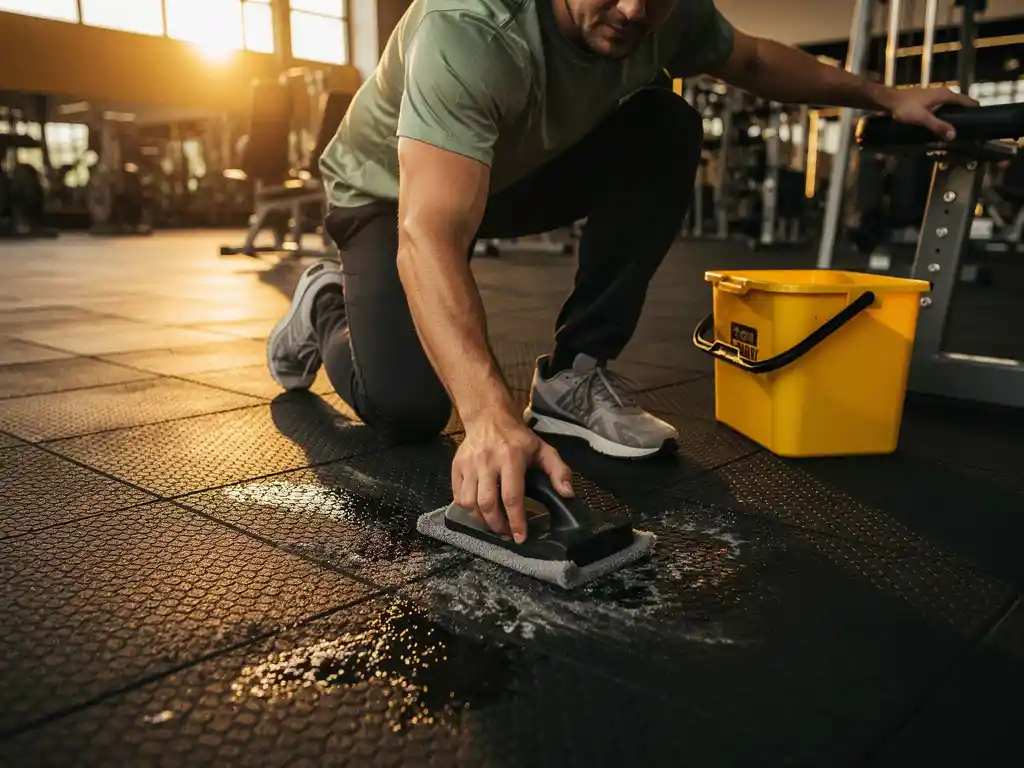
In recreational facilities and sports venues with heavy daily use, sweeping or dry mopping should happen after every session or at minimum once per day. This removes the grit and particles that cause surface wear. A wet mop with a mild, pH-neutral cleaner should follow on a weekly basis to address sweat residue, body oils, and any sticky buildup that dry cleaning misses.
Facilities that skip regular cleaning often find themselves facing premature surface breakdown that no amount of deep cleaning can reverse. Think of it this way: the more foot traffic a sports floor handles, the more frequently it needs attention. Sports facility management teams that build cleaning into daily operations consistently get more years out of their flooring investment than those who clean reactively.
What cleaning products are safe for rubber sports mats?
Safe cleaning products for rubber sports mats are mild, pH-neutral detergents diluted in water. Avoid solvents, bleach, ammonia-based cleaners, and any oil-based products, as these can break down the rubber compound and cause surface cracking, discoloration, or premature deterioration.
A simple solution of warm water and a gentle dish soap or purpose-made rubber floor cleaner works well for routine maintenance. Apply it with a soft mop or cloth, then rinse with clean water and allow the surface to dry fully before use. Avoid leaving standing water on the mats, even after cleaning.
For tougher stains, a slightly stronger concentration of the same mild detergent can be applied and left for a few minutes before scrubbing gently. Abrasive scrubbing pads should be avoided, as they can scratch and roughen the surface texture. In sports and recreational facilities, it is worth posting clear guidelines for cleaning staff so the wrong products are never used by mistake.
How do you inspect sports flooring for early signs of wear?
To inspect sports flooring for early signs of wear, walk the entire surface systematically and look for lifting edges, surface cracks, soft spots, discoloration, and any areas where the texture has worn smooth. Early detection allows you to address problems before they become safety hazards or require full replacement.
Start at the perimeter. Edges and seams are the first areas to lift or separate, especially in high-traffic athletic facilities. Press along the edges with your foot to feel for any give or movement beneath the surface. Then move inward, checking for visible surface cracks or tears, particularly in areas where equipment is frequently placed or where athletes pivot and change direction.
Check for smoothing in high-traffic zones. When the surface texture wears down, it reduces traction and increases slip risk, which is a direct safety concern in any sports venue. Discoloration or dark patches can indicate moisture trapped beneath the surface. If you notice any soft or spongy areas underfoot, that often points to delamination or subsurface damage that needs prompt attention.
A good rule of thumb for sports facility management is to do a formal inspection monthly, in addition to the visual checks that should happen during daily cleaning routines. Document what you find so you can track wear patterns over time and plan maintenance or replacement proactively.
Does rubber sports flooring need to be replaced more often than other materials?
Rubber sports flooring generally does not need to be replaced more often than other materials. In fact, high-quality rubber flooring tends to outlast many alternatives, including foam, vinyl, and carpet tiles, particularly in demanding sports and recreational environments where durability under heavy use matters most.
The longevity of rubber flooring comes down to its physical properties. Rubber is naturally resilient, meaning it absorbs impact and returns to its original shape rather than compressing permanently over time. It is also non-porous, so it does not absorb moisture or harbor bacteria the way porous materials can. These characteristics make it well suited for athletic facilities where hygiene and performance are both priorities.
That said, not all rubber flooring is equal. Thicker mats with reinforced compounds hold up better under repeated heavy loads than thinner, standard options. The environment also matters: rubber performs well across a wide temperature range and holds up in both indoor and outdoor sports venues. With proper maintenance, quality rubber sports flooring can remain functional and safe for many years without needing replacement.
What maintenance mistakes shorten sports flooring life the most?
The maintenance mistakes that shorten sports flooring life the most are using harsh chemical cleaners, allowing moisture to sit on the surface, skipping regular inspections, and dragging heavy equipment across the floor instead of lifting it. Each of these mistakes accelerates wear in ways that are difficult or impossible to reverse.
Using the wrong cleaning products is probably the most common mistake in sports venue maintenance. Bleach, ammonia, and solvent-based cleaners feel effective because they cut through grime quickly, but they also degrade the rubber compound, making the surface brittle and prone to cracking over time.
Letting moisture sit is the second big one. After mopping or after heavy use that generates sweat, floors should be dried or allowed to air out fully. Trapped moisture beneath mats or in seams leads to mold, adhesive failure, and subsurface damage that is expensive to fix.
Dragging equipment is another issue that is easy to overlook. Weight racks, benches, and machines dragged across rubber flooring create deep surface gouges and tears. Using furniture sliders or lifting equipment properly protects the surface and costs nothing extra.
Finally, skipping inspections means problems go unnoticed until they become serious. A small lifted edge that takes five minutes to reglue can become a tripping hazard or require full section replacement if ignored for months. Consistent, scheduled maintenance is always more cost-effective than reactive repairs.
At LRP Matting, we design our rubber sports mats to be as low-maintenance as possible, with non-porous surfaces that resist moisture and durable rubber compounds that stand up to heavy daily use. But even the best flooring benefits from the right care routine. If you are looking for flooring built to last in demanding athletic environments, explore our sports and recreation mats to find the right fit for your facility.
Frequently Asked Questions
How long does rubber sports flooring typically last with proper maintenance?
With a consistent maintenance routine, high-quality rubber sports flooring can last anywhere from 10 to 20 years or more, depending on traffic volume, installation quality, and environmental conditions. Thicker, commercial-grade rubber mats used in high-traffic athletic facilities tend to sit at the higher end of that range. The key factors are daily cleaning, prompt spill response, and regular inspections that catch wear before it escalates into structural damage.
Can rubber sports flooring be repaired, or does the entire section need to be replaced?
In many cases, localized damage to rubber sports flooring can be repaired rather than requiring full section replacement. Lifted edges and separated seams can often be reglued with the appropriate adhesive, and small surface tears may be patched depending on the severity. However, widespread delamination, deep gouges across a large area, or significant subsurface moisture damage typically make full section replacement the more practical and cost-effective solution. Acting on small issues early is always the better option.
What is the best way to protect rubber sports flooring under heavy gym equipment?
The most effective protection is to place rubber equipment mats or high-density pads directly under heavy machines, weight racks, and benches to distribute the load and prevent point pressure from causing indentations or cracks. When moving equipment, always lift it fully rather than dragging or sliding it across the surface. For frequently repositioned items, furniture sliders designed for rubber flooring can help reduce surface gouging without requiring a full lift every time.
Does rubber sports flooring require any special treatment or sealing to maintain its performance?
Most high-quality rubber sports flooring does not require sealing or special surface treatments the way hardwood or concrete floors do, since rubber is naturally non-porous and resistant to moisture absorption. However, some facilities choose to apply a rubber floor conditioner or protectant periodically to help maintain surface flexibility and reduce the risk of cracking, particularly in environments with low humidity or temperature fluctuations. Always check the manufacturer’s recommendations before applying any treatment product to confirm compatibility with your specific flooring.
How should rubber sports flooring be maintained in outdoor sports venues compared to indoor facilities?
Outdoor rubber sports flooring faces additional challenges including UV exposure, temperature extremes, and direct rainfall, all of which can accelerate surface degradation over time. For outdoor venues, it is important to choose UV-stabilized rubber compounds designed for exterior use, and to inspect drainage around and beneath the flooring more frequently to prevent water from pooling. Cleaning schedules may also need to be more frequent outdoors due to wind-blown debris, leaves, and organic material that can trap moisture against the surface.
What should I do if I notice a musty smell coming from rubber sports mats?
A musty odor from rubber sports mats is usually a sign of moisture trapped beneath the surface or mold and mildew beginning to develop in seams or on the underside of the mats. Start by lifting the affected mats if possible, cleaning both the underside and the subfloor with a pH-neutral disinfectant, and allowing everything to dry thoroughly before reinstalling. Going forward, improve ventilation in the facility, ensure mats are fully dried after cleaning, and check that the subfloor is level and free of standing water to prevent the issue from recurring.
Is there a recommended schedule for deep cleaning rubber sports flooring versus routine daily maintenance?
A practical maintenance schedule for most athletic facilities includes dry sweeping or dust mopping after every session, a wet mop with a pH-neutral cleaner on a weekly basis, and a thorough deep clean monthly that includes moving equipment, cleaning edges and seams, and inspecting the full surface. High-traffic facilities such as commercial gyms or multi-use sports venues may need to increase the frequency of wet mopping to two or three times per week. The goal is to match your cleaning schedule to your actual usage level rather than following a one-size-fits-all approach.
Related Articles
- How do sports venues manage heavy foot traffic?
- What flooring is best for a large animal veterinary wash area?
- How do you protect a performance horse's legs during stabling?
- How do you keep a horse stall dry without using excessive bedding?
- What are the hidden costs of poor horse stall flooring?
- What is the most low-maintenance horse stall setup?
- What is the difference between anti-fatigue mats and standard rubber mats?
- What is the best way to protect a loading dock floor?
- What do you put under heavy equipment to protect a floor?
- How do you protect a concrete floor from heavy machinery?