
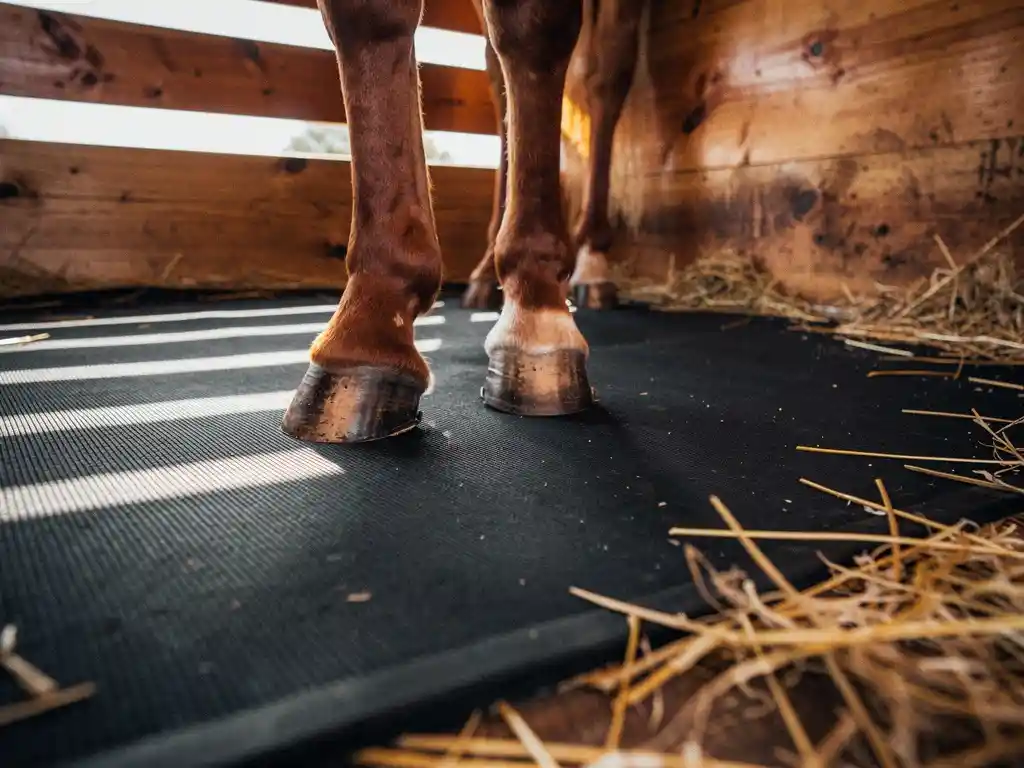
The best flooring for a horse trailer is thick rubber matting, ideally 3/4 inch or more. Rubber provides the right combination of grip, cushioning, and durability to keep horses safe and comfortable during transport. It also resists moisture, cleans easily, and holds up under the constant movement and weight of livestock. For most trailers, purpose-built rubber mats designed specifically for equine use are the go-to choice.
Why does horse trailer flooring matter so much?
Horse trailer flooring directly affects your horse’s safety, comfort, and stress levels during every journey. Poor flooring increases the risk of slipping, joint strain, and injury—even on short trips. The floor is the one surface your horse is in constant contact with, so getting it right is one of the most important decisions you can make for your animal’s well-being on the road.
Horses naturally brace themselves during transport, which puts significant pressure on their hooves, legs, and joints. A floor that offers no cushioning or grip forces them to work much harder just to stay upright. Over time, that stress adds up. Beyond comfort, trailer flooring also needs to handle urine, manure, and moisture without deteriorating—because a rotting or slippery floor is a genuine safety hazard for both the horse and the handler loading and unloading it.
What types of flooring are used in horse trailers?
Horse trailers typically use one of four flooring types: bare wood, aluminum, rubber matting, or a combination of rubber over wood or aluminum. Each has its trade-offs, but rubber matting is by far the most widely recommended option for everyday use because it addresses the shortcomings of the other materials.
Wood flooring
Wood has been used in horse trailers for decades. It is relatively inexpensive and easy to replace, but it absorbs urine and moisture over time, which causes it to rot and weaken. A rotting wood floor is a serious structural risk. Wood also offers limited traction on its own, especially when wet.
Aluminum flooring
Aluminum is lightweight and does not rot, which makes it popular in modern trailers. However, it provides almost no cushioning and can become extremely slippery when wet or contaminated with manure. Most horse owners with aluminum floors add rubber mats on top for exactly this reason.
Rubber matting
Rubber mats are the most practical and widely used solution. They provide traction, cushioning, and moisture resistance all in one. You can use them as a standalone floor covering or lay them over an existing wood or aluminum base to improve performance significantly. Rubber mats designed specifically for equine and trailer use are purpose-built to handle the weight, movement, and mess that comes with transporting horses.
What is the best flooring material for a horse trailer?
Rubber matting is the best flooring material for a horse trailer. It offers the ideal combination of slip resistance, shock absorption, moisture resistance, and durability. Unlike wood, it will not rot. Unlike bare aluminum, it provides real cushioning and grip. Quality rubber mats also hold up under the weight of large horses without compressing or degrading over time.
For the trailer floor itself, look for mats that are purpose-designed for equine transport. A product like a dedicated trailer ramp mat, for example, is engineered to provide comfort and safety from the moment the horse steps onto the ramp all the way through to arrival at the destination. The surface texture matters, too—a hammer-top or studded pattern gives hooves something to grip, which reduces slipping and the anxiety that comes with it.
Rubber also has a practical advantage when it comes to hygiene. It is non-porous, meaning it does not absorb urine or moisture the way wood does. A quick clean with mild detergent and water is all it takes to keep the surface sanitary between trips. That ease of maintenance makes rubber the most sensible long-term investment for your trailer floor.
What’s the difference between rubber mat thicknesses for trailers?
The main difference between rubber mat thicknesses is the level of cushioning and weight. Thinner mats (around 1/2 inch) are lighter and easier to handle, making them a practical choice for ramp applications or situations where budget is a factor. Thicker mats (3/4 inch or more) provide noticeably more shock absorption and are better suited for the standing area of the trailer, where horses spend the most time.
For the main floor of the trailer, 3/4 inch is the most commonly recommended thickness. It provides enough cushioning to reduce leg and joint fatigue on longer journeys without adding excessive weight to the trailer. A 4 x 6 mat at 3/4 inch thickness weighs around 115 pounds, so it is substantial but manageable for installation.
A slightly thinner option at 5/8 inch offers a lighter alternative—around 91.5 pounds for the same footprint—which can be useful if you are covering a large area and total weight is a concern. For ramp areas, a purpose-built ramp mat is a better choice than a standard stall mat, since it is designed for the specific dimensions and angle of trailer ramps and optimized for the loading and unloading process.
How do you install rubber mats in a horse trailer?
Installing rubber mats in a horse trailer is straightforward. Clean the existing floor thoroughly, let it dry completely, then lay the mats flat with the textured side facing up. For most trailers, mats are cut or selected to fit the interior dimensions closely, minimizing gaps where hooves could catch or where moisture could pool underneath.
Before you start, measure your trailer floor carefully—including any wheel wells, dividers, or angled sections. Getting accurate measurements upfront saves a lot of frustration. If your trailer has an unusual shape or non-standard dimensions, custom-cut mats are a practical solution that eliminates the guesswork and reduces the number of seams in the finished installation.
Once the mats are in place, check that they sit flat without buckling or curling at the edges. Some horse owners secure mats with trailer-specific fasteners or use interlocking mat systems for added stability. For ramp areas, always use a mat designed for that purpose—standard stall mats are not sized or shaped for ramp installation and can shift during loading.
How do you clean and maintain horse trailer floor mats?
Cleaning rubber horse trailer mats is simple. Remove them from the trailer after each use if possible, rinse off manure and urine with water, scrub with a mild detergent, and allow them to dry fully before reinstalling. Regular cleaning prevents ammonia buildup, which can degrade rubber over time and create an unpleasant environment for your horse.
For routine maintenance between trips, a quick sweep or rinse is often enough. Because rubber is non-porous, it does not absorb liquids, so surface contamination stays on the surface and comes off easily. Avoid harsh chemical cleaners or pressure washers at very close range, as these can damage the surface texture over time.
Drying the mats before reinstalling them is worth the extra step. Moisture trapped between the mat and the trailer floor—especially if the base is wood—accelerates rot and can cause the mats to shift. Storing mats upright or slightly elevated when the trailer is not in use helps them dry faster and keeps them in better shape long-term.
When should you replace your horse trailer floor mats?
You should replace your horse trailer floor mats when you notice visible cracking, significant thinning, surface deterioration, or persistent odors that do not clear with cleaning. Any mat that has lost its surface texture—the grip pattern that prevents slipping—should be replaced immediately, as a smooth mat on a trailer floor is a real safety risk.
High-quality rubber mats made from durable compounds can last for many years with proper care, but they are not permanent. Check your mats regularly, especially at the edges and in high-traffic zones like the ramp and the areas where horses stand most often. These spots wear faster than the rest of the mat.
Also inspect the trailer floor underneath the mats periodically. If the base floor has softened, rotted, or corroded, replacing the mats alone is not enough—the structural floor needs attention, too. Think of the mats and the base floor as a system. Both need to be in good condition for the trailer to be genuinely safe for your horse.
When it is time for new mats, that is also a good moment to consider whether your current setup is working as well as it could. If you have been using standard mats that do not quite fit your trailer’s dimensions, switching to custom-cut rubber matting sized to your exact trailer floor is a worthwhile upgrade. At LRP Matting, we offer made-to-measure rubber mats cut to any size or shape, so you get a precise fit with fewer seams and a cleaner, safer installation from day one.
Frequently Asked Questions
Can I use standard stall mats in my horse trailer instead of purpose-built trailer mats?
You can use standard stall mats in a pinch, but they are not ideal for trailer use. Stall mats are designed for flat, stationary surfaces and are not sized or shaped to fit trailer dimensions, ramps, or wheel wells—meaning you will likely end up with awkward gaps, overlaps, or mats that shift during transit. Purpose-built trailer mats are engineered for the specific demands of transport, including the movement, vibration, and moisture exposure that comes with every trip.
How do I know if my horse trailer's base floor is still structurally sound before laying new mats?
Remove the existing mats and inspect the base floor closely for soft spots, discoloration, rust (on aluminum), or any areas that flex or give under pressure—these are all signs of rot or structural compromise. For wood floors, use a screwdriver or similar tool to probe suspect areas; if it sinks in easily, the wood has rotted and needs replacing before any new mats go down. Never rely on mats alone to compensate for a weakened base floor, as a structurally unsound floor is a serious safety hazard regardless of how good the matting on top is.
Is it better to glue rubber mats down or leave them loose in a horse trailer?
Most horse owners leave rubber mats loose rather than gluing them down, and for good reason—it makes cleaning, drying, and replacement far easier. Well-fitted mats that cover the trailer floor closely and sit flat will stay in place under normal conditions due to their weight and friction against the base floor. If you find mats shifting, the better solution is to improve the fit with custom-cut mats or use trailer-specific fasteners, rather than adhesive, which makes future removal and maintenance much more difficult.
How many mats do I need for a standard two-horse trailer, and how do I calculate the right amount?
Start by measuring the full interior floor area of your trailer in feet, including the ramp, and account for any wheel wells or dividers that reduce usable space. Standard mats come in common sizes like 4 x 6 feet, so divide your total floor area by the mat size to estimate quantity—but always round up and factor in any cuts needed to fit irregular sections. For a more accurate and waste-free result, consider ordering custom-cut mats sized precisely to your trailer’s dimensions, which eliminates guesswork and reduces the number of seams in the finished installation.
Will rubber mats make my trailer significantly heavier, and does that affect towing?
Rubber mats do add meaningful weight—a standard 4 x 6 mat at 3/4 inch thickness weighs around 115 pounds, so outfitting a full trailer floor can add several hundred pounds to your total load. This is worth factoring into your towing calculations, particularly if your vehicle is already near its towing or payload capacity. Opting for a slightly thinner 5/8 inch mat where full cushioning is less critical (such as in lower-traffic areas) is a practical way to reduce overall weight without compromising safety in the areas that matter most.
What surface texture should I look for in a horse trailer mat, and does it really make a difference?
Yes, surface texture makes a significant difference to both safety and your horse’s confidence during loading and transit. Look for a hammer-top, studded, or diamond-plate pattern, which gives hooves a consistent surface to grip and prevents slipping even when the mat is wet or soiled. A smooth or worn-down surface, by contrast, can be nearly as dangerous as bare aluminum—if your mats have lost their texture, that alone is sufficient reason to replace them regardless of how intact the rest of the mat appears.
Are there any safety checks I should do on my trailer mats before every trip?
Before each trip, do a quick visual and physical check: make sure all mats are lying flat with no curled edges or lifted corners that a hoof could catch, check that the ramp mat is secure and has not shifted, and look for any new cracks or damage since the last use. If you have been storing the trailer between uses, also check underneath the mats for any moisture buildup, especially if the base floor is wood. This two-minute pre-trip check is one of the simplest ways to catch a potential problem before it becomes a dangerous one on the road.
Related Articles
- How do you build a floor maintenance plan?
- Why do wet floors become dangerous?
- How can you improve traction on existing floors?
- What is the best flooring for a horse stall?
- How do you protect a sports facility floor during the off-season?
- How do you fit stall mats to a non-standard stall size?
- What are the pros of rubber mats in a horse stall?
- Why does my horse paw at the stall floor?
- What should you put on a concrete barn floor to protect your horse?
- What floor is best for a horse with arthritis?