
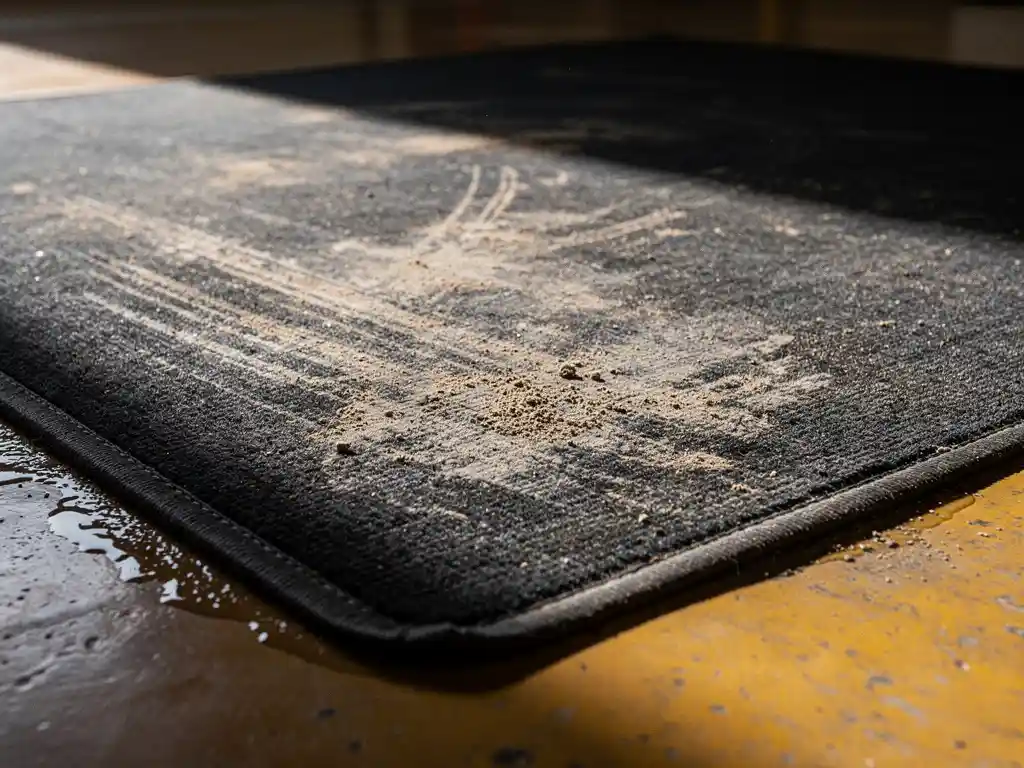
The first signs a commercial floor needs maintenance include visible surface wear like scuffing, discoloration, or loss of texture, along with early cracking, peeling, or a noticeable increase in slip incidents. These warning signs often appear gradually, making them easy to overlook until the damage becomes more serious. Catching them early is the most effective way to protect your floor investment and keep your space safe. Below, we break down the most common signs to watch for and what each one tells you about the condition of your flooring.
How do commercial floors typically show early wear?
Commercial floors typically show early wear through surface scuffing, fading, loss of texture, and small areas of discoloration. These changes are often subtle at first, but they signal that the floor’s protective layer is beginning to break down. In high-traffic environments, early wear tends to concentrate in predictable zones like entryways, corridors, and workstation areas.
Scuff marks and dull patches are usually the first things you notice. They appear where foot traffic is heaviest and where equipment like carts or forklifts frequently passes. Over time, the surface texture that provides grip and resilience starts to flatten out, reducing the floor’s ability to absorb impact or resist moisture. Color changes, especially yellowing or graying, are another early indicator that the material is aging or has been exposed to chemicals, UV light, or heavy cleaning agents.
The tricky part is that early wear rarely causes immediate problems. It is easy to dismiss a few scuff marks as cosmetic. But surface degradation is the starting point for deeper structural damage, so recognizing these signs early gives you the best chance to act before repairs become expensive.
What does surface cracking or peeling mean for your floor?
Surface cracking or peeling on a commercial floor means the material has started to break down structurally, not just cosmetically. This is a more serious stage of wear that indicates the floor can no longer perform its intended function reliably. Cracks and peeling create uneven surfaces, trap moisture and bacteria, and increase the risk of trips and falls.
Cracking often develops when a floor has been repeatedly exposed to temperature changes, heavy loads, or cleaning chemicals that are too harsh for the material. Peeling is especially common in layered or coated flooring systems where the top layer separates from the base, usually due to moisture getting underneath or adhesive failure over time.
Once cracking or peeling begins, it tends to spread. Gaps in the surface collect dirt and liquids, which accelerate the deterioration further. From a hygiene and facility management perspective, cracked flooring is also a compliance concern in regulated environments like food production areas, healthcare facilities, or commercial kitchens. At this stage, cleaning alone is not enough. You are looking at either targeted repair or full replacement, depending on how widespread the damage is.
Why do slip hazards appear on commercial floors over time?
Slip hazards appear on commercial floors over time because the surface texture that provides grip gradually wears away, and contaminants like oils, water, and cleaning residues build up in ways the degraded surface can no longer manage. A floor that felt safe when it was new may become a genuine hazard after months or years of heavy use.
There are two main mechanisms at work. First, the physical texture of the floor gets worn smooth. Anti-slip surfaces rely on small ridges, patterns, or rough finishes to create friction underfoot. As these features flatten, the floor becomes more slippery, especially when wet. Second, worn floors are harder to clean effectively. Micro-cracks and pitted surfaces trap grease, water, and detergent residue, creating slick patches that are difficult to remove even with regular mopping.
Slip hazards are one of the leading causes of workplace injuries in commercial environments. From a preventive maintenance standpoint, monitoring the grip performance of your floor, not just its appearance, is a practical way to catch this problem before an incident occurs. Adding rubber matting in high-risk zones like entryways, wet areas, or near machinery can help bridge the gap while a longer-term flooring solution is planned.
How can you tell if a rubber mat needs replacing versus cleaning?
A rubber mat needs replacing when it shows structural damage like cracks, tears, permanent compression, or curling edges that do not flatten out. If the mat is simply dirty, discolored, or has surface buildup, cleaning is usually enough to restore its performance. The key distinction is whether the mat’s core function, providing grip, cushioning, and a stable surface, is still intact.
Here is a practical way to assess it:
- Clean it first. Wash the mat with mild detergent and water, then let it dry fully. If the surface texture returns and the mat lies flat, it is still functional.
- Check the edges and corners. Curling or lifting edges are a trip hazard and often mean the mat has reached the end of its usable life.
- Look at the surface texture. If the anti-slip pattern is worn smooth and does not return after cleaning, the mat has lost its grip performance.
- Press on the surface. A mat that has permanently compressed and no longer springs back has lost its cushioning and ergonomic benefit.
- Check for cracks or tears. Any structural break in the rubber means the mat can shift underfoot or catch on footwear, creating a hazard.
Genuine rubber mats, especially those made from high-quality or fiber-reinforced compounds, tend to last significantly longer than lower-grade alternatives. If your mat is failing quickly, the material quality may be a factor worth reconsidering for your next purchase.
What causes commercial flooring to deteriorate faster than expected?
Commercial flooring deteriorates faster than expected when it is exposed to conditions it was not designed to handle, including excessive loads, incompatible cleaning chemicals, standing moisture, or temperature extremes. Poor installation and inadequate preventive maintenance also accelerate wear significantly.
Some of the most common causes of premature deterioration include:
- Wrong product for the environment. Using a floor material rated for light commercial use in a heavy industrial setting will cause it to wear out much faster than the manufacturer’s specifications suggest.
- Harsh cleaning chemicals. Many commercial cleaning agents contain solvents or acids that break down flooring materials over time, especially if used at higher concentrations than recommended.
- Moisture infiltration. Water that gets beneath the surface or into micro-cracks causes swelling, adhesive failure, and mold growth, all of which speed up structural damage.
- Point loading from heavy equipment. Forklifts, pallet jacks, and heavy machinery concentrate significant weight on small surface areas, which can compress or crack flooring that is not rated for that kind of load.
- Neglected maintenance cycles. Small issues like minor cracks or loose seams, if left unaddressed, tend to grow into larger problems quickly under continued traffic.
Understanding the specific demands of your environment before selecting a flooring product is the most effective way to avoid premature wear. Matching the material to the actual conditions it will face makes a significant difference in lifespan.
How often should commercial floors be inspected for damage?
Commercial floors should be inspected visually on a daily or weekly basis by facility staff, with a more thorough formal inspection carried out every three to six months. High-traffic or high-risk environments, such as industrial facilities, commercial kitchens, or areas with heavy machinery, benefit from more frequent structured checks.
A practical inspection schedule looks something like this:
- Daily: Quick visual checks during opening or closing routines. Look for obvious hazards like lifted edges, wet patches, visible cracks, or debris that could cause slips.
- Weekly: A more deliberate walk-through of all flooring zones, including less-trafficked areas. Note any new scuffing, discoloration, or texture loss.
- Quarterly: A formal inspection that documents the condition of each flooring area, checks seams and edges, tests surface grip, and identifies any areas that need repair or replacement.
- Annually: A comprehensive review of the entire facility’s flooring as part of your broader facility maintenance planning. This is a good time to assess whether flooring products are still the right fit for current usage patterns.
Keeping written records of each inspection is useful for tracking how quickly different areas wear, identifying recurring problem spots, and making informed decisions about when to repair versus replace. It also supports compliance documentation in regulated industries.
At LRP Matting, we offer a wide range of durable rubber mats built to handle the demands of real commercial environments. Whether you need flooring for an industrial workspace, a commercial facility, or anywhere in between, our products are made from 100% recycled rubber and designed to last. If you are ready to explore options that reduce maintenance headaches and keep your space safer for longer, take a look at our commercial matting solutions and find the right fit for your floor.
Frequently Asked Questions
Can I repair a cracked or peeling commercial floor myself, or do I need a professional?
Minor surface cracks and small peeling areas can sometimes be addressed with DIY repair kits designed for your specific flooring type, but this is generally only appropriate for isolated, contained damage. If cracking or peeling is widespread, or if the damage has reached the subfloor, professional assessment and repair is strongly recommended. Attempting to patch over extensive structural damage without addressing the root cause — such as moisture infiltration or adhesive failure — typically leads to the same problem returning faster. When in doubt, getting a professional opinion early saves money compared to a full replacement down the line.
What type of commercial flooring holds up best in high-traffic environments?
Rubber flooring and rubber matting are among the most resilient options for high-traffic commercial environments because they resist compression, absorb impact, and maintain surface grip even under heavy use. Other durable options include epoxy-coated concrete and heavy-duty vinyl, depending on the specific demands of the space. The most important factor is matching the flooring material to the actual conditions it will face — including load type, moisture exposure, and chemical contact — rather than simply choosing the most popular option. A product that performs well in an office corridor may fail quickly in an industrial kitchen or warehouse.
How do I know if my cleaning products are damaging my commercial floor?
Signs that your cleaning products may be damaging your floor include accelerated dullness or discoloration after cleaning, a surface that feels increasingly sticky or slippery, and faster-than-expected texture loss. Harsh solvents, high-pH degreasers, and acidic cleaners are common culprits, particularly when used at concentrations higher than the manufacturer recommends. Always cross-reference your cleaning product’s chemical composition with your flooring manufacturer’s care guidelines. Switching to a pH-neutral cleaner formulated for your floor type is one of the simplest ways to extend its lifespan without changing anything else in your maintenance routine.
What is the best way to get started with a preventive maintenance plan for commercial flooring?
Start by conducting a baseline inspection of your entire facility’s flooring, documenting the current condition of each zone with notes and photographs. From there, assign inspection responsibilities to specific staff members and establish a simple checklist that covers daily, weekly, and quarterly checks as outlined in the post. Identify your highest-risk areas first — entryways, wet zones, and heavily trafficked corridors — and prioritize those for more frequent monitoring and protective measures like rubber matting. A written maintenance log, even a basic spreadsheet, gives you the data you need to make smarter repair and replacement decisions over time.
Are rubber mats a long-term flooring solution or just a temporary fix?
High-quality rubber mats can absolutely serve as a long-term flooring solution, not just a stopgap measure, particularly in environments where permanent flooring is impractical to replace or where conditions change over time. Mats made from durable, fiber-reinforced, or 100% recycled rubber compounds are engineered for sustained heavy use and can last many years with proper care. They also offer the practical advantage of being modular — you can replace individual mats in worn zones without overhauling an entire floor. The key is selecting a mat that is genuinely rated for your environment’s demands rather than opting for a lower-grade product that will need frequent replacement.
How do slip resistance ratings work, and should I be checking them when buying commercial flooring?
Slip resistance is typically measured using standards like the Pendulum Test Value (PTV) or the R-rating system, which classify surfaces from low to high friction under wet and dry conditions. Yes, you should absolutely check these ratings when purchasing commercial flooring, especially for environments where wet floors, oils, or cleaning chemicals are common. A floor or mat with a higher slip resistance rating provides a measurable safety margin that generic product descriptions like ‘anti-slip’ do not guarantee. In regulated industries such as food production, healthcare, or hospitality, meeting minimum slip resistance thresholds may also be a compliance requirement.
What are the most common mistakes facility managers make when maintaining commercial floors?
The most common mistakes include waiting for visible damage before acting, using cleaning chemicals that are incompatible with the flooring material, and skipping formal documented inspections in favor of informal walk-throughs. Another frequent error is choosing flooring based on upfront cost alone without accounting for the total cost of ownership, which includes maintenance frequency, repair costs, and expected lifespan. Finally, many facilities underestimate the value of protective matting in high-wear zones, which can significantly extend the life of the underlying floor by absorbing the bulk of daily traffic and impact.
Related Articles
- How do facility layouts affect animal movement?
- How does flooring affect workplace comfort?
- What flooring is best for a large animal veterinary wash area?
- What flooring works best under heavy sports equipment?
- What is the best flooring for a horse wash rack?
- What is the best flooring for a sports facility?
- What causes back pain in workers who stand on hard floors all day?
- How do you cover a large factory floor area with anti-fatigue matting?
- How do you protect a sports facility floor from cleats and spikes?
- What is the fastest way to muck out a horse stall?