

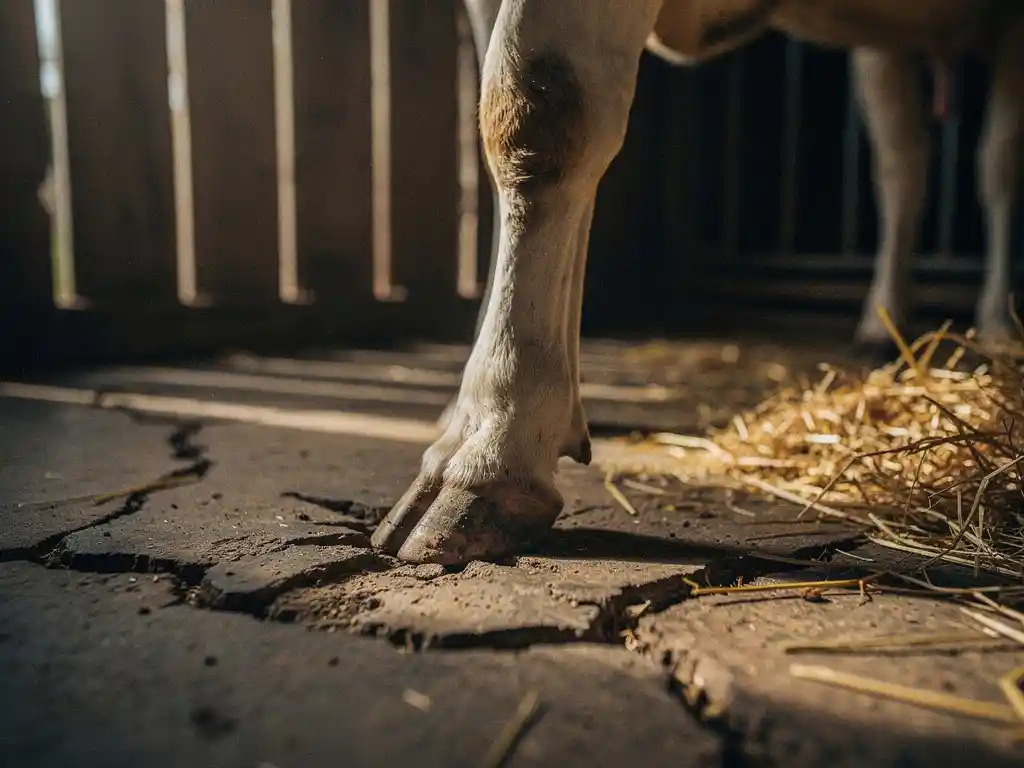
Injuries in animal housing facilities are most commonly caused by slippery surfaces, hard flooring, poor facility design, and stress-related behavioral issues. These factors affect animals across all types of housing, from dairy barns and beef feedlots to horse stables and multi-species livestock facilities. Understanding the root causes helps you make better decisions about facility design, flooring materials, and daily management practices. Below, we break down the most common injury types, why they happen, and what you can do about them.
What types of injuries are most common in animal housing facilities?
The most common injuries in animal housing facilities include slip-and-fall injuries, hoof damage, joint problems, skin abrasions, and stress-induced behavioral wounds. Slips and falls are particularly prevalent in cattle and horse facilities, while hoof and leg injuries often develop gradually from prolonged contact with hard or abrasive surfaces. These injuries affect animal welfare, reduce productivity, and increase veterinary costs.
In dairy operations, lameness is one of the most reported and economically significant health issues. Cows that develop hoof lesions, sole ulcers, or white line disease often do so because of repeated pressure on hard concrete floors. In equine facilities, horses are prone to joint strain and tendon stress when stabling conditions lack adequate cushioning. Smaller livestock like sheep and pigs face similar risks, particularly in overcrowded or poorly maintained housing.
Skin abrasions and pressure sores are also worth noting. These develop when animals spend extended time lying on rough, hard surfaces without adequate bedding or cushioning. In some cases, these wounds become infected and lead to more serious health complications. Recognizing the full range of possible injuries helps you prioritize which aspects of your facility design to address first.
Why do animals slip and fall in barns and stables?
Animals slip and fall in barns and stables primarily because of smooth, wet, or contaminated flooring surfaces. Concrete is widely used in animal housing because it is durable and easy to clean, but its surface becomes dangerously slick when wet with urine, water, or manure. Animals with heavy body weight and narrow hooves, like cattle and horses, are especially vulnerable to losing traction on these surfaces.
Flooring wear plays a significant role as well. New concrete has a rougher texture that provides some grip, but over time, traffic wears the surface smooth. Once that surface texture is gone, even a thin film of moisture is enough to cause an animal to lose its footing. This is a particular concern in high-traffic areas like barn alleys, milking parlors, and stable entries.
Facility layout also contributes to slip risk. Tight corners, steep ramps, and narrow passages force animals to shift their weight quickly and awkwardly, increasing the chance of a fall. Stress and fear can make animals move erratically, which compounds the problem. Proper drainage, regular surface maintenance, and thoughtful traffic flow design all help reduce slip incidents in animal housing environments.
How does hard flooring contribute to hoof and joint damage?
Hard flooring contributes to hoof and joint damage by placing continuous, unabsorbed pressure on an animal’s legs and feet. Unlike natural ground surfaces such as soil or grass, concrete and similar materials offer no give. Every step an animal takes on a hard floor sends impact directly into the hoof, pastern, fetlock, and joints above. Over time, this repeated stress causes inflammation, structural damage, and chronic pain.
In cattle, hard flooring is directly linked to lameness, which is one of the leading causes of early culling in dairy herds. Cows standing for extended periods on concrete develop sole bruising and hoof horn lesions. The digital cushion, a fatty pad inside the hoof that acts as a natural shock absorber, can deteriorate under sustained hard-surface pressure, leaving the internal structures of the hoof increasingly vulnerable.
Horses face similar challenges. Hard stall floors contribute to navicular syndrome, joint stiffness, and tendon fatigue, particularly when horses are stabled for long hours. Even well-bedded stalls can fall short if the bedding compresses over time and the hard floor beneath becomes the primary load-bearing surface.
The problem is not just about immediate injury. Cumulative wear from hard flooring builds up quietly over months and years. By the time visible lameness or behavioral changes appear, significant damage may already have occurred. This is why the choice of flooring material in stable design and livestock facility design is not just a comfort consideration but a long-term animal welfare decision.
What role does flooring play in animal stress and behavioral injuries?
Flooring directly influences animal stress levels by affecting how comfortable, secure, and stable an animal feels in its environment. When animals feel uncertain about their footing, they become anxious, reluctant to move, and more prone to sudden, reactive behavior. This heightened stress state increases the risk of behavioral injuries, including kicks, collisions, and self-inflicted wounds from repetitive movement against walls or gates.
In equine facility design, flooring choice has a measurable effect on horse behavior. Horses that feel insecure on slippery or hard stall floors may develop stable vices like weaving or box walking, which are repetitive stress behaviors. These not only indicate poor welfare but also cause physical wear on hooves and joints over time.
In cattle facilities, discomfort from hard or abrasive flooring reduces lying time. Cows that do not lie down enough experience elevated cortisol levels, reduced milk production, and impaired immune function. The connection between flooring and stress is well documented in veterinary and agricultural research, making it a practical consideration in any livestock facility design or veterinary facility design project.
Social dynamics also come into play. Animals low in the social hierarchy are often displaced from comfortable resting areas by dominant individuals. If the only alternative is a hard, bare surface, subordinate animals end up bearing the greatest physical and psychological burden of poor flooring conditions. Designing facilities with adequate resting space and appropriate floor surfaces throughout helps distribute that burden more evenly across the group.
How can rubber matting reduce injuries in animal housing facilities?
Rubber matting reduces injuries in animal housing facilities by improving traction, absorbing impact, and providing a more comfortable surface for animals to stand and lie on. Unlike concrete, rubber has natural grip and slight flexibility, which helps animals maintain stable footing and reduces the shock transmitted to hooves and joints with each step. This makes rubber matting a practical and effective solution for barns, stables, and other animal housing environments.
From a traction standpoint, rubber mats maintain grip even when wet, which directly addresses one of the main causes of slip-and-fall injuries. Textured rubber surfaces channel moisture away and give hooves something to grip, reducing the likelihood of sudden falls during feeding, milking, or general movement through the facility.
On the comfort side, rubber matting reduces the cumulative pressure that hard flooring places on hooves and joints. Animals that rest on rubber surfaces tend to lie down more willingly and for longer periods, which supports better recovery, digestion, and overall health. In dairy operations, increased lying time is associated with higher milk yields and lower rates of lameness, making rubber flooring a practical investment rather than just a welfare improvement.
Rubber mats are also easier on skin and soft tissue than bare concrete, reducing the risk of abrasions and pressure sores. They can be installed in stalls, alleys, milking parlors, and holding areas, giving you flexibility to address the specific high-risk zones in your facility. Mats that are non-porous and easy to clean also support better hygiene, which reduces the bacterial load that contributes to hoof infections.
At LRP Matting, we manufacture rubber mats specifically designed for agricultural and equine environments. Our mats are made from 100% recycled rubber, including options using our proprietary Fiber Reinforced Rubber Compound (FRC®), which gives them extra strength and durability for heavy-use areas. We also offer large-format mats that minimize seams, making installation simpler and keeping your facility cleaner. If you are looking for a practical flooring solution that supports animal welfare across the board, explore our livestock matting solutions to find the right fit for your facility.
Frequently Asked Questions
How do I know if my current flooring is already causing harm to my animals?
Watch for early warning signs like reluctance to move, uneven weight distribution, changes in gait, reduced lying time, or increased aggression during handling. In cattle, early-stage lameness often shows up as subtle shifts in posture or a slight limp before it becomes visibly severe. Regularly inspecting hooves for bruising, lesions, or abnormal wear patterns can also reveal whether your flooring is contributing to cumulative damage before it becomes a serious welfare or productivity issue.
What are the most high-risk areas in a barn or stable that I should prioritize when upgrading flooring?
Focus first on high-traffic transition zones like barn alleys, milking parlor entries, holding areas, and stable doorways, as these are where animals accelerate, decelerate, and change direction most frequently. Feeding stations and water points are also critical, since animals congregate there and wet conditions from spills create prime slip hazards. Addressing these hotspots first gives you the greatest immediate return on investment in both injury reduction and animal welfare improvement.
Can rubber matting replace bedding entirely, or should both be used together?
Rubber matting and bedding serve complementary but distinct purposes, and in most cases, using both together delivers the best results. Rubber mats provide structural cushioning, traction, and impact absorption, while bedding adds insulation, moisture absorption, and additional softness for lying comfort. In practice, facilities using rubber mats often find they need significantly less bedding to achieve the same comfort level, which can offset the initial cost of the mats over time.
How do I maintain rubber mats to make sure they stay effective and hygienic over time?
Rubber mats should be cleaned regularly by scraping off manure and organic material, followed by rinsing with water and, periodically, a disinfectant appropriate for agricultural use. Non-porous rubber surfaces resist bacterial absorption, but buildup in seams or edges can still harbor pathogens, so pay attention to mat edges and joints during cleaning. Periodically lifting and drying mats underneath also prevents moisture accumulation on the subfloor, which can lead to odors and surface degradation over time.
Are there specific rubber mat thicknesses or designs that work better for different types of animals?
Yes, the right mat specification depends on the animal’s body weight, hoof type, and how the space is used. Heavier animals like dairy cows and horses generally benefit from thicker mats in the range of 17mm to 25mm or more, which provide greater impact absorption for their weight. Smaller livestock like sheep or pigs can be adequately supported with thinner profiles, while high-traffic alley areas may benefit from interlocking or large-format mat designs that minimize seams and stay securely in place under constant movement.
What facility design changes can I make beyond flooring to further reduce injury risk?
Beyond flooring, improving drainage to prevent moisture buildup, widening alleys and passageways to reduce crowding, and eliminating sharp corners or abrupt level changes all meaningfully lower injury risk. Adequate lighting helps animals navigate confidently, while proper ventilation reduces stress and the respiratory conditions that can make animals more reactive and prone to erratic movement. Reviewing your animal flow patterns during feeding, milking, and movement routines can also reveal bottlenecks where injury risk is disproportionately high.
Is rubber matting a worthwhile investment financially, or is it mainly a welfare consideration?
Rubber matting delivers measurable financial returns alongside its welfare benefits, particularly in dairy and equine operations. In dairy herds, reductions in lameness rates directly translate to lower veterinary costs, fewer early cullings, and improved milk yields, with research consistently showing that lame cows produce significantly less milk. In equine facilities, reduced injury rates mean lower treatment costs and less downtime for performance or working horses, making quality rubber flooring a practical business decision that also happens to be the right thing to do for your animals.
Related Articles
- What is recycled rubber?
- What causes floor surface damage in high traffic facilities?
- What causes a floor surface to become slippery over time?
- What is the easiest floor to disinfect in an animal clinic?
- What is the best flooring for an outdoor athletic facility?
- What is the best way to protect a sports facility floor from heavy equipment?
- How does stall flooring affect a horse's overall well-being?
- How do you make a horse trailer safer for loading and unloading?
- How do you reduce noise in a sports facility through flooring choice?
- What floor protection is needed for indoor crane operations?