
Drainage plays a direct role in animal welfare by keeping housing surfaces dry, reducing the risk of bacterial infections, hoof problems, and physical discomfort caused by prolonged contact with wet ground. When moisture builds up on stable or barn floors, animals are forced to stand and lie in conditions that compromise their health and increase stress levels. Good drainage is not just a comfort feature — it is a practical requirement for responsible animal housing. This article walks through the most common questions around drainage and animal welfare, from the health risks of poor drainage to the flooring features that make the biggest difference.
How does poor drainage affect livestock health?
Poor drainage in animal housing creates persistently wet surfaces that become a breeding ground for bacteria and pathogens. When animals stand or rest on damp floors for extended periods, they are exposed to conditions that increase the likelihood of hoof rot, mastitis in dairy cattle, and skin infections. The longer the floor stays wet, the higher the risk of disease spreading through a herd or group of animals.
Beyond infection, wet floors soften hooves and skin over time, making animals more susceptible to injury and lameness. Lameness is one of the most common welfare problems in dairy and beef cattle, and flooring conditions are a well-recognized contributing factor. A floor that drains effectively removes moisture quickly, reducing the window in which bacteria can thrive and limiting the physical softening of hoof tissue. In facilities where drainage is poor, the cost shows up not just in animal health but also in veterinary bills and reduced productivity.
What is the connection between wet flooring and animal stress?
Wet flooring increases animal stress by reducing traction, forcing animals to move cautiously or avoid moving altogether. When a surface is slippery, animals experience anxiety around standing, walking, and lying down because each action carries a risk of slipping or falling. This kind of low-level, persistent stress affects feeding behavior, social interaction, and overall activity levels.
For dairy cows, reduced movement caused by slippery wet floors directly impacts milk production and reproductive performance. For horses, anxiety around footing can make them reluctant to move freely in their stall, which contributes to muscle stiffness and behavioral problems over time. Animals cannot communicate discomfort verbally, so the signs often show up indirectly through changes in behavior, posture, or output. Keeping floors dry and grippy removes one of the most common and preventable sources of stress in livestock and equine facility design.
How does rubber matting improve drainage in animal housing?
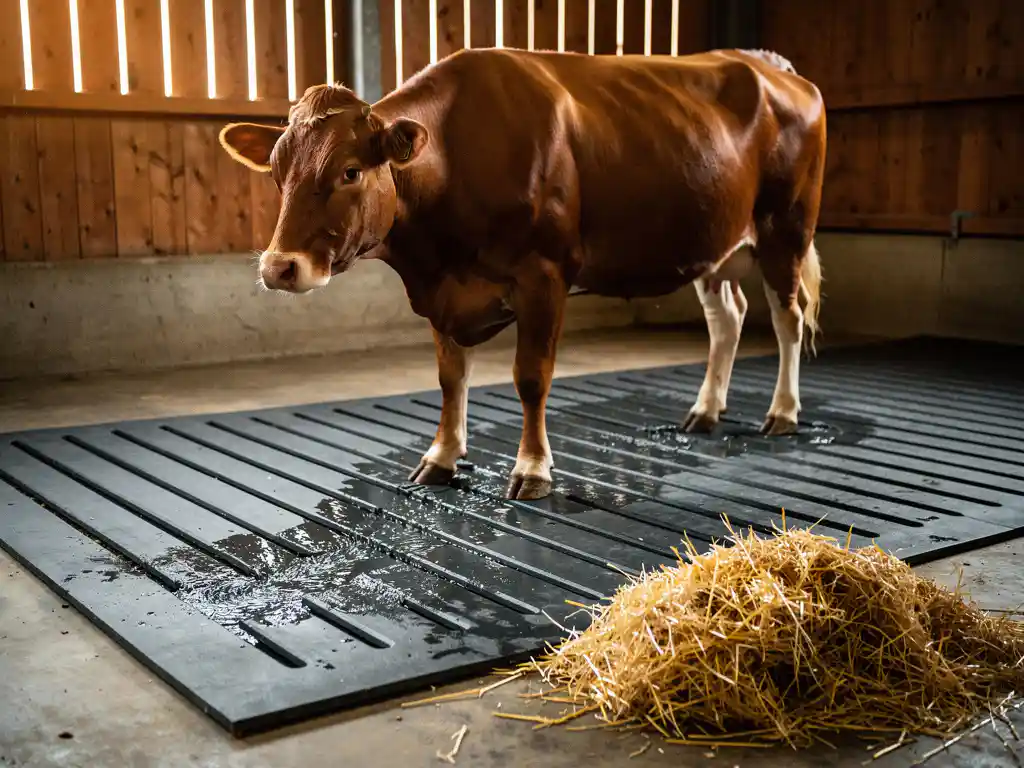
Rubber matting improves drainage in animal housing by providing a textured, non-porous surface that channels moisture away from the area where the animal stands or lies. Many rubber mats designed for agricultural use feature grooved or patterned surfaces that direct urine and water toward drainage channels rather than allowing it to pool underneath or on top of the mat. This keeps the contact surface drier and reduces the time animals spend on wet ground.
Unlike concrete, which can retain moisture in surface irregularities and become increasingly slippery when wet, rubber provides consistent grip even in damp conditions. The material itself does not absorb moisture, which means it does not harbor bacteria in the same way that organic bedding or degraded flooring materials can. Rubber mats also cushion the floor, which reduces pressure on joints and hooves — a benefit that compounds when animals are spending many hours a day on hard surfaces.
In stable design and livestock facility design, rubber matting is often used in combination with a sloped concrete sub-floor to maximize drainage performance. The mat provides comfort and grip at the surface level, while the slope underneath ensures liquid moves efficiently toward drains.
What flooring features matter most for drainage performance?
The flooring features that matter most for drainage performance are surface texture, mat thickness, sub-floor slope, and the presence of drainage channels. Each of these factors works together to move moisture away from animals quickly and consistently.
- Surface texture: Grooved, ribbed, or studded surfaces break up the film of liquid on the mat and channel it toward the edges or built-in drainage paths. A flat surface, even a rubber one, allows liquid to pool if there is no slope to encourage flow.
- Sub-floor slope: A slight slope in the underlying concrete — typically around 1 to 2 percent — allows gravity to do most of the drainage work. Without this, even well-designed mats cannot move liquid efficiently.
- Mat permeability or edge design: Some mats are designed to allow liquid to pass through the material itself, while others rely on edge gaps or surface channels. Both approaches can work well depending on the facility layout.
- Mat thickness and weight: Heavier, thicker mats tend to stay in place better, which prevents liquid from pooling in gaps or seams between sections. Fewer seams also mean fewer places where moisture can collect.
In veterinary facility design and equine facility design, the combination of a properly sloped floor, well-fitted mats, and accessible drainage channels is the standard approach for maintaining dry, hygienic surfaces.
Which animals benefit most from drainage-optimized matting?
Dairy cows, beef cattle, horses, and pigs benefit most from drainage-optimized matting because these animals spend the majority of their time on hard or semi-hard flooring in enclosed spaces. The risk of hoof and skin problems is highest in animals that have limited ability to move to drier ground on their own.
Dairy cows are particularly sensitive to flooring conditions because lameness directly affects their ability to reach feed and water, which in turn affects milk yield and reproductive success. Horses are another high-priority group — stall flooring that stays wet softens the hoof wall and creates conditions favorable to thrush, a bacterial infection of the frog. Pigs housed on wet concrete are prone to skin irritation and joint problems, especially in younger animals.
Poultry operations also benefit from improved drainage, though the requirements differ because birds interact with flooring differently than hoofed animals. In all cases, the underlying principle is the same: reducing the time an animal spends in contact with moisture reduces the risk of disease and discomfort.
How often should animal mats be cleaned to maintain drainage?
Animal mats should be cleaned daily in high-traffic areas such as feeding lanes, milking parlors, and stall floors. Daily removal of manure and soiled bedding prevents organic material from blocking drainage channels and keeps the mat surface free of bacteria. A more thorough wash-down with water and a mild detergent should happen at least once a week, or more frequently in facilities with high animal density.
Regular cleaning also extends the life of the mat. Organic buildup can degrade rubber over time if it is left to sit, and blocked drainage channels reduce the effectiveness of even well-designed flooring systems. In practice, the cleaning schedule should be tied to the facility’s existing mucking or sanitation routine so it becomes a consistent habit rather than an afterthought.
Rubber is a practical material for this kind of regular cleaning because it is non-porous and does not absorb moisture or odor the way organic materials do. A quick rinse removes most surface contamination, and the mat dries relatively quickly once the liquid has drained away. In veterinary and livestock facility design, this ease of cleaning is one of the reasons rubber matting is widely recommended over alternatives like foam or textile-based flooring.
At LRP Matting, we manufacture rubber mats specifically designed for agricultural and equine environments, with surface profiles and material properties that support both drainage and animal comfort. All our mats are made from genuine, non-porous rubber that cleans easily and holds up under daily use in demanding conditions. If you are looking for flooring that works as hard as your animals do, explore our livestock matting solutions to find the right fit for your facility.
Frequently Asked Questions
How do I know if my current drainage setup is inadequate for my animals?
The clearest signs of inadequate drainage are persistently wet or discolored floor surfaces, a strong ammonia smell that lingers after cleaning, and visible pooling of urine or water in stalls or pens. At the animal level, watch for increased incidence of lameness, hoof softening, skin irritation, or reluctance to lie down — these are behavioral and physical indicators that flooring conditions are affecting welfare. If your current cleaning routine is not keeping surfaces dry between sessions, it is worth reassessing both your drainage infrastructure and whether your matting system is suited to your animal density and facility layout.
Can rubber mats be used on top of existing concrete floors without major renovation?
Yes, rubber mats can be installed directly over existing concrete floors in most cases, making them one of the most practical retrofitting options for older facilities. The key requirement is that the underlying concrete should be reasonably level and structurally sound — significant cracks, uneven surfaces, or areas with standing water may need to be addressed first to prevent mat movement and liquid pooling beneath the mat. If your concrete lacks the recommended 1–2% slope for drainage, pairing your mats with strategic placement of drainage channels or floor squeegees can compensate without requiring a full floor replacement.
What is the difference between permeable and non-permeable rubber mats, and which is better for drainage?
Permeable rubber mats allow liquid to pass directly through the material via holes or open-cell structures, draining moisture away from the surface quickly and relying on the sub-floor slope to carry it to a drain. Non-permeable mats, by contrast, use surface grooves, ribs, or edge gaps to channel liquid away laterally rather than through the mat itself. Neither is universally superior — permeable mats tend to perform better in high-moisture environments like dairy parlors, while non-permeable grooved mats are often preferred in horse stalls where bedding is used on top, since loose material can clog perforations over time. The best choice depends on your specific animal type, bedding practices, and facility drainage layout.
How do I prevent rubber mats from shifting or creating gaps where moisture can collect?
The most effective way to prevent mat movement is to choose mats that are heavy and thick enough to resist displacement from animal activity — heavier mats naturally stay in place better under hoof traffic. Fitting mats snugly against walls and each other reduces the number of seams and gaps where liquid can accumulate, and some facilities use interlocking mat designs or edge trim pieces to create a more unified surface. In high-traffic areas like feeding lanes, periodic repositioning and inspection of mat alignment should be part of your regular maintenance routine to catch any shifting before it creates drainage or hygiene problems.
Are there any common mistakes to avoid when setting up drainage matting in a new facility?
One of the most common mistakes is installing rubber mats on a flat concrete floor without any sub-floor slope, which means liquid has nowhere to go and simply pools beneath or around the mats despite their surface design. Another frequent error is choosing mats based on price alone without considering surface profile or mat weight, which can result in flat, lightweight mats that slip, shift, and allow moisture to pool. Finally, many facility managers underestimate the importance of drain placement — even the best matting system will underperform if drains are not positioned at the lowest points of the floor and kept clear of blockages.
Does rubber matting help with drainage in outdoor or partially covered animal areas?
Rubber matting can be effective in outdoor and semi-covered areas such as sacrifice paddocks, outdoor feeding stations, and covered exercise yards, where ground conditions are often the worst in terms of mud and moisture accumulation. In these settings, mats help by creating a stable, elevated surface that keeps animals off saturated ground and reduces the risk of hoof problems associated with prolonged exposure to mud. It is important to choose mats with aggressive surface textures and sufficient thickness for outdoor use, and to ensure the ground beneath is compacted and graded to drain rainwater away from the matted area rather than allowing it to undercut the installation.
How long do rubber mats typically last in a livestock or equine facility, and what affects their lifespan?
High-quality rubber mats used in agricultural and equine environments typically last anywhere from 10 to 20 years, depending on animal type, usage intensity, and how consistently they are maintained. The biggest factors that shorten mat lifespan are chemical degradation from prolonged exposure to undiluted disinfectants or harsh cleaning agents, physical damage from sharp objects like pitchfork tines or metal-shod hooves, and organic buildup that is left to sit on the surface for extended periods. Following the manufacturer’s cleaning recommendations, using rubber-safe cleaning products, and inspecting mats regularly for tears or surface wear will significantly extend their functional life and maintain their drainage performance over time.
Related Articles
- Why does product lifespan matter for sustainability?
- What flooring improvements can increase workplace comfort?
- How do professional equine facilities improve horse welfare?
- Why is regular floor maintenance important for long term performance?
- How can flooring materials be reused or recycled?
- How do different floor materials affect slip resistance?
- How do you support a horse's joints during long periods of stabling?
- How do you protect a concrete floor in a cold storage facility?
- What are the hidden costs of poor horse stall flooring?
- What is the best way to protect a warehouse floor during construction?