
Regular floor maintenance is important for long-term performance because it prevents surface degradation, reduces safety hazards, and extends the usable life of your flooring investment. Without consistent care, even high-quality rubber mats can deteriorate faster than they should. The sections below walk through the most common questions about rubber flooring maintenance, from cleaning routines to knowing when replacement makes more sense than upkeep.
What happens to rubber flooring without regular maintenance?
Without regular maintenance, rubber flooring accumulates dirt, oils, and moisture that gradually break down the surface. Over time, this leads to reduced traction, surface cracking, and premature wear. In commercial or industrial settings, neglected flooring also becomes a slip-and-fall risk, which creates both safety and liability concerns for facility managers.
The damage often happens in stages. First, surface grime builds up and makes the mat harder to clean effectively. Then, embedded contaminants start to affect the rubber’s flexibility and grip. In high-traffic areas, this process accelerates significantly. What might take years under good maintenance practices can happen in months when flooring is ignored.
In industrial or agricultural environments, the stakes are even higher. Chemicals, animal waste, and heavy machinery all place extra stress on rubber flooring. Without regular cleaning and inspection, small problems like edge lifting or surface softening go unnoticed until they become bigger, more expensive issues.
How does regular maintenance extend the life of rubber mats?
Regular maintenance extends the life of rubber mats by removing the contaminants and stresses that cause deterioration. Cleaning prevents chemical buildup, inspection catches damage early, and proper care preserves the mat’s structural integrity. Together, these habits can significantly delay the need for replacement and keep the flooring performing at its best for longer.
Think of it this way: rubber is a durable material, but it is not indestructible. Oils from machinery, cleaning chemicals that are too harsh, and standing moisture all gradually affect the rubber compound. Routine maintenance interrupts that cycle before it takes hold.
Preventive maintenance also keeps the surface properties intact. Anti-slip textures, cushioning, and drainage channels all work as designed when the mat is clean and free of debris. Once those features are compromised, the mat is no longer doing its job, even if it still looks usable.
What is the correct way to clean rubber floor mats?
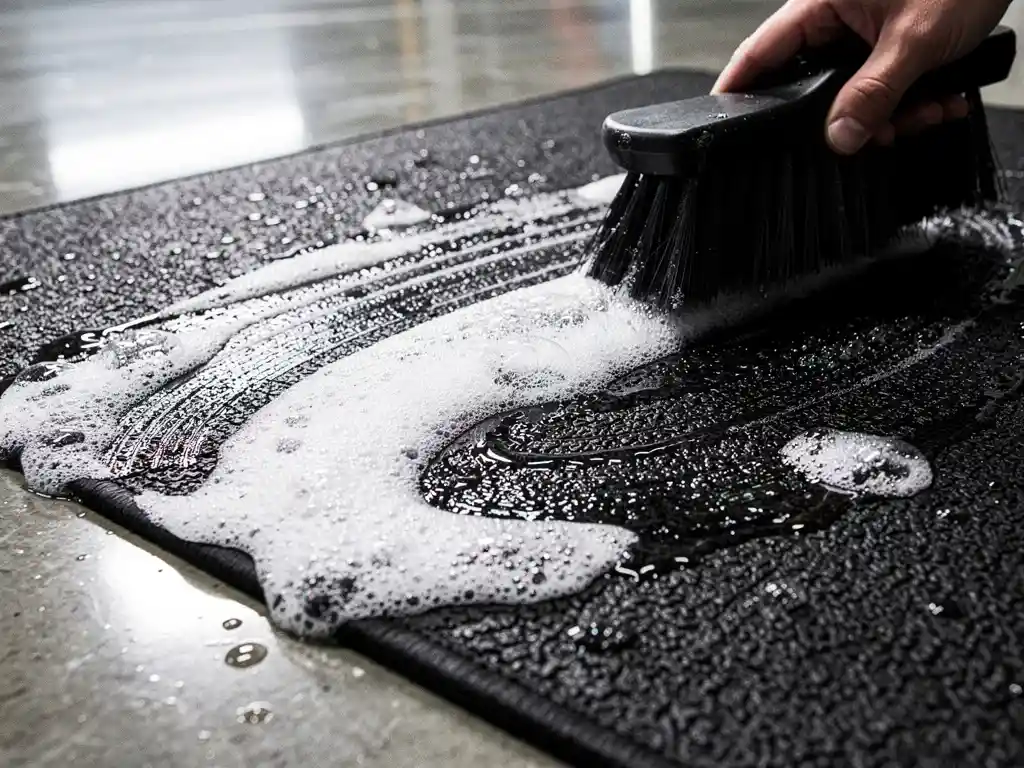
The correct way to clean rubber floor mats is to sweep or vacuum loose debris first, then scrub the surface with a mild detergent and warm water using a stiff-bristled brush or mop. Rinse thoroughly and allow the mat to dry before returning it to service. Avoid soaking the mat in standing water for extended periods.
For most settings, this process is straightforward. Remove the mat if possible, clean both sides, and let it air dry. In fixed installations, work in sections and avoid letting dirty water pool on the surface.
A few additional tips that make a practical difference:
- Rinse the mat fully after cleaning to remove all soap residue, which can make surfaces slippery.
- Use a squeegee or wet vacuum to speed up drying in high-traffic areas.
- For textured mats, a stiff brush helps lift grime from grooves and drainage channels.
- In agricultural settings, remove organic material before applying any cleaning solution.
How often should rubber mats be inspected for wear and damage?
Rubber mats in commercial or industrial settings should be inspected at least monthly, with a quick visual check each week in high-traffic areas. Agricultural mats, particularly those used by livestock, benefit from more frequent inspection because damage can directly affect animal welfare and safety.
During each inspection, look for these specific signs:
- Curling or lifting edges that create trip hazards
- Surface cracking or brittleness
- Thinning in high-wear zones
- Loss of texture or grip on anti-slip surfaces
- Visible compression that no longer rebounds
Catching these issues early is the core principle behind preventive maintenance. A small curl at the edge of a mat is easy to address. A mat that has been tripped over repeatedly, or that has developed a hard, cracked surface, is a much bigger problem. Scheduling inspections as part of your regular facility maintenance routine makes it easier to stay consistent.
What cleaning products are safe for rubber flooring?
Safe cleaning products for rubber flooring include mild dish soaps, pH-neutral detergents, and diluted all-purpose cleaners that do not contain solvents, bleach, or petroleum-based ingredients. Harsh chemicals can soften, swell, or discolor rubber over time, even if the damage is not immediately visible.
Products to avoid include:
- Bleach or chlorine-based cleaners
- Petroleum-based solvents or degreasers
- Strong acids or alkaline cleaners not rated for rubber
- Steam cleaning at very high temperatures for extended periods
When in doubt, test any new cleaning product on a small, inconspicuous area of the mat and wait 24 hours before applying it more broadly. This is especially relevant in industrial settings where specialized degreasers are common. Some industrial cleaning products are formulated to be rubber-safe, but it is worth confirming before using them across an entire floor system.
Does rubber matting maintenance differ by industry or application?
Yes, rubber matting maintenance does differ by industry and application. The core cleaning steps remain similar, but the frequency, products, and inspection focus points change depending on what the mat is exposed to. A gym mat faces sweat and foot traffic; a dairy barn mat faces moisture, animal waste, and heavy hooves. Each environment demands a tailored approach.
Commercial and gym environments
In commercial spaces and gyms, the priority is maintaining hygiene and surface grip. Mats should be cleaned daily in high-use areas and inspected for surface wear and edge stability. Disinfectant solutions that are rubber-safe can be added to the routine in fitness environments where bacteria and odor are concerns.
Industrial and manufacturing environments
Industrial settings introduce oils, chemicals, and heavy loads. Here, the focus is on chemical compatibility. Cleaning products must be checked for rubber safety, and mats should be inspected more frequently for compression loss and surface breakdown. Anti-fatigue mats in assembly lines, for example, lose their ergonomic benefit once the foam or rubber core is compressed beyond recovery.
Agricultural and livestock environments
In agricultural applications, organic matter and moisture are the main concerns. Mats should be cleaned regularly to prevent bacterial buildup, and the surface should be inspected for any cracks or rough patches that could injure animals. Drainage design matters here too. Mats with effective drainage channels are easier to maintain and stay cleaner between scheduled cleaning sessions.
When should rubber floor mats be replaced rather than maintained?
Rubber floor mats should be replaced when maintenance can no longer restore safe or functional performance. Specific signs include deep surface cracking, permanent compression that does not rebound, significant thinning in high-wear zones, or edges that curl and cannot be corrected. At that point, continued use becomes a safety risk rather than a cost-saving measure.
It is a practical decision that comes down to what the mat can still do versus what it is supposed to do. If an anti-slip mat has lost its texture, it is no longer anti-slip. If an anti-fatigue mat no longer cushions, it is no longer protecting workers from joint strain. Maintenance keeps functional mats performing well, but it cannot rebuild a mat that has reached the end of its service life.
A few useful questions to ask during inspection:
- Is the mat still providing the grip, cushioning, or drainage it was installed for?
- Does it present any tripping, slipping, or injury risk in its current condition?
- Has the cost of repeated repairs or deep cleaning exceeded the cost of replacement?
If the answer to any of these is yes, replacement is the right call. At LRP Matting, we make that transition straightforward. Our commercial matting solutions are built for durability from the start, made from 100% recycled rubber and, in many cases, reinforced with our proprietary FRC® compound for extra strength and a longer service life. When you do need to replace, investing in quality upfront means you will be having this conversation less often.
Frequently Asked Questions
Can I use a pressure washer to clean rubber floor mats?
Pressure washing can be used on rubber mats, but with caution. Keep the pressure setting moderate (below 1,500 PSI) and maintain a safe distance from the surface to avoid forcing water into seams or lifting bonded edges. For most commercial and agricultural mats, a stiff brush and hose rinse achieves the same result without the risk of accelerating edge separation or surface damage.
How do I prevent rubber mats from curling or lifting at the edges?
Edge curling is most often caused by improper installation, inadequate drying between cleanings, or a mat that has exceeded its service life. To prevent it, ensure mats are fully dry before being returned to service, use beveled edge ramps or interlocking borders where available, and store roll-out mats flat rather than folded. If curling persists after corrective measures, it is a strong indicator that the mat needs to be replaced.
What is the best way to remove stubborn stains or odors from rubber matting?
For stubborn stains, apply a paste of baking soda and water or a rubber-safe enzyme-based cleaner, let it sit for 10–15 minutes, then scrub with a stiff brush and rinse thoroughly. Odors, particularly in gym or agricultural settings, are best addressed with a rubber-safe disinfectant or a diluted white vinegar solution. Avoid masking odors with fragrance-based products, as residue can attract more grime over time.
How should rubber mats be stored when not in use?
Rubber mats should be stored clean, dry, and flat in a climate-controlled environment away from direct sunlight, extreme heat, and ozone-producing equipment like motors or generators. If space requires rolling the mats, roll them with the top surface facing outward and avoid tight coiling, which can cause permanent creasing. Improper storage is one of the most overlooked causes of premature rubber degradation.
Is there a maintenance schedule template I can follow for rubber flooring?
A practical baseline schedule includes daily debris removal in high-traffic areas, weekly scrubbing with a mild detergent, monthly full inspections for wear indicators like edge lifting, surface cracking, and grip loss, and an annual assessment of whether each mat still meets its functional purpose. Adjust the frequency based on your specific environment — industrial and agricultural settings typically require more frequent cleaning and inspection cycles than low-traffic commercial spaces.
Can rubber flooring be repaired, or does damage always mean full replacement?
Minor issues like small surface tears or slightly lifting edges can sometimes be addressed with rubber adhesive or edge trim solutions, buying additional service life from an otherwise functional mat. However, structural problems — such as deep cracking, permanent compression, or significant thinning — cannot be meaningfully repaired and indicate the mat has reached end of life. As a general rule, if a repair would need to be repeated within a few months, replacement is the more cost-effective and safer choice.
How do I know if a new rubber mat is higher quality and will require less maintenance long-term?
Look for mats made from 100% recycled rubber with a high density and consistent thickness, as these tend to resist compression and surface breakdown better than lower-grade alternatives. Proprietary compounds — such as reinforced rubber composites — are specifically engineered for extended durability in demanding environments. Asking the manufacturer about expected service life, chemical resistance ratings, and load-bearing capacity gives you a clearer picture of long-term maintenance demands before you commit to a purchase.
Related Articles
- What are the first signs a commercial floor needs maintenance?
- Why does product lifespan matter for sustainability?
- What are the biggest flooring maintenance mistakes?
- What makes a flooring material sustainable?
- How do weather conditions affect outdoor sports surfaces?
- How do you prevent seasonal floor hazards?
- What makes a floor safe?
- How do you level a horse stall floor before laying mats?
- How do you make a horse trailer safer for loading and unloading?
- How do you keep a large animal veterinary floor hygienic?