

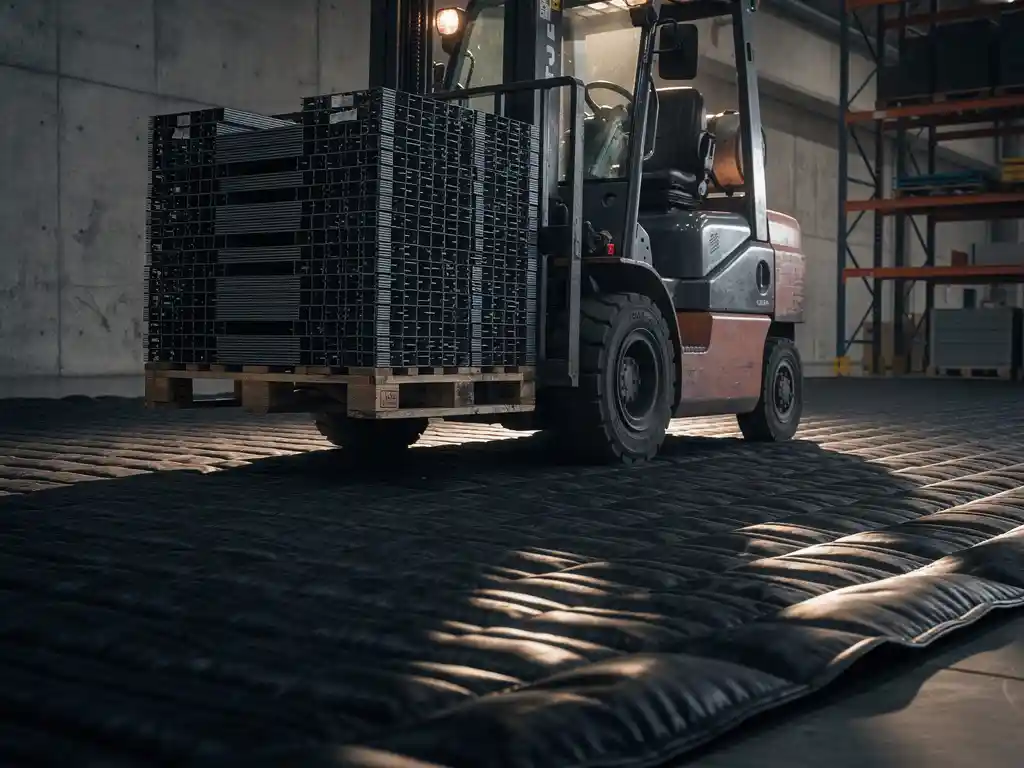
Heavy loads damage commercial floors by concentrating pressure on specific points, which causes cracking, indentation, surface wear, and structural weakening over time. The type and severity of damage depend on the flooring material, how the load is distributed, and how frequently heavy equipment or vehicles move across the surface. This article walks through the most common questions facility managers ask about floor performance under heavy loads.
What types of damage do heavy loads cause to commercial floors?
Heavy loads cause several distinct types of floor damage: surface cracking, point indentation, delamination, joint failure, and progressive structural weakening. The damage often starts small and invisible, then accelerates as the compromised area absorbs repeated stress from daily operations.
Concrete floors, which are common in industrial and commercial settings, tend to crack when load pressure exceeds the tensile strength of the slab. These cracks allow moisture to enter, which then expands and contracts with temperature changes, widening the damage. Vinyl and epoxy coatings are prone to chipping and delamination when heavy equipment rolls over them repeatedly, especially at seams and edges.
Point loads are particularly destructive. A forklift with small, hard wheels concentrates enormous pressure on a tiny contact area, far more than a person or even a heavy pallet spread across a larger surface. This is why floor wear often appears in predictable patterns, along travel routes and at stopping points.
Which commercial flooring materials hold up best under heavy loads?
Concrete is the most widely used material for heavy-load commercial environments because of its compressive strength and rigidity. Properly reinforced concrete handles significant weight without deforming. However, surface coatings and finishes on concrete are more vulnerable than the slab itself, and unprotected concrete still wears, dusts, and cracks under sustained heavy use.
Epoxy-coated concrete improves surface durability and resistance to abrasion, but it can delaminate under impact or point load stress. Industrial rubber flooring adds a protective, flexible layer that absorbs shock and distributes pressure more evenly, which reduces the stress transferred to the underlying floor. Rubber does not crack, peel, or crumble, making it a practical choice for protecting the floor beneath it.
For most commercial and industrial spaces, the flooring system matters as much as the base material. A strong concrete slab combined with a protective surface layer performs significantly better than either component alone.
How does load distribution affect floor wear over time?
Load distribution directly controls how quickly and where floor wear occurs. A load spread across a large surface area creates lower pressure per square inch, reducing the rate of wear. A concentrated load, like a narrow wheel or a machine foot, delivers the same total weight to a much smaller area, dramatically increasing local stress and accelerating damage.
Over time, repeated concentrated loads create wear patterns that compound. A small surface crack from a point load becomes a channel for moisture, which weakens the surrounding material, which then cracks more easily under the next load cycle. This is why high-traffic routes and equipment parking spots show disproportionate wear compared to lower-traffic areas.
Spreading loads more evenly, through wider equipment wheels, floor plates, or cushioning mats, slows this cycle considerably. Even a modest improvement in load distribution can extend floor life noticeably in high-use environments.
What are the safety risks of floors weakened by heavy loads?
Floors weakened by heavy loads create several direct safety risks: trip and fall hazards from cracks and uneven surfaces, increased slip risk from surface deterioration, and in severe cases, structural failure that can damage equipment or injure workers. These risks grow gradually, which makes them easy to underestimate until an incident occurs.
Cracked or pitted concrete creates uneven surfaces that catch wheels, feet, and pallet jacks. Workers navigating these areas on foot are at higher risk of tripping, while forklifts and carts can tip or lose control when a wheel drops into a gap. Deteriorated surface coatings also reduce traction, increasing slip risk, particularly when floors are wet or contaminated with oil or dust.
Beyond immediate physical hazards, damaged floors can also compromise drainage systems and containment features, which matters in environments where spill control is a regulatory requirement. Regular inspection and early intervention are far more cost-effective than responding after an injury or a compliance issue.
How do rubber mats protect commercial floors from heavy equipment?
Rubber mats protect commercial floors by absorbing impact, distributing load pressure across a wider surface area, and acting as a physical barrier between heavy equipment and the floor beneath. This reduces the stress transferred to the base floor and slows the wear cycle significantly.
The flexibility of rubber is what makes it effective. Unlike rigid materials, rubber compresses slightly under load and then recovers, which dissipates energy rather than transferring it directly into the concrete slab. This is particularly useful under stationary heavy equipment, in high-traffic travel lanes, and at loading and unloading points where impact stress is highest.
Rubber mats also protect against surface contamination from oils, chemicals, and moisture, which can degrade concrete and coatings over time. Because rubber is non-porous, it does not absorb liquids, making it easy to clean and maintaining a safer, more hygienic surface in the process. For environments with both heavy equipment and foot traffic, rubber matting addresses floor protection and worker comfort at the same time.
When should you replace commercial flooring damaged by heavy loads?
You should replace or repair commercial flooring when damage creates a safety hazard, when the structural integrity of the slab is compromised, or when surface deterioration can no longer be addressed through maintenance or protective measures. Cosmetic wear alone is not a trigger, but functional failure is.
Practical signs that replacement or significant repair is needed include cracks wider than a few millimeters that continue to grow, areas where the floor surface has become uneven enough to affect equipment stability or foot traffic safety, delaminated coatings that cannot be re-bonded, and sections where moisture infiltration has caused subsurface damage.
Before replacing flooring entirely, it is worth assessing whether protective solutions can extend the remaining life of the existing floor. In many cases, adding industrial rubber matting over a worn but structurally sound concrete floor delays the need for full replacement while improving safety and surface performance in the short term. When the base slab itself is compromised, however, surface-level fixes are not enough, and full remediation is the right call.
At LRP Matting, we manufacture heavy-duty rubber mats designed specifically for commercial and industrial environments where floor protection and surface performance matter. Our mats are made from 100% recycled rubber, including fiber-reinforced rubber compound (FRC®) for added strength and durability, and are built to handle the demands of daily heavy equipment use. If you are looking for a practical way to protect your floors and improve safety, explore our industrial matting solutions to find the right fit for your facility.
Frequently Asked Questions
How do I know if my commercial floor has already suffered structural damage from heavy loads?
Look beyond visible surface cracks — structural damage often shows up as floor deflection (a slight bounce or give underfoot), cracks that run through the full depth of the slab rather than just the surface, or sections that have visibly sunk or shifted. If you notice equipment vibrating more than usual during travel, or if cracks are reappearing shortly after being patched, those are strong indicators that the damage goes deeper than the surface. A structural assessment by a flooring or concrete specialist is the most reliable way to confirm the extent of the damage before deciding on a repair or replacement strategy.
What is the best way to get started with protecting a floor that is already showing early signs of wear?
The most practical first step is to map your wear patterns — identify the specific travel routes, equipment parking spots, and loading zones where damage is concentrated. These high-stress areas are where protective measures will have the greatest impact. Adding industrial rubber matting to these targeted zones is a cost-effective, immediate solution that stops further wear without requiring downtime for floor repairs. Addressing early-stage damage proactively is significantly cheaper than waiting until full resurfacing or slab repair becomes necessary.
Can rubber mats be used on floors that are already cracked or damaged, or do the cracks need to be repaired first?
Rubber mats can be placed over floors with minor surface cracks and cosmetic wear, and in many cases they help prevent those cracks from worsening by reducing the ongoing stress applied to the area. However, if cracks are wide, deep, or actively growing, it is worth filling and stabilizing them before laying matting — not because the mats require a perfect surface, but because sealing cracks prevents moisture infiltration that can cause subsurface damage over time. For structurally compromised slabs, matting is not a substitute for repair, but it can serve as a protective layer once the underlying issue has been addressed.
How do I choose the right rubber mat thickness for my specific equipment and load requirements?
Thicker mats generally provide greater shock absorption and load distribution, which is important for environments with heavy stationary equipment, forklifts, or frequent impact loading. As a general guideline, lighter foot traffic and small wheeled carts can be managed with thinner mats, while heavy forklifts, industrial machinery, and high-frequency vehicle traffic benefit from thicker, denser options. It is also worth considering the mat’s durometer (hardness rating) — a mat that is too soft may compress excessively under point loads rather than distributing them effectively. Consulting with a matting manufacturer about your specific equipment weights and traffic patterns will help you match the right product to your facility’s needs.
What common mistakes do facility managers make when trying to protect floors from heavy load damage?
One of the most common mistakes is waiting too long to act — by the time damage is clearly visible, the wear cycle is already well advanced and repair costs are significantly higher. Another frequent error is using general-purpose mats in heavy industrial settings; mats not rated for the actual loads in use can compress, shift, or degrade quickly, providing little real protection. Facility managers also sometimes focus protection efforts only on stationary equipment spots while overlooking high-traffic travel lanes, which often accumulate just as much cumulative wear. Finally, neglecting regular floor inspections means small, fixable issues go undetected until they become major structural or safety problems.
Do rubber mats require special maintenance in industrial environments with oil, chemicals, or heavy debris?
Rubber mats are relatively low-maintenance compared to other flooring solutions — because rubber is non-porous, most oils, chemicals, and liquids sit on the surface rather than soaking in, making them easy to clean with standard industrial floor cleaning equipment. For environments with heavy chemical exposure, it is important to confirm that the mat compound is compatible with the specific substances present, as some aggressive chemicals can degrade certain rubber formulations over time. Routine inspection for mat displacement, edge curl, or surface wear ensures the mats continue to perform as intended and do not themselves become a trip hazard.
Is it more cost-effective to invest in floor protection upfront or to repair damage as it occurs?
Upfront floor protection is almost always more cost-effective in heavy-use commercial and industrial environments. Reactive repairs — crack filling, coating reapplication, or slab resurfacing — are significantly more expensive per square foot than preventive measures, and they typically require operational downtime that compounds the cost. More importantly, repeated repair cycles do not address the root cause of wear, so damage tends to recur faster in already-compromised areas. Investing in proper load distribution and surface protection from the outset, or as soon as early wear is detected, reduces both long-term maintenance costs and the risk of safety incidents that carry their own financial and liability consequences.
Related Articles
- What makes warehouse floors deteriorate faster?
- How do sports facilities prevent slips?
- What should be included in a commercial floor inspection?
- What makes a veterinary facility safer?
- How can you reduce fall risk in busy facilities?
- How do you prevent cross-contamination through flooring in an animal clinic?
- What do you put on a horse trailer ramp to prevent slipping?
- How do you make a horse feel more comfortable during long trailer rides?
- How do you know if your factory floor is causing worker fatigue?
- How do you choose the right rubber flooring for an indoor sports complex?