

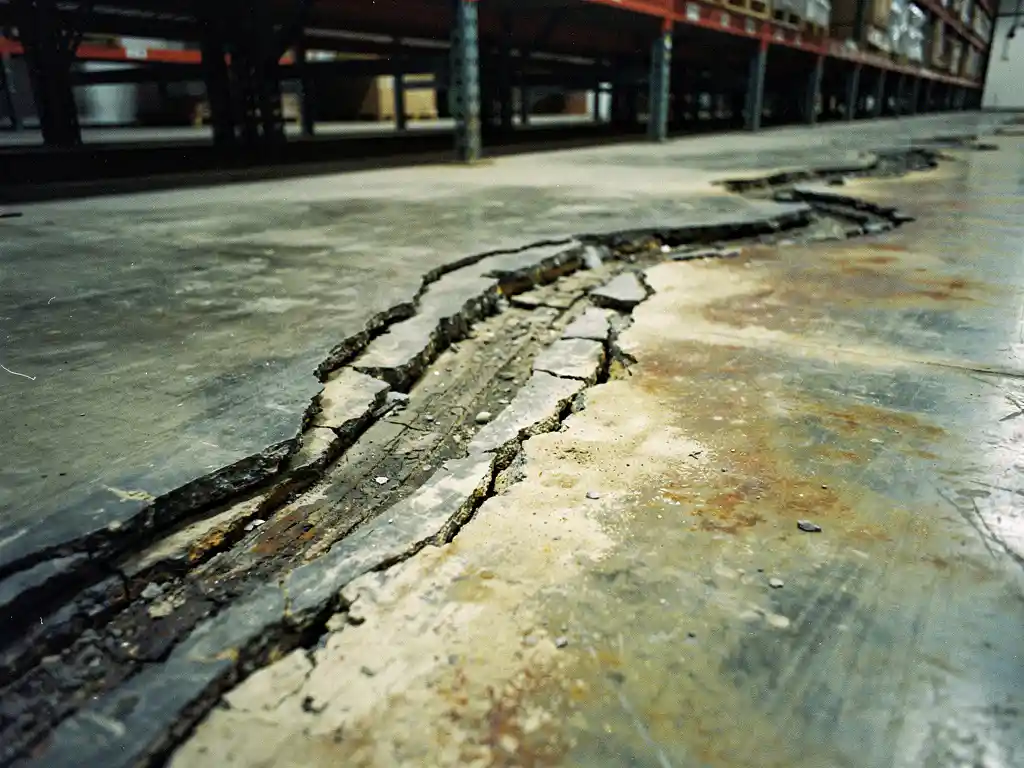
Warehouse floors deteriorate faster when they face a combination of heavy equipment traffic, chemical exposure, moisture infiltration, and inadequate floor protection. These factors work together over time, breaking down concrete and other flooring materials from the surface down. Understanding which causes apply to your facility is the first step toward slowing the damage and reducing long-term maintenance costs.
What are the most common causes of warehouse floor damage?
The most common causes of warehouse floor damage are heavy vehicle and equipment traffic, chemical spills, moisture penetration, point-load pressure from racking systems, and temperature fluctuations. In most warehouses, several of these factors are present at the same time, which accelerates wear significantly compared to any single cause acting alone.
Concrete is a durable material, but it has real limits. Repeated stress from forklifts, pallet jacks, and heavy loads creates microfractures that grow over time. Chemical spills eat into the surface and weaken the binder that holds concrete together. Moisture seeps into cracks and expands during temperature changes, widening those cracks further. And racking systems concentrate enormous weight onto very small contact points, which can cause localized cracking or surface depression.
Effective facility maintenance starts with identifying which of these factors are most active in your specific environment. A warehouse handling corrosive materials faces a different set of priorities than one focused on high-volume pallet movement.
How does heavy equipment traffic damage concrete floors?
Heavy equipment damages concrete floors through repeated mechanical stress that causes surface abrasion, microcracking, and structural fatigue. Forklifts and other industrial vehicles exert significant dynamic loads with every pass, especially when turning or braking. Over time, this breaks down the top layer of concrete and allows damage to penetrate deeper into the slab.
The type of wheels on equipment also matters. Hard polyurethane wheels concentrate pressure into a narrow contact patch, which is much more damaging than pneumatic tires that distribute weight across a broader area. In high-traffic lanes, you can often see visible wear patterns where the surface has been ground down or pitted by repeated use.
Poor floor joints and uneven surfaces make this worse. When equipment wheels drop into a joint or crack, the impact force spikes sharply. That sudden loading accelerates joint deterioration and can cause edge spalling, where chunks of concrete break away from the edges of a crack or joint.
Why do chemical spills accelerate warehouse floor wear?
Chemical spills accelerate warehouse floor wear because many industrial fluids are mildly to severely acidic or alkaline, and concrete is vulnerable to both. When chemicals contact the floor surface, they react with the cement paste that binds the aggregate together, softening and dissolving it. This leaves the surface porous, rough, and increasingly fragile.
Even common warehouse substances cause damage. Battery acid from electric forklifts is particularly aggressive. Hydraulic fluid and oil do not chemically attack concrete directly, but they penetrate the surface and make it harder for any protective coating to bond later. Cleaning agents used to remove spills can also be corrosive if they are too alkaline or acidic for unprotected concrete.
The damage from chemical exposure is often invisible at first. The surface may look intact while the cement paste underneath has already been weakened. When mechanical traffic then passes over that weakened area, deterioration accelerates rapidly. This is why spill response speed and floor protection in chemical-exposed zones are both important parts of any preventive maintenance plan.
What role does moisture play in industrial floor deterioration?
Moisture plays a significant role in industrial floor deterioration by infiltrating cracks and pores in concrete, then expanding and contracting as temperatures change. This freeze-thaw cycle widens existing cracks and creates new ones. In areas without temperature extremes, moisture still causes problems by promoting corrosion of steel reinforcement inside the slab and by softening the subbase beneath the concrete.
Loading docks and facility entrances are especially vulnerable because they experience both external weather exposure and heavy internal traffic. Water tracked in by vehicles or entering through open dock doors keeps these zones consistently damp, which weakens the surface over time.
High humidity in refrigerated warehouses or food processing areas creates a different but related problem. Condensation forms on cold floors, keeping them perpetually wet. Without proper drainage and surface protection, this steady moisture exposure degrades both the floor surface and any adhesives or coatings applied to it.
How can rubber matting slow down warehouse floor deterioration?
Rubber matting slows warehouse floor deterioration by acting as a protective barrier between the floor surface and the forces that damage it. Mats absorb impact from foot traffic and equipment, reduce surface abrasion, and prevent direct contact between spills and the concrete below. In high-traffic zones, matting can significantly extend the life of the underlying floor.
For areas where chemical spills are a regular occurrence, rubber mats provide a non-porous surface that resists absorption and is easy to clean. Because rubber does not react with most industrial chemicals, it holds up where unprotected concrete would not. Mats also reduce the amount of debris and grit that gets ground into the floor surface by foot and wheel traffic.
Rubber matting is not a replacement for floor repairs or resurfacing, but it is a practical and cost-effective layer of protection that reduces how quickly damage accumulates. In zones where the floor is already showing early wear, matting can buy time while a longer-term floor maintenance strategy is put in place.
Which warehouse areas deteriorate the fastest?
The areas that deteriorate fastest in a warehouse are loading docks, main traffic aisles, forklift turning zones, and areas beneath heavy static loads like racking feet. These locations combine high mechanical stress, frequent moisture exposure, or concentrated point loads, which makes them far more vulnerable than low-traffic storage zones.
- Loading docks: Exposed to weather, heavy vehicle impact, and constant traffic from pallet jacks and forklifts
- Main traffic aisles: Subject to continuous wheel traffic and the abrasive effect of debris carried by vehicle tires
- Turning and braking zones: Forklift turns and stops generate lateral forces that grind and shear the surface
- Racking base areas: Static point loads from racking legs concentrate weight on very small floor areas
- Wash-down and spill zones: Frequent moisture contact and chemical exposure weaken the surface over time
Prioritizing floor protection and maintenance in these specific zones is one of the most effective approaches to facility management. Addressing the highest-risk areas first gives you the best return on your maintenance investment.
When should a warehouse consider replacing its floor protection?
A warehouse should consider replacing its floor protection when existing matting or coatings show visible wear, loss of grip, surface cracking, or when they no longer lay flat and create trip hazards. Beyond visible signs, it is worth reviewing floor protection whenever operational conditions change, such as introducing heavier equipment, increasing traffic volume, or adding chemical handling processes.
From a preventive maintenance standpoint, waiting until floor protection has completely failed means the underlying concrete has likely already taken damage. A more practical approach is to inspect high-traffic zones regularly and replace protection before it reaches the point of failure.
For the concrete floor itself, signs that protection is overdue include visible surface pitting, joint deterioration, spalling edges, and areas where the floor has become uneven. At that stage, surface repairs or resurfacing may be needed before new protection can be applied effectively.
At LRP Matting, we offer durable rubber matting solutions built for exactly the kind of heavy-duty environments described here. Our mats are made from 100% recycled rubber, including fiber-reinforced rubber compound (FRC®) options that deliver extra strength and longevity in demanding warehouse conditions. If you are looking for floor protection that holds up under real industrial use, explore our industrial matting solutions to find the right fit for your facility.
Frequently Asked Questions
How often should warehouse floors be inspected for early signs of damage?
High-traffic zones like loading docks, main aisles, and forklift turning areas should be inspected at least monthly, while lower-risk storage areas can be checked quarterly. During inspections, look for surface pitting, joint widening, edge spalling, discoloration from chemical exposure, and any areas where matting or coatings have shifted or worn thin. Catching damage early is significantly cheaper than addressing it after deterioration has penetrated deep into the slab.
What is the most cost-effective first step to protect a warehouse floor that is already showing early wear?
The most cost-effective first step is to deploy rubber matting in your highest-risk zones — loading docks, main traffic aisles, and forklift turning points — before investing in full resurfacing or coating applications. Matting immediately reduces ongoing mechanical stress and chemical contact, slowing further damage while you plan a longer-term repair strategy. This approach protects your maintenance budget by buying time and preventing early wear from escalating into structural damage that requires expensive slab repair.
Can warehouse floor coatings and rubber matting be used together, or do you have to choose one?
They can absolutely be used together and often work best as a layered system. A floor coating like epoxy or polyurethane provides a sealed, chemical-resistant base layer that protects the concrete itself, while rubber matting placed on top adds impact absorption, anti-slip properties, and an additional barrier against heavy traffic and spills. Just ensure the coating is fully cured and properly bonded before laying mats, as trapped moisture or oils beneath matting on an uncured surface can compromise adhesion.
Does the type of forklift — electric vs. propane — affect how quickly floors deteriorate?
Yes, the type of forklift matters in two ways. Electric forklifts are generally lighter and produce no exhaust, but their battery acid is one of the most aggressive substances warehouse floors encounter, and even minor leaks cause rapid chemical deterioration. Propane and diesel forklifts tend to be heavier, which increases mechanical stress, and their dripping hydraulic fluid can contaminate the surface and prevent protective coatings from bonding properly. Knowing which equipment operates in each zone helps you prioritize the right type of floor protection.
How do you prevent moisture damage at loading docks specifically, since they are exposed to outdoor conditions?
Effective loading dock moisture management combines several measures: installing quality dock seals or shelters to minimize weather infiltration, ensuring the dock floor slopes slightly toward drainage channels to prevent water pooling, and using rubber matting rated for wet and outdoor-adjacent environments. Applying a penetrating concrete sealer to exposed dock areas also significantly reduces how much water the slab absorbs. Consistent cleaning to remove road salt, grit, and debris tracked in by vehicles is equally important, as these materials trap moisture against the surface and accelerate wear.
Are there specific rubber mat properties to look for when protecting floors under heavy racking systems?
For static load applications under racking feet, look for high-density rubber mats with strong compression resistance — mats that deform or compress permanently under sustained point loads will not provide consistent protection. Fiber-reinforced rubber compounds (like FRC®) are particularly well suited here because the internal fiber structure distributes concentrated loads more evenly across the floor surface, reducing the risk of localized cracking or surface depression beneath racking legs. Always verify the mat’s load rating against the actual weight your racking system will impose.
What are the most common mistakes warehouse managers make when trying to manage floor deterioration?
The most common mistakes are reacting to damage instead of preventing it, underestimating how quickly multiple damage factors compound one another, and applying floor protection to an already-compromised surface without repairing it first. Placing matting or coatings over spalled, pitted, or chemically weakened concrete traps the damage underneath and reduces how well the protection performs or bonds. A successful floor maintenance strategy starts with an honest condition assessment, prioritizes the highest-risk zones, and treats floor protection as an ongoing operational investment rather than a one-time fix.
Related Articles
- What shortens the lifespan of commercial flooring?
- How do you extend the lifespan of facility floors?
- How can flooring materials be reused or recycled?
- How do you support a horse's joints during long periods of stabling?
- How do you protect a concrete floor in a cold storage facility?
- What flooring works best in a high-moisture veterinary environment?
- What is the best flooring for a horse wash rack?
- What is the most comfortable floor surface for a horse to stand on?
- How do you keep a sports facility floor safe in wet conditions?
- What is the fastest way to muck out a horse stall?