
Modern animal facilities improve safety by combining smart facility design with appropriate flooring, proper drainage, and thoughtful layout planning. The right flooring choice alone can significantly reduce the risk of slips, joint injuries, and stress-related health issues in livestock and horses. Key upgrades include rubber matting, non-slip surfaces, adequate lighting, and well-designed handling areas. Below, we break down the most common questions facility owners and managers have when looking to improve animal welfare and operational safety.
What flooring materials are used in modern animal facilities?
Modern animal facilities use a range of flooring materials depending on the species, activity level, and hygiene requirements of the space. The most common options are concrete, rubber matting, compacted dirt or clay, slatted flooring, and composite materials. Each has its own strengths, and many facilities combine two or more to get the best results in different zones.
Concrete is still widely used because it is durable, easy to clean, and cost-effective to install. The downside is that bare concrete is hard on joints, provides poor traction when wet, and offers no insulation against cold. This makes it uncomfortable for animals that spend long periods standing or lying down.
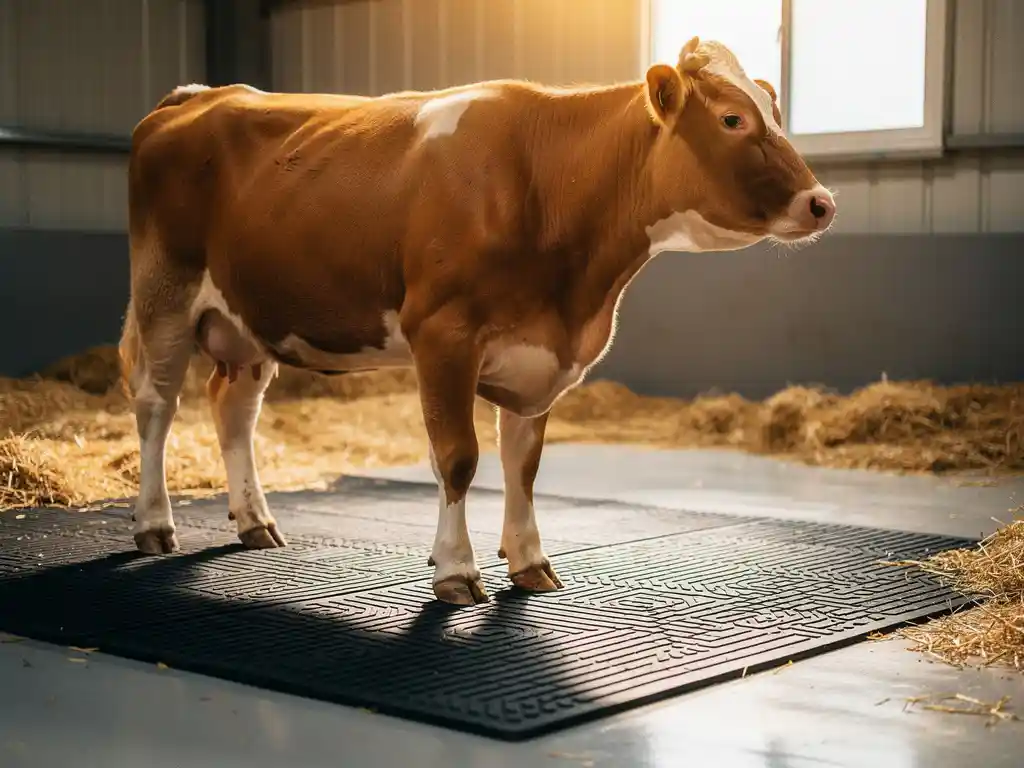
Rubber matting has become a popular choice as a top layer over concrete, particularly in stalls, stables, milking parlors, and holding areas. It absorbs impact, provides traction, and adds a layer of warmth that concrete simply cannot offer. Slatted flooring is common in pig and cattle housing because it allows waste to fall through, reducing direct contact with manure. Compacted dirt or clay is still used in some equine and beef cattle settings where a more natural surface is preferred.
How does rubber matting reduce injuries in animal housing?
Rubber matting reduces injuries in animal housing by cushioning the impact on joints and hooves, improving traction on slippery surfaces, and reducing the physical stress that comes from standing on hard flooring for extended periods. These three factors directly address the most common causes of musculoskeletal injuries in livestock and horses.
Slipping is one of the leading causes of injury in cattle and horse facilities. When animals lose their footing, they can suffer muscle tears, ligament damage, or fractures. A rubber surface with a textured or grooved finish gives hooves something to grip, dramatically lowering the chance of a fall.
Long-term joint health is another area where rubber matting makes a real difference. Animals that stand on hard concrete for hours each day are more prone to developing hoof problems, leg soreness, and joint inflammation. A rubber layer absorbs some of that impact, reducing the cumulative strain on legs and hooves over time. For dairy cows, this often translates to longer productive lifespans and better overall condition scores.
What are the key safety features to look for in livestock mats?
The most important safety features in livestock mats are surface texture for traction, adequate thickness for cushioning, resistance to moisture and bacteria, and stability under heavy weight. A mat that checks all four boxes will perform well across most livestock housing applications.
- Surface texture: Look for mats with grooved, ribbed, or raised patterns on the top surface. These channels also help direct liquid away from the standing area, keeping the surface drier.
- Thickness: Thicker mats offer more cushioning for heavy animals. For dairy cows and horses, a mat of at least 17 mm is generally recommended. Thinner mats may compress too quickly under repeated use.
- Moisture resistance: Rubber is naturally non-porous, which means it does not absorb urine, water, or other liquids. This makes it far more hygienic than porous materials and easier to keep clean.
- Weight stability: Mats should lie flat without curling at the edges or shifting under the animal’s weight. Heavier, denser mats tend to stay in place better without needing adhesives or fasteners.
- Material quality: High-quality rubber, particularly fiber-reinforced rubber compound, holds its shape and surface texture far longer than lower-grade alternatives.
How do animal facilities maintain hygiene alongside safety?
Animal facilities maintain hygiene alongside safety by choosing flooring and matting materials that are easy to clean, resistant to moisture, and designed to minimize waste buildup. The goal is to create surfaces that support animal health without creating conditions where bacteria or pathogens can thrive.
Rubber mats support hygiene because they are non-porous. Unlike wood shavings or compacted dirt, rubber does not absorb urine or harbor moisture in the material itself. A quick rinse with mild detergent and water is usually enough to keep them clean. This reduces the time and labor required for daily maintenance, which is a practical advantage in busy facilities.
Drainage is equally important. Even the best mat will become a hygiene problem if liquid cannot escape the area. Many facilities use mats with channeled undersides or install them over sloped concrete to encourage runoff. Proper drainage reduces standing moisture, which is one of the main contributors to hoof disease in cattle and horses.
Bedding management also plays a role. In stalls where bedding is used on top of rubber mats, regular removal of soiled material keeps ammonia levels down and reduces the bacterial load on the mat surface. Rubber mats used under bedding typically need less frequent deep cleaning than bare concrete because they do not absorb contaminants.
Which animals benefit most from rubber matting in facilities?
Dairy cows, beef cattle, horses, and pigs benefit most from rubber matting in animal facilities. These species spend significant time standing or lying on hard surfaces, making cushioning and traction especially relevant to their health and welfare.
Dairy cows in particular show measurable improvements in comfort, lying time, and milk production when rubber matting is installed in stalls and milking parlors. Cows on comfortable surfaces are more willing to lie down, which supports blood flow to the udder and reduces leg fatigue. Better comfort generally means healthier animals and more consistent production.
Horses benefit from rubber matting in stalls, wash bays, grooming areas, and trailer flooring. Hard concrete in these spaces can cause joint soreness and increase the risk of slipping, especially when wet. Rubber provides a safer, warmer surface that reduces the physical toll of standing during grooming or loading.
Pigs and sheep can also benefit, particularly in farrowing areas, milking pens, or anywhere animals need to move confidently on potentially wet surfaces. Even in poultry facilities, rubber mats are sometimes used in specific zones to reduce injury during handling or transport.
What’s the difference between standard and custom-sized animal mats?
Standard-sized animal mats come in fixed dimensions that suit common stall sizes and general-purpose applications, while custom-sized mats are cut or manufactured to fit a specific space exactly. The main difference is fit, which affects both the appearance of the installation and how well the mats perform over time.
Standard mats are a practical choice for straightforward spaces where common dimensions work well. They are typically available quickly, cost less per unit, and are easy to replace. Many facilities use standard mats successfully in milking parlors, holding areas, and regular stall configurations.
Custom-sized mats become the better option when a space has unusual dimensions, irregular shapes, or when minimizing seams is a priority. Fewer seams mean fewer gaps where waste, moisture, and bacteria can accumulate, which supports both hygiene and longevity. Large mats that cover more area with fewer joins also create a cleaner, more professional look and reduce the chance of edges lifting or shifting over time.
We at LRP Matting offer both standard and made-to-measure options, including some of the largest mats available in the industry. Larger mats mean fewer seams, simpler installation, and a more uniform surface across the entire area. If you are planning or upgrading a livestock or equine facility and want to explore what is available, our livestock matting solutions page is a good place to start.
Frequently Asked Questions
How do I know when it's time to replace rubber mats in my animal facility?
Signs that rubber mats need replacing include visible surface wear that has flattened the traction texture, cracking or splitting in the material, persistent odors that don’t clear after cleaning, and edges that curl or no longer lie flat. A mat that has lost its surface grip or structural integrity is no longer providing the safety and cushioning benefits it was installed for. As a general rule, high-quality fiber-reinforced rubber mats in heavy-use areas should be inspected at least twice a year and replaced before degradation creates a safety risk for your animals.
Can rubber mats be used outdoors or only inside animal housing?
Rubber mats can absolutely be used outdoors, and many facilities install them in high-traffic exterior areas such as barn entrances, outdoor wash bays, loading ramps, and yard laneways. For outdoor use, look for mats with UV-resistant compounds and drainage-friendly designs, since prolonged exposure to sunlight and standing water can accelerate wear in lower-grade materials. Proper installation on a firm, level base is especially important outdoors to prevent shifting and water pooling beneath the mat.
What's the best way to install rubber mats in an existing stall or barn without a full renovation?
In most cases, rubber mats can be laid directly over existing concrete without adhesives, making them a practical upgrade for facilities that don’t want to undertake major construction work. The key preparation steps are ensuring the concrete surface is clean, level, and free of large cracks or raised edges that could cause the mat to rock or shift. Heavier, denser mats generally stay in place through animal movement and daily use without fastening, while interlocking or bordered designs can help secure lighter mats in busy areas. If the existing floor has drainage issues, addressing the slope or drainage channels before laying mats will significantly improve both hygiene and mat longevity.
How does flooring and matting choice affect animal behavior and stress levels?
Flooring has a direct impact on how confidently and calmly animals move through a facility. Animals that have experienced slipping on hard or wet surfaces often develop a reluctance to enter certain areas, which can make handling, milking, and veterinary procedures more difficult and stressful for both animals and handlers. Rubber matting with good traction helps animals move and stand with confidence, which reduces anxiety-driven behaviors such as reluctance to enter milking parlors or resistance during loading. Reducing physical discomfort through better flooring also lowers the background stress load on animals, which can positively influence immune function, feed conversion, and reproductive performance.
Are there any common mistakes facility owners make when choosing or installing animal mats?
One of the most frequent mistakes is choosing mats based on upfront cost alone, which often leads to selecting thinner or lower-density options that compress quickly and lose their cushioning and traction properties within a short time. Another common error is failing to account for drainage, either by installing mats on a flat surface with no runoff slope or choosing mats without channeled undersides, which leads to moisture pooling and hygiene problems. Facility owners also sometimes underestimate the importance of mat size and seam placement — too many small mats in a stall create multiple edges that can lift, trap waste, and become trip hazards. Investing in fewer, larger mats with proper thickness from the start typically delivers better long-term value.
Can rubber matting help reduce my facility's bedding costs over time?
Yes, rubber matting can meaningfully reduce bedding requirements and associated costs in stall-based housing. Because the mat itself provides cushioning and insulation, animals need less bedding depth to stay comfortable, meaning you can use a thinner layer of straw, shavings, or other material while still meeting welfare standards. Some facilities that switch to thick rubber matting in stalls report reductions in bedding use of 30–50%, which adds up significantly over a year. The non-absorbent nature of rubber also means soiled bedding sits on top rather than being ground into the floor surface, making mucking out faster and reducing the total volume of material removed.
Is rubber matting suitable for facilities that need to meet specific animal welfare certifications or standards?
Rubber matting is widely recognized within animal welfare frameworks and is commonly specified in housing guidelines for dairy cattle, horses, pigs, and other livestock as a means of meeting comfort and injury-prevention standards. Many certification schemes — including those related to organic production, free-range standards, and higher-welfare assurance programs — reference flooring quality as part of their assessment criteria, and rubber matting in stalls and handling areas is generally viewed favorably. If you are working toward a specific certification, it is worth reviewing the relevant welfare code for your species and region, and consulting with your certifying body to confirm that your chosen mat specification meets or exceeds the required standards.
Related Articles
- What factors influence animal comfort in housing facilities?
- How does flooring lifespan affect total cost of ownership?
- How do sports venues manage heavy foot traffic?
- How do you reduce impact on a horse's legs during stabling?
- What flooring works best under heavy sports equipment?
- What type of matting is best for a wet industrial work environment?
- How do you stop floor damage in a high-traffic shipping and receiving area?
- How do you prevent bacteria buildup in a veterinary stall floor?
- What do you put under heavy equipment to protect a floor?
- What floor surface is best for an equine rehabilitation center?