

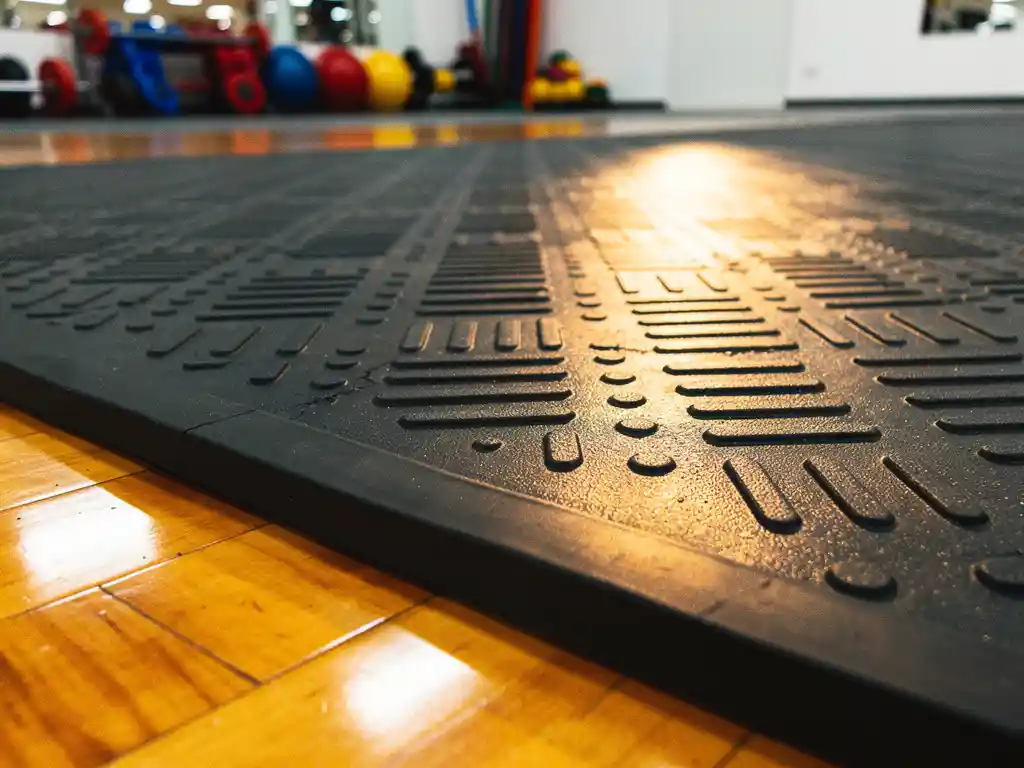
You improve safety in recreational facilities by combining smart flooring choices, clear layout planning, regular maintenance, and staff training. No single fix covers everything, but the right flooring forms the foundation of a safer space. Below, we answer the most common questions facility managers ask when trying to reduce injuries and meet safety expectations in 2026.
What are the most common safety hazards in recreational facilities?
The most common safety hazards in recreational facilities are slip-and-fall risks, inadequate impact protection, poor surface drainage, and worn or uneven flooring. These hazards affect gyms, sports halls, aquatic centers, and multi-use athletic facilities alike, and they are responsible for a significant share of recreational injuries each year.
Wet surfaces near pools, water fountains, and locker room entrances create obvious slip risks. But dry surfaces can be just as dangerous when the flooring is too smooth, too worn, or simply the wrong material for the activity taking place. High-traffic zones near entrances and transition areas between different floor types are especially prone to accidents.
Impact-related injuries are another major concern in sports venue maintenance. When athletes fall, jump, or make sudden lateral movements, the flooring beneath them either absorbs that impact or transfers it directly to joints and bones. Surfaces with no cushioning increase fatigue and raise the risk of both acute injuries and long-term strain.
Other common hazards include:
- Exposed edges or curled mat corners that create trip points
- Gaps between flooring sections that catch feet or equipment wheels
- Surfaces that retain moisture and develop mold or bacteria over time
- Flooring that shifts or slides under load
How does flooring choice affect safety in recreational spaces?
Flooring choice directly affects traction, impact absorption, drainage, and hygiene in recreational spaces. The wrong surface increases slip risk, contributes to joint fatigue, and creates conditions where bacteria and moisture accumulate. Choosing the right sports flooring for each zone in a facility is one of the most practical steps a manager can take to reduce injuries.
Different activities demand different surface properties. A sprinting track needs grip and energy return. A weightlifting platform needs shock absorption and stability. A pool deck needs drainage and slip resistance even when wet. Using a single flooring type across an entire athletic facility rarely meets all of these needs at once.
Material also matters for long-term performance. Some surfaces degrade quickly under heavy foot traffic or equipment loads, developing cracks, soft spots, or surface breakdown that create new hazards over time. Durable, non-porous materials hold their properties longer and are easier to keep clean, which reduces both physical and biological risks.
What type of rubber mat is best for gym and recreational use?
For gym and recreational use, the best rubber mats are dense, non-porous, and textured on the surface to provide traction. Thickness matters depending on the application: thicker mats absorb more impact under free weights or cardio equipment, while thinner, firmer mats work better for stretching areas or courts where surface stability is the priority.
Rubber is widely used in athletic facilities because it handles heavy loads without compressing permanently, resists moisture, and maintains its surface texture over time. Unlike foam or vinyl alternatives, quality rubber does not crack, peel, or degrade under the temperature swings common in facilities that are heated in winter and cooled in summer.
For high-traffic recreational environments, mats made from a fiber-reinforced rubber compound offer additional strength and longevity. The reinforced structure resists deformation under repeated impact, which means the mat keeps performing safely long after a standard rubber mat might start showing wear.
Large-format mats are also worth considering for sports facility management. Fewer seams mean fewer trip hazards and a cleaner surface that is easier to maintain. A mat that covers a wide area in one piece removes the gaps and edges that accumulate in multi-piece installations.
Where should rubber mats be placed in a recreational facility?
Rubber mats should be placed in any zone where slip risk, impact, or surface wear is elevated. Priority areas include entrances and transition zones, weightlifting and free weight areas, locker rooms and wet areas, and any surface that receives heavy equipment or foot traffic. Strategic placement reduces hazards without requiring a full floor replacement.
Entrances and lobby areas are where outdoor moisture gets tracked inside. A mat at every entry point gives people a surface to wipe their feet and slows the spread of water across interior floors. This is one of the simplest and most effective placements in any sports venue.
In gym areas, mats under free weights protect both the floor and the people using it. A dropped weight on an unprotected hard floor can bounce unpredictably. A rubber mat absorbs the impact and keeps the weight in place. Around cardio equipment, mats reduce vibration and prevent machines from shifting during use.
Wet zones like pool decks, shower areas, and locker rooms need mats that drain well and resist mold. Textured rubber with an open drainage pattern keeps water moving away from the surface rather than pooling underfoot.
How do you maintain rubber matting to keep it safe long-term?
To maintain rubber matting safely long-term, clean it regularly with mild detergent and water, inspect it for wear or lifting edges, and replace sections that show significant deterioration. Rubber is low-maintenance compared to many flooring types, but a consistent routine keeps it performing at the level your facility needs.
Daily sweeping or vacuuming removes grit and debris that can act as an abrasive over time, gradually wearing down the surface texture that provides traction. A weekly wet clean with a mild detergent removes oils, sweat, and bacteria without damaging the rubber. Avoid harsh solvents or bleach-based cleaners, which can break down the surface over time.
Periodic inspections are just as important as cleaning. Check for:
- Curled or lifted edges that create trip hazards
- Surface cracking or delamination
- Sections that have shifted out of position
- Visible thinning in high-wear zones
Catching these issues early prevents small problems from becoming safety incidents. Non-porous rubber will not absorb or retain moisture, which eliminates one of the most common sources of long-term degradation. Still, standing water should be cleared promptly to maintain the cleanest possible environment.
Are rubber mats enough on their own to meet facility safety standards?
Rubber mats are an important part of a safe recreational facility, but they are not sufficient on their own to meet full safety standards. Sports facility management requires a broader approach that includes proper lighting, clear signage, staff training, equipment maintenance, and compliance with local building and safety codes.
Flooring addresses surface-level hazards, but safety in athletic facilities goes further. Adequate lighting prevents collisions and helps users see surface transitions. Clear signage communicates rules and hazard areas. Regular equipment checks ensure that nothing in the space creates a secondary risk. Emergency procedures and first aid readiness are also part of a complete safety plan.
That said, flooring is often the most overlooked and most impactful single investment a facility can make. A poorly chosen or deteriorated surface contributes to a wide range of incidents that better flooring would prevent. Rubber matting handles a large share of the physical hazards in a recreational space, which makes it a practical starting point for any safety improvement plan.
For facilities working toward compliance with safety standards, it helps to document your flooring choices, maintenance schedule, and inspection records. This creates accountability and gives you a clear picture of where gaps exist across the facility.
At LRP Matting, we design rubber matting specifically for the demands of recreational and athletic environments. Our mats are made from 100% recycled rubber, non-porous, and built to hold their performance over years of heavy use. If you are reviewing your facility’s flooring as part of a broader safety plan, explore our sports and recreation matting range to find the right fit for your space.
Frequently Asked Questions
How do I know when it's time to replace rubber mats rather than just repair them?
Replace rubber mats when you notice consistent surface cracking, permanent compression in high-traffic zones, or sections that no longer lie flat despite attempts to reposition them. Repairs like edge adhesives or patching can extend the life of a mat in good overall condition, but once the core material has lost its density or the surface texture is visibly worn smooth, the mat is no longer performing its safety function. As a general rule, if a mat has degraded to the point where it requires frequent attention to stay in place or stay clean, replacement is the more cost-effective and safer choice.
What thickness of rubber mat should I choose for different areas of a recreational facility?
For free weight and heavy equipment zones, mats between 15mm and 20mm thick are typically recommended to absorb impact and protect the subfloor. For general gym floors, stretching areas, and courts where surface stability matters more than cushioning, 8mm to 12mm is usually sufficient. Wet areas like pool decks and locker rooms prioritize drainage and slip resistance over thickness, so a shallower profile with an open-drain texture works better there. Always match thickness to the specific activity and load demands of each zone rather than applying a single standard across the whole facility.
Can rubber mats be used on top of existing flooring without causing damage?
Yes, rubber mats can generally be placed over existing hard flooring such as concrete, tile, or hardwood without causing damage, provided the subfloor is clean, dry, and level. However, rubber can trap moisture beneath it if the subfloor is not fully dry before installation, which may cause staining or, in the case of hardwood, warping over time. For permanent or semi-permanent installations, using non-slip backing or interlocking edges helps keep mats stable without the need for adhesives that could damage the surface underneath.
What are the most common mistakes facility managers make when selecting flooring for recreational spaces?
One of the most common mistakes is choosing a single flooring type for the entire facility without accounting for the different demands of each activity zone. Another is prioritising upfront cost over long-term durability, which often leads to faster surface degradation and higher replacement frequency. Overlooking drainage requirements in wet areas and underestimating the importance of seam placement are also frequent oversights that create trip hazards and maintenance problems down the line. Taking a zone-by-zone approach to flooring selection, even within a tight budget, leads to better safety outcomes and lower total cost over time.
How can I build a flooring inspection routine that satisfies safety compliance requirements?
Start by creating a written checklist that covers the key failure points for each flooring type in your facility — including edge conditions, surface texture, drainage performance, and signs of delamination or shifting. Schedule daily visual walkthroughs for high-traffic areas and more thorough monthly inspections for all zones. Log every inspection with dates, findings, and any corrective actions taken, as this documentation is often required when demonstrating compliance with local health and safety codes. Assigning a specific staff member to own the inspection process ensures accountability and consistency over time.
Are there specific safety certifications or standards I should look for when purchasing rubber matting for a recreational facility?
Look for mats that meet or reference standards relevant to slip resistance, such as the Pendulum Test Value (PTV) ratings used in the UK and Europe, or ASTM standards commonly referenced in North America. For impact-absorbing applications, certifications aligned with EN 1177 (impact-attenuation testing for playground and sports surfaces) can provide useful benchmarks. It is also worth checking whether the product complies with any local building codes or sport-specific governing body guidelines that apply to your facility type. Reputable manufacturers should be able to provide technical data sheets and test results on request.
How should staff be trained to identify and respond to flooring-related hazards?
Staff should be trained to recognise the early warning signs of flooring deterioration — such as lifted edges, surface discolouration, shifting mats, or pooling water — and to report or address them immediately rather than waiting for a scheduled inspection. Practical walkthroughs during onboarding, combined with a simple visual reference guide posted in staff areas, help reinforce what to look for. Response protocols should be clear: staff need to know whether to cordon off a hazard area, apply a temporary fix, or escalate to a facilities manager, depending on the severity. Regular refreshers, especially after high-use periods or seasonal changes, keep awareness levels high.
Related Articles
- What is recycled rubber?
- What shortens the lifespan of commercial flooring?
- How do employers reduce standing fatigue?
- What affects the lifespan of sports flooring?
- How do you know when a horse trailer floor needs replacing?
- How do you reduce fall risk for horses in a veterinary facility?
- How do you reduce re-injury risk in a horse recovery stall?
- Why is my horse stiff after being in the stall overnight?
- What is the most comfortable floor surface for a horse to stand on?
- What flooring works best in an outdoor or covered sports venue?