

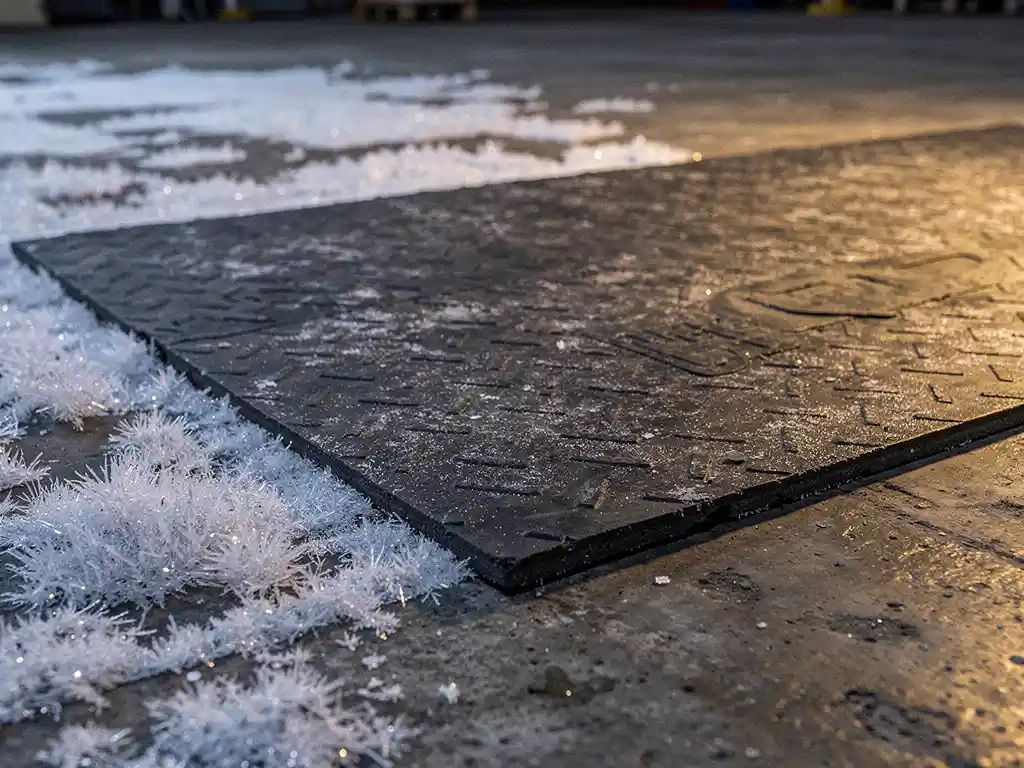
Temperature changes cause floor materials to expand when heated and contract when cooled. This repeated movement puts stress on the material over time, leading to warping, cracking, or joint failure depending on the type of flooring. Materials with a high thermal expansion rate are the most vulnerable, while more flexible options tend to absorb the movement without lasting damage. Below, we answer the most common questions about how temperature affects different floor types and what you can do about it.
Why do floor materials expand and contract with temperature?
All solid materials expand when they absorb heat and contract when they lose it. This happens because heat increases the energy of the molecules within the material, causing them to move farther apart. When temperatures drop, that energy decreases and the molecules pull closer together again. The degree of expansion or contraction depends on the material’s thermal expansion coefficient, which varies significantly across floor types.
In everyday settings, this movement is small enough to go unnoticed. But in environments with wide temperature swings, like industrial facilities, outdoor areas, or cold storage rooms, the cumulative effect adds up. Over time, repeated expansion and contraction cycles create internal stress that can compromise floor durability and surface performance. This is why installation guides for most flooring products recommend leaving expansion gaps at the edges of a room.
Which floor materials are most vulnerable to temperature damage?
Hardwood, laminate, vinyl, and certain types of tile are among the floor materials most vulnerable to temperature damage. Hardwood expands and contracts significantly with both temperature and humidity changes, making it a poor choice for spaces with inconsistent climate control. Laminate behaves similarly and can buckle or gap at the seams when exposed to heat or cold extremes.
Vinyl flooring, especially luxury vinyl planks, can soften and warp in high heat and become brittle and prone to cracking in cold conditions. Ceramic and porcelain tile are more stable on their own, but the grout between tiles can crack under repeated thermal stress, allowing moisture to get in and cause further damage underneath. Concrete is also widely used in industrial and commercial settings, but without proper concrete floor protection, it can develop surface cracks when temperature fluctuations are severe.
How does rubber flooring respond to temperature changes?
Rubber flooring handles temperature changes better than most hard floor materials. Its natural flexibility allows it to absorb thermal expansion and contraction without cracking, warping, or separating at the seams. Rubber has a relatively low thermal expansion rate, and because it is elastic by nature, it can return to its original shape after stress is applied. This makes it a practical option for environments where floor wear from temperature cycling is a real concern.
Genuine rubber, as opposed to foam or synthetic alternatives, is also non-porous. It does not absorb moisture that can freeze and expand in cold conditions, which is one of the main causes of surface damage in other materials. Rubber flooring performs reliably across a wide temperature range, from freezing agricultural environments to warm industrial floors, without losing its structural integrity or surface performance.
What causes floor materials to crack in cold temperatures?
Cold temperatures cause floor materials to crack primarily through two mechanisms: contraction stress and moisture expansion. When a material contracts rapidly or unevenly, the internal tension can exceed the material’s tensile strength, causing it to split. This is especially common in materials that are rigid and have little flexibility, such as concrete, ceramic tile, and some types of vinyl.
The second mechanism involves water. Many porous floor materials absorb moisture during warmer periods. When temperatures drop below freezing, that trapped moisture expands as it turns to ice, creating pressure from within the material. This freeze-thaw cycle is one of the most damaging forces in outdoor and semi-outdoor flooring environments. Non-porous materials, like solid rubber, avoid this problem entirely because they do not absorb water in the first place.
What’s the best flooring for environments with extreme temperature swings?
The best flooring for environments with extreme temperature swings is one that combines flexibility, low thermal expansion, and moisture resistance. Rubber flooring consistently meets all three criteria. It flexes rather than fractures under thermal stress, does not absorb water that could freeze and expand, and maintains its surface performance across a wide temperature range. For industrial flooring applications, rubber mats are a practical and durable choice.
Epoxy-coated concrete can also perform well when properly installed and maintained, though it requires careful preparation and is sensitive to moisture during application. Polished concrete is another option for controlled indoor environments, but it still benefits from expansion joints and concrete floor protection measures to prevent cracking over time. For spaces that experience both foot traffic and significant temperature variation, layering a rubber mat system over a hard subfloor often provides the best balance of durability and comfort.
How do you maintain floor materials in high-temperature environments?
Maintaining floor materials in high-temperature environments comes down to three priorities: choosing the right material from the start, cleaning regularly to prevent heat-accelerated buildup, and inspecting for early signs of thermal stress. No maintenance routine fully compensates for a material that is not suited to the heat levels it faces, so material selection is the first line of defense against floor wear.
For rubber flooring specifically, maintenance in warm environments is straightforward. Clean the surface with mild detergent and water to remove grease, oils, or debris that can degrade the surface over time. Avoid harsh solvents or steam cleaning at very high temperatures, as these can affect the surface finish. Check periodically for any lifting at the edges or seams, which can indicate that the subfloor surface is not clean or level.
For concrete floors in high-heat settings, sealing the surface reduces the risk of moisture penetration and surface degradation. Reapply sealants on a regular schedule and inspect for hairline cracks after any period of significant temperature change. Catching small cracks early prevents them from widening under continued thermal stress.
At LRP Matting, we manufacture rubber mats built specifically for demanding environments, including spaces where temperature shifts are a daily reality. Our mats are made from genuine rubber, which means they are non-porous, flexible, and built to last without cracking, peeling, or warping. If you are looking for a flooring solution that holds up under real-world conditions, explore our industrial matting solutions to find the right fit for your space.
Frequently Asked Questions
How much expansion gap should I leave when installing flooring in a temperature-variable environment?
The size of the expansion gap depends on the material and the expected temperature range. For hardwood and laminate, most manufacturers recommend a gap of at least 10–12mm around the perimeter of the room, with additional mid-room expansion joints in larger spaces. For vinyl and rubber flooring, gaps are typically smaller — around 5–8mm — but always follow the manufacturer’s specifications for your specific product and installation environment.
Can I install rubber flooring directly over concrete in a cold storage or freezer environment?
Yes, rubber flooring can be installed over concrete in cold storage and freezer environments, but surface preparation is critical. The concrete must be clean, dry, and level before installation, as moisture trapped beneath the mat can cause adhesion failure or ice formation. In very low-temperature settings, use a rubber mat system designed for cold environments and consider loose-lay or interlocking tiles rather than adhesive-bonded sheets, since some adhesives lose effectiveness at freezing temperatures.
What are the warning signs that temperature damage is already affecting my floors?
Early warning signs include visible gaps or buckling between planks or tiles, hairline cracks along grout lines or the floor surface, edges lifting away from the wall, and a hollow sound when walking over certain areas. For vinyl and laminate, cupping or warping of individual planks is a clear indicator of thermal stress. Catching these signs early is important — minor damage addressed quickly is far less costly than a full floor replacement after structural failure.
Does humidity play a role alongside temperature, or is temperature the main factor?
Both factors work together and often amplify each other’s effects, particularly for wood-based materials like hardwood and laminate. High humidity causes these materials to absorb moisture and swell, while low humidity causes them to dry out and shrink — movements that compound the stress caused by temperature changes alone. In environments where both temperature and humidity fluctuate, maintaining a stable indoor climate through HVAC or dehumidification systems is just as important as choosing the right flooring material.
Is there a flooring option that works well in both extreme heat and extreme cold within the same facility?
Rubber flooring is one of the few materials that performs reliably at both ends of the temperature spectrum, making it well suited for facilities that transition between hot and cold zones — such as food processing plants, agricultural buildings, or warehouses with loading docks. Its elasticity allows it to flex with thermal movement in either direction without cracking or warping. If the facility also experiences heavy equipment traffic or chemical exposure, look for industrial-grade rubber mats with reinforced construction for added durability.
How often should I inspect and reseal concrete floors in high-temperature industrial settings?
In high-temperature industrial environments, concrete floors should be inspected for cracks or surface degradation at least every six months, and after any significant temperature event such as an equipment failure or seasonal extreme. Sealant reapplication frequency depends on traffic levels and the type of sealant used, but a general guideline is every one to three years. Penetrating sealers tend to last longer than topical coatings in high-heat settings and are less likely to peel or blister under thermal stress.
Can placing rubber mats over an existing damaged floor help protect it from further temperature-related wear?
Yes, rubber mats can act as a protective buffer over an existing floor that has already experienced minor thermal damage, helping to prevent further deterioration by reducing direct exposure to temperature fluctuations, foot traffic impact, and moisture. However, mats are not a structural repair solution — if the underlying floor has significant cracking, heaving, or moisture intrusion, those issues should be addressed first. Think of rubber matting as a long-term surface protection layer rather than a substitute for proper subfloor maintenance.
Related Articles
- What shortens the lifespan of commercial flooring?
- What are the biggest flooring maintenance mistakes?
- How does flooring affect workplace comfort?
- How often should facility floors be inspected?
- How often should commercial floors be maintained?
- Why do wet floors become dangerous?
- What flooring works best under heavy sports equipment?
- What is the best flooring for a sports facility?
- How do you reduce fall risk for horses in a veterinary facility?
- How do you protect a concrete floor from heavy machinery?