
You can improve hygiene in animal facilities by combining good drainage, easy-to-clean surfaces, and a consistent cleaning routine. Flooring plays a bigger role than most people realize: the right surface reduces moisture buildup, limits bacterial growth, and makes daily cleaning faster and more effective. The sections below break down the most common hygiene challenges, what to look for in flooring, and how rubber mats fit into a well-designed facility.
What are the biggest hygiene challenges in animal facilities?
The biggest hygiene challenges in animal facilities are moisture accumulation, ammonia buildup from urine, manure management, and bacterial growth on porous or uneven surfaces. These problems compound each other: wet floors trap waste, waste feeds bacteria, and bacteria spread quickly in enclosed spaces. Stable design, livestock facility design, and equine facility design all need to account for these realities from the start.
Moisture is the root cause of most hygiene problems. When urine pools on a hard floor or soaks into a porous surface, it creates ideal conditions for pathogens like E. coli and Salmonella. Poor drainage makes this worse, especially in stalls where animals spend long periods standing or lying down. Ammonia fumes from urine breakdown also irritate the respiratory systems of both animals and the people who work around them.
Beyond the floor itself, wall junctions, feed areas, and water sources are common trouble spots. Gaps between flooring sections trap organic matter and are difficult to clean thoroughly. A facility that looks clean on the surface can still harbor bacteria in places that are hard to reach or easy to overlook.
How does flooring affect hygiene in barns and stalls?
Flooring directly affects hygiene in barns and stalls because it determines how easily moisture, manure, and bacteria can accumulate and spread. A surface that is smooth, non-porous, and properly sloped toward drainage points keeps waste moving rather than pooling. Poor flooring choices make cleaning harder and create persistent hygiene risks regardless of how often the space is cleaned.
Concrete is a common choice in livestock facility design because it is durable and relatively affordable. However, bare concrete is porous and rough, which means it absorbs liquids and traps bacteria in its surface texture. Over time, it can also become slippery, especially when wet, increasing injury risk for both animals and handlers.
Flooring with a textured, non-porous surface addresses both problems. It resists liquid absorption, which means waste stays on the surface where it can be removed rather than soaking in. This is particularly relevant in veterinary facility design and equine facility design, where cleanliness directly affects animal health outcomes.
What type of flooring is easiest to clean in animal facilities?
Non-porous, smooth-surfaced flooring is the easiest to clean in animal facilities. Rubber matting is widely used for this reason: it does not absorb moisture or retain odors, and it can be cleaned with mild detergent and water. Concrete with a sealed surface is another option, though it requires more maintenance over time to keep that seal intact.
The key factor is surface porosity. A porous surface requires more scrubbing, more water, and stronger cleaning agents to remove the same amount of contamination as a non-porous one. Over time, this adds up in labor costs and cleaning product use.
Ease of cleaning also depends on how well the flooring fits the space. Fewer seams mean fewer places for waste to collect. Large-format mats or continuous flooring panels reduce the number of joints in a stall or barn aisle, which simplifies the cleaning process significantly.
Do rubber mats actually improve hygiene for livestock?
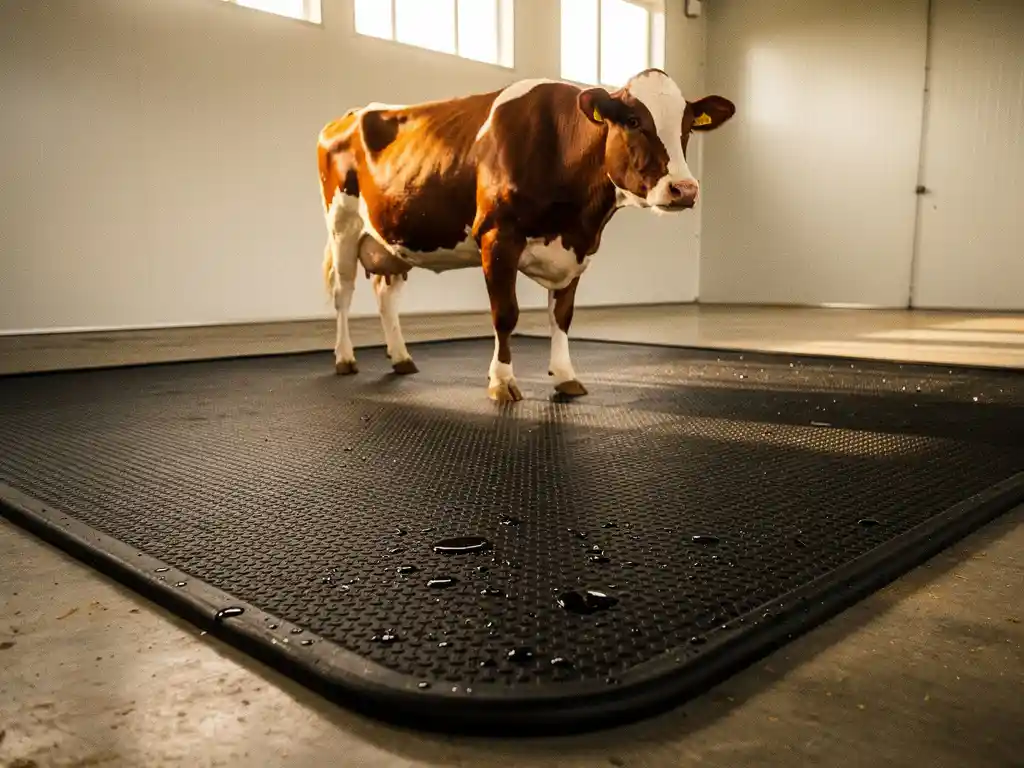
Yes, rubber mats improve hygiene for livestock when they are properly installed and maintained. Because rubber is non-porous, it does not absorb urine or moisture, which reduces bacterial growth on the floor surface. Rubber mats also cushion joints, which encourages animals to lie down more, keeping them off bare concrete and reducing contact with pooled waste.
From an animal welfare perspective, this matters. Cows, horses, and other livestock that are comfortable lying down tend to have better health outcomes, including lower rates of hock lesions, mastitis, and lameness. A clean, cushioned surface supports both physical comfort and hygiene at the same time.
It is worth noting that rubber mats are not a substitute for regular cleaning. They reduce the rate at which bacteria accumulate, but they still need to be cleaned consistently to maintain a hygienic environment. The benefit is that cleaning a rubber mat is faster and more thorough than cleaning bare concrete.
How often should you clean rubber mats in animal facilities?
Rubber mats in animal facilities should be cleaned at least once daily in high-traffic or high-waste areas like stalls and milking parlors. In lower-traffic zones, cleaning every two to three days may be sufficient, but the mat surface and the area underneath should be checked regularly for moisture buildup. The cleaning frequency depends on the type of animal, the number of animals, and how the space is used.
Daily cleaning typically involves removing solid waste, rinsing the surface, and applying a mild detergent if needed. Periodically, mats should be lifted to clean the floor underneath, since moisture can migrate to the subfloor even with a non-porous mat surface. This step is easy to overlook but important for preventing long-term odor and bacterial buildup.
In veterinary facility design, where biosecurity is a higher priority, cleaning protocols may be more frequent and involve disinfectants approved for use around animals. Always check that any cleaning product used is safe for the mat material and for the animals that will be in contact with the surface.
What features should animal facility mats have for better hygiene?
Animal facility mats should be non-porous, resistant to moisture and bacteria, easy to clean, and durable enough to withstand heavy use without cracking or degrading. Textured surfaces that provide grip without creating deep grooves are useful because they reduce slip risk while still being easy to wipe down. Mats that cover large areas with minimal seams are preferable because seams are where waste accumulates.
Here are the most important features to look for:
- Non-porous material: Prevents moisture and bacteria from soaking into the mat surface
- Textured grip surface: Reduces slip risk for animals and handlers without trapping waste in deep grooves
- Large format or seamless design: Fewer joints mean fewer places for manure and urine to collect
- Resistance to temperature extremes: Mats should not crack, stiffen, or degrade in cold winters or hot summers
- Cushioning: Supports animal welfare by reducing joint stress, which encourages animals to lie down and stay off wet concrete
- Chemical resistance: The mat should tolerate cleaning agents without breaking down over time
At LRP Matting, our livestock rubber mats are made from 100% recycled genuine rubber and are engineered to meet exactly these standards. They are non-porous, easy to clean, and built to last in demanding agricultural environments. Many are made from our proprietary Fiber Reinforced Rubber Compound (FRC®), which adds strength and durability beyond what standard rubber flooring offers. Whether you are designing a new facility or upgrading an existing one, the right matting makes daily hygiene management noticeably more manageable.
Frequently Asked Questions
Can rubber mats be used on top of existing concrete floors without any modifications?
Yes, rubber mats can generally be installed directly over existing concrete floors, but the condition of the concrete matters. The subfloor should be reasonably level and free of major cracks or raised edges that could create gaps underneath the mat, since those gaps trap moisture and waste. If the concrete has poor drainage slope, it is worth addressing that before laying mats, as even non-porous rubber will not compensate for standing water pooling beneath it.
What is the best way to sanitize rubber mats without damaging them?
The safest approach is to use a pH-neutral or mildly alkaline detergent diluted in water, scrub the surface, rinse thoroughly, and allow the mat to dry before animals return to the area. Avoid highly acidic or solvent-based cleaners, as these can degrade the rubber compound over time and shorten the mat’s lifespan. For facilities requiring a higher level of biosecurity, look for animal-safe disinfectants that are explicitly labeled as compatible with rubber surfaces, and always follow the manufacturer’s dilution guidelines.
How do I prevent odors from building up under rubber mats?
The most effective way to prevent under-mat odor buildup is to lift and clean the mats on a regular schedule — typically every one to two weeks in high-use stalls — and to ensure the subfloor is dry before replacing them. Applying a diluted agricultural lime solution or an enzyme-based odor neutralizer to the concrete subfloor before relaying the mats can also help break down residual organic matter. Adequate ventilation in the facility plays an equally important role, since airflow reduces the moisture levels that allow odor-causing bacteria to thrive.
Are rubber mats suitable for all types of livestock, or are they better suited to specific animals?
Rubber mats are suitable for a wide range of livestock, including cattle, horses, pigs, sheep, and goats, but the ideal mat thickness, texture, and format vary by species and use case. For example, dairy cows benefit from thicker, highly cushioned mats in free stalls to reduce hock lesions, while horses in high-traffic aisle areas need a firmer surface with strong grip to prevent slipping. When selecting mats, consider the animal’s weight, typical movement patterns, and how long they spend standing versus lying down in that specific area.
How long do rubber mats typically last in a livestock or equine facility?
High-quality rubber mats in agricultural settings typically last between 10 and 20 years when properly installed and maintained, though this varies depending on animal traffic, cleaning frequency, and the quality of the rubber compound used. Mats made from reinforced or recycled genuine rubber tend to outlast lower-density alternatives, especially in heavy-use areas like milking parlors or high-traffic barn aisles. Regularly inspecting mats for cracks, lifting edges, or surface degradation helps catch wear early and prevents hygiene issues from developing at the subfloor level.
What common mistakes should I avoid when setting up flooring in a new animal facility?
The most common mistakes include neglecting drainage slope before laying flooring, choosing mats based on upfront cost alone rather than long-term durability and hygiene performance, and installing mats with too many small sections that create excessive seaming. Another frequent oversight is failing to account for the area underneath the mats during routine cleaning, which leads to undetected moisture and bacterial buildup over time. Planning your flooring layout alongside your drainage design from the very beginning — rather than treating them as separate decisions — will save significant labor and cost down the line.
Can the right flooring choice reduce my facility's overall cleaning and maintenance costs?
Yes, significantly. Non-porous rubber flooring reduces the time, water, and cleaning products needed per cleaning session compared to bare or unsealed concrete, because waste does not penetrate the surface and is easier to remove. Over a facility’s lifetime, this translates into measurable savings in labor hours and supply costs, as well as potentially lower veterinary costs due to fewer hygiene-related health issues in the herd. Investing in higher-quality matting upfront typically delivers a strong return through reduced ongoing maintenance demands and longer replacement cycles.
Related Articles
- How do high traffic logistics environments affect floor performance?
- How do different facility environments affect floor performance?
- Why do some floor surfaces become polished over time?
- What factors increase floor wear in manufacturing environments?
- How do sports venues manage heavy foot traffic?
- What makes a sports surface safe?
- How does stall flooring affect a horse's hooves long term?
- How do you keep a sports facility floor safe in wet conditions?
- What is the fastest way to muck out a horse stall?
- How do you stop horse stall mats from shifting?