
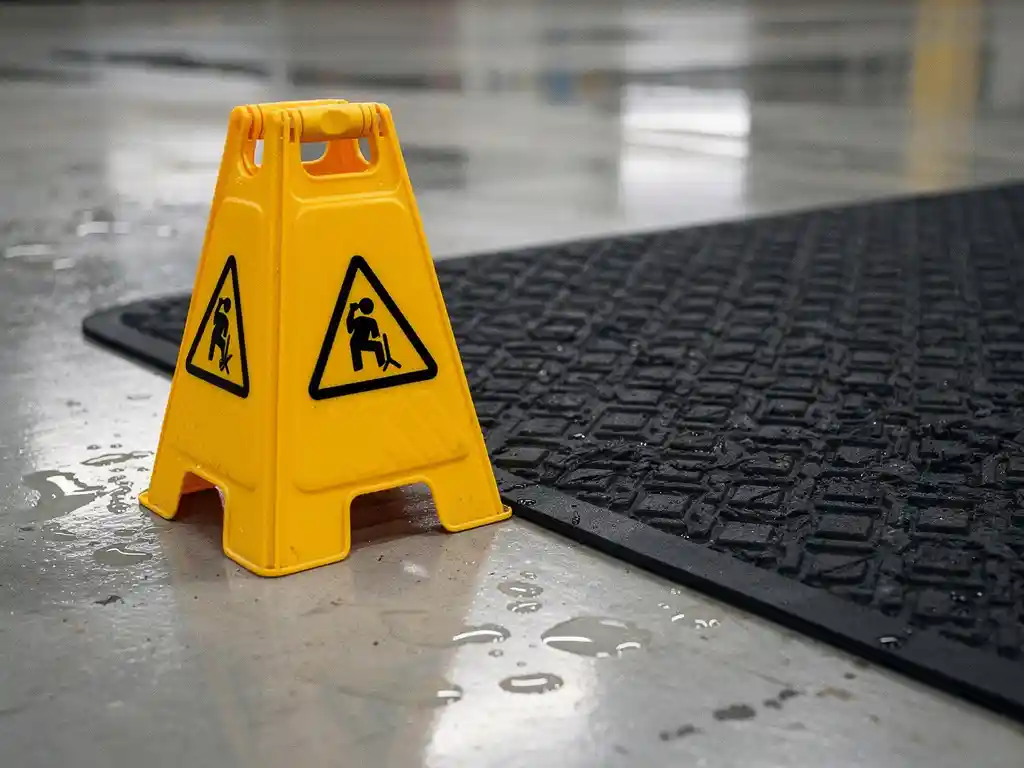
The most common causes of slip and fall accidents are wet or contaminated floor surfaces, inadequate footwear, poor lighting, and uneven or damaged flooring. These hazards show up in workplaces, public spaces, and homes every day, and most of them are preventable with the right precautions in place. Below, we break down the key questions around floor safety and slip and fall prevention so you can understand the risks and take practical action.
Where do most slip and fall accidents happen?
Slip and fall accidents happen most often in workplaces, retail environments, and food service areas, where foot traffic is high and floor conditions change frequently. Kitchens, warehouses, factory floors, and building entrances are among the highest-risk locations. Any space where people move quickly, surfaces get wet, or clutter builds up is a potential floor hazard.
In commercial settings, entranceways are a particular problem because people track in water, mud, and debris from outside. In industrial environments, spills of oil, coolant, or other liquids create sudden slip risks that can be hard to spot. Even office environments carry risk, especially near kitchens, bathrooms, or staircases where surfaces transition from one material to another.
The common thread across all these locations is that floor hazards tend to develop gradually and go unnoticed until someone gets hurt. That is why regular floor safety inspections are one of the most effective ways to stay ahead of the problem.
What floor surfaces are most likely to cause a slip?
Smooth, hard floor surfaces such as polished concrete, ceramic tile, marble, and sealed hardwood are the most likely to cause a slip, especially when wet or contaminated. These materials offer very little natural grip, and their slip resistance drops significantly the moment a liquid or fine dust is introduced.
Epoxy coatings and certain vinyl floors can also become dangerously slippery over time as the surface wears down and loses its texture. Even surfaces that feel safe when dry can become floor hazards under the wrong conditions.
Textured or matte surfaces generally perform better, but no surface is fully slip-proof without proper maintenance and the right protective measures in place. The condition of a floor matters just as much as the material itself.
How does moisture contribute to slip and fall accidents?
Moisture is the single biggest contributor to slip and fall accidents because it dramatically reduces friction between a shoe sole and a floor surface. Even a thin film of water is enough to cause a person to lose their footing on a smooth floor. In workplaces, moisture comes from spills, cleaning processes, condensation, and weather tracked in from outside.
The danger increases when moisture is not immediately visible. Condensation on cold surfaces, fine mist from machinery, or a small spill on a dark floor can all go unnoticed until someone steps on it. This is why floor hazards related to moisture are so common in kitchens, production areas near washing stations, and building entrances during wet weather.
Addressing moisture means both managing the source and making the floor surface more forgiving. Drainage systems, absorbent entrance mats, and slip-resistant flooring all help reduce the risk that moisture creates.
What role does footwear play in slip and fall risk?
Footwear plays a significant role in slip and fall risk because the grip between a shoe sole and the floor surface is what keeps a person upright. Worn-out soles, smooth leather bottoms, or footwear not suited to the environment can dramatically reduce slip resistance, even on a floor that is otherwise safe.
In workplaces, this is why many industries require slip-resistant or safety-rated footwear as part of standard personal protective equipment. A good shoe sole designed for wet or oily conditions can compensate for a floor surface that is less than ideal. On the other hand, even the best non-slip shoe will struggle on a floor that is heavily contaminated or poorly maintained.
Footwear and floor condition work together. Neither one alone guarantees safety, and both need to be considered as part of any serious approach to slip and fall prevention.
How can rubber matting reduce slip and fall hazards?
Rubber matting reduces slip and fall hazards by adding a textured, high-grip surface over floors that would otherwise be smooth and slippery. Rubber naturally provides better friction than hard flooring materials, and most rubber mats include surface patterns designed to channel moisture away from the contact area, keeping the walking surface drier and more stable.
In entranceways, rubber mats trap dirt and moisture before it gets tracked further into a building. In kitchens and production areas, drainage mats allow liquids to pass through the surface so workers are not standing in pooled water. In industrial settings, heavy-duty rubber flooring protects workers from fatigue while also reducing slip risk on hard concrete floors.
Beyond grip, rubber matting is non-porous, which means it does not absorb moisture or harbor bacteria the way some other materials do. It is easy to clean, holds up under heavy use, and maintains its slip resistance over time without degrading the way worn vinyl or coated concrete can. For many environments, it is one of the most practical and cost-effective tools available for improving floor safety.
What are OSHA’s requirements for slip and fall prevention?
OSHA requires employers to keep walking and working surfaces free from recognized hazards that could cause slips, trips, or falls. Under the General Duty Clause and specific standards such as 29 CFR 1910.22, employers must maintain floors in a clean, dry, and orderly condition, provide drainage where wet processes occur, and use covers, mats, or other protective measures where floors cannot be kept dry.
OSHA also requires that floors be inspected regularly and that hazards be corrected promptly. Employers are expected to train workers on floor hazards relevant to their environment and to document their floor safety inspection processes as part of an overall safety program.
Non-compliance carries financial penalties, but the bigger cost is the human one. Slip and fall injuries are among the leading causes of lost workdays across industries, and OSHA’s requirements exist precisely because these accidents are largely preventable when the right systems are in place.
At LRP Matting, we design rubber mats built to meet the practical demands of exactly these kinds of environments. Whether you need coverage for a high-traffic entrance, a wet production floor, or a heavy-duty industrial workspace, our mats are made from 100% recycled rubber and built to last. If you are looking for matting that takes floor safety seriously, explore our industrial matting solutions to find the right fit for your space.
Frequently Asked Questions
How do I know if my current flooring meets an acceptable slip resistance standard?
Slip resistance is measured using the Coefficient of Friction (COF), and most safety guidelines recommend a minimum COF of 0.5 for walking surfaces and 0.6 or higher for ramps or areas exposed to frequent moisture. You can have your floors professionally tested using a tribometer, or start with a basic visual and tactile inspection to identify surfaces that are smooth, worn, or frequently wet. If your floors are in high-risk areas like kitchens, entrances, or production zones, professional testing is worth the investment and can also support your documentation for OSHA compliance.
What is the most effective way to get started with a workplace floor safety program?
The best starting point is a structured floor safety audit of your entire facility, where you walk every area and document surface types, moisture sources, lighting conditions, and any existing damage or wear. From there, prioritize the highest-risk zones — entrances, wet process areas, and high-traffic corridors — and address those first with targeted solutions like drainage mats, slip-resistant flooring, or improved signage. Building a simple inspection checklist and assigning responsibility for regular walkthroughs will help you maintain progress and catch new hazards before they cause an incident.
What are the most common mistakes businesses make when trying to prevent slip and fall accidents?
One of the most frequent mistakes is treating slip and fall prevention as a one-time fix rather than an ongoing process — installing a mat at the entrance and assuming the problem is solved. Another common error is focusing only on the floor surface while ignoring contributing factors like inadequate lighting, inappropriate footwear, or poor drainage. Businesses also often underestimate how quickly floor conditions can change during a shift, which is why scheduled mid-day inspections, not just morning walkthroughs, are an important part of any serious safety program.
How often should rubber mats be replaced, and what are the signs that a mat is no longer doing its job?
A rubber mat that is no longer providing adequate safety is often easy to spot: look for surface texture that has worn flat, edges that have curled or cracked and create a trip hazard, tearing or thinning in high-traffic zones, or a mat that slides rather than stays firmly in place. High-quality rubber mats made from dense, recycled rubber typically last several years under normal commercial or industrial use, but mats in extremely heavy-use areas may need replacement sooner. Incorporating a mat condition check into your regular floor safety inspections is the most reliable way to stay on top of this.
Can slip-resistant mats alone satisfy OSHA's requirements for wet or hazardous floor areas?
Mats are an important tool, but OSHA’s requirements under 29 CFR 1910.22 call for a comprehensive approach that includes maintaining floors in a clean and orderly condition, providing proper drainage where wet processes occur, training workers on floor hazards, and documenting your inspection and corrective action processes. Mats work best as part of a layered strategy that also addresses the source of moisture, ensures adequate lighting, and pairs floor solutions with appropriate footwear requirements. Relying on mats alone without the supporting systems in place is unlikely to fully satisfy OSHA standards or eliminate your liability exposure.
Are there specific industries or environments where slip and fall risks are significantly higher than average?
Yes — food service, healthcare, construction, manufacturing, and hospitality consistently rank among the highest-risk industries for slip and fall incidents, largely because these environments combine wet or contaminated surfaces with fast-paced movement and frequent surface transitions. In healthcare settings, for example, spills are common and workers often move quickly between areas with different flooring materials. In food production facilities, oils, fats, and cleaning chemicals create persistent floor hazards throughout the day. If your business operates in one of these sectors, a more rigorous and frequent inspection schedule, combined with purpose-built matting solutions, is strongly recommended.
What should I do immediately after a slip and fall incident occurs on my premises?
The immediate priority is ensuring the injured person receives appropriate medical attention. Once that is addressed, you should secure the area to prevent additional incidents, document the exact conditions at the time of the accident — including photographs of the floor surface, any liquid or debris present, lighting conditions, and the footwear worn — and complete a formal incident report as soon as possible. From a safety and liability standpoint, it is equally important to conduct a root cause analysis to understand why the hazard existed and what corrective actions will prevent a recurrence, then update your floor safety inspection records accordingly.
Related Articles
- What makes a standing workstation ergonomic?
- What factors increase floor wear in manufacturing environments?
- What creates a safe recovery environment for animals?
- How can you improve traction on existing floors?
- How do large boarding facilities manage bedding costs across many stalls?
- How do you stop steel-tracked vehicles from damaging a concrete floor?
- How do you protect a concrete floor from heavy machinery?
- How do you keep a horse stall floor from getting slippery when wet?
- What type of floor is easiest to keep clean in a horse barn?
- How do you stop horse stall mats from shifting?