

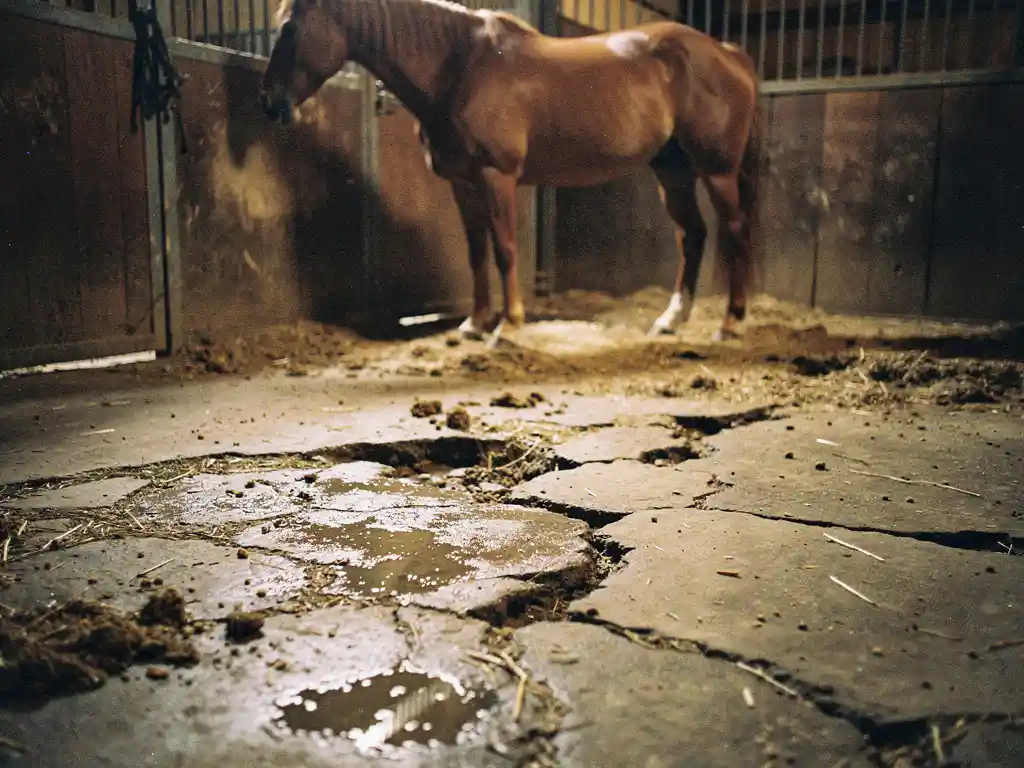
The most common safety risks in horse facilities include slipping and falling on wet or worn surfaces, repetitive strain injuries from hard flooring, and injuries caused by poorly maintained or inadequate stable mats. These risks affect both horses and the people who work around them every day. Understanding where these hazards come from and how to address them helps you build a safer, healthier environment for everyone in the barn.
What types of injuries are most common in horse facilities?
In horse facilities, the most common injuries include slips and falls on wet or slick surfaces, joint and hoof problems from prolonged standing on hard floors, and lacerations or bruising from contact with sharp edges or deteriorating flooring materials. These injuries affect both horses and stable staff, and many of them are preventable with the right flooring and management practices.
For horses, hoof and leg injuries top the list. Constant pressure on hard, unforgiving surfaces puts stress on joints, tendons, and hooves over time. Horses that slip in stalls or aisles can suffer muscle tears, fractures, or ligament damage, sometimes severe enough to end a working or competition career.
For stable staff and handlers, slipping on wet aisles is the most frequent cause of injury. Handlers also face risks from being kicked or knocked over by a horse that has lost its footing and panicked. Back strain from working in cramped, poorly designed spaces adds to the long-term toll on stable workers.
Why do horses slip and fall in stalls and barns?
Horses slip and fall in stalls and barns primarily because of smooth, wet, or worn flooring surfaces that provide little traction for their hooves. Concrete and clay are the most common offenders. When wet from urine, water, or cleaning, these materials become dangerously slick. A horse’s natural movement and weight distribution make them especially vulnerable to losing grip on low-friction surfaces.
Stall flooring absorbs a significant amount of moisture over time, particularly in high-traffic areas near water buckets and drains. Even flooring that feels firm when dry can become slippery almost instantly when wet. Bedding materials like straw or shavings can shift and compress, leaving patches of exposed flooring beneath.
Aisle flooring presents a different set of challenges. Horses are often led across smooth concrete aisles while wearing metal shoes, which dramatically reduces grip. Any moisture, manure, or debris on the surface multiplies the slip risk. The combination of a heavy, reactive animal and a low-traction surface is a serious hazard in any equine facility design.
How does poor flooring affect horse health over time?
Poor flooring affects horse health over time by causing chronic joint stress, hoof deterioration, and fatigue-related injuries. Hard surfaces without adequate cushioning force horses to bear their full weight on unforgiving ground for hours each day, which accelerates wear on joints, tendons, and the soft tissues of the hoof. Over months and years, this leads to lameness, joint inflammation, and reduced quality of life.
Horses spend a significant portion of each day standing in their stalls. When the floor beneath them offers no give or insulation, the constant impact travels directly into the limbs. This is particularly damaging for older horses, horses recovering from injury, and high-performance animals whose joints are already under strain from training and competition.
Moisture retention in flooring materials creates a secondary problem. Wet, poorly drained surfaces promote bacterial growth and increase the risk of thrush, a fungal infection of the hoof. Horses standing on damp, contaminated ground are also more prone to skin conditions around the lower leg. Stable design that prioritizes proper drainage and moisture-resistant flooring is a direct investment in long-term animal welfare.
What flooring materials are safest for horse stalls and aisles?
The safest flooring materials for horse stalls and aisles are those that combine traction, cushioning, and moisture resistance. Rubber matting is widely considered the most practical option because it delivers all three qualities in a single surface. Other materials, such as clay, sand, and interlocking foam tiles, each have trade-offs in durability, drainage, or ease of maintenance.
Stall flooring options
Rubber mats are the most popular choice for stalls because they provide a non-slip surface that cushions the horse’s joints and stays in place under movement. High-quality rubber is non-porous, so it resists moisture absorption and is easy to clean. Mats can be used alone or over a base of compacted stone or concrete, depending on the drainage needs of the facility.
Clay and sand are traditional options that offer some natural give, but they require regular maintenance to stay level and can become waterlogged in wet conditions. Concrete alone is the least suitable option for stalls, as it is hard, cold, and slippery when wet, though it works well as a base layer beneath rubber matting.
Aisle flooring options
For aisles, textured rubber or grooved rubber surfaces are highly effective at reducing slip risk while remaining easy to clean. Brick and pavers with a rough finish are also used in some facilities and offer reasonable traction when dry, but they can become hazardous in wet conditions and are harder on horses’ and handlers’ legs over time.
The best aisle flooring for equine facility design prioritizes grip in wet conditions, durability under heavy foot traffic, and ease of cleaning. A surface that performs well only when dry is not adequate for a working barn.
How can stable managers reduce slip hazards for staff and horses?
Stable managers can reduce slip hazards by installing high-traction flooring, maintaining consistent drainage, keeping surfaces clean and dry, and establishing clear protocols for wet weather management. No single measure eliminates all risk, but combining good flooring with regular maintenance and staff training creates a meaningfully safer environment for both horses and handlers.
Drainage is often overlooked in stable design but plays a major role in slip prevention. Aisles and stalls that drain efficiently stay drier and reduce the window of time when surfaces are at their most dangerous. Sloped flooring toward drainage channels, combined with moisture-resistant mats, addresses the problem at the source rather than managing symptoms after the fact.
Staff practices matter too. Encouraging handlers to slow down in aisles, keeping walkways clear of manure and debris, and placing additional grip surfaces in high-risk areas like wash bays and entry points all contribute to a safer daily routine. Livestock facility design that builds safety into the layout from the start reduces the need for reactive fixes later.
What are the safety risks of using worn or damaged stable mats?
Worn or damaged stable mats create several safety risks, including reduced traction, uneven surfaces that cause horses to stumble, and gaps or curled edges that can trap hooves or trip handlers. A mat that has deteriorated past its useful life can be more dangerous than no mat at all, particularly if it gives a false sense of security while providing little actual grip or cushioning.
As rubber mats age and wear down, their textured surface becomes smooth, which is exactly the condition you are trying to avoid. Mats that have cracked, torn, or lost their structural integrity no longer distribute weight evenly, creating pressure points that stress the horse’s joints. Edges that have lifted or curled are a tripping hazard for both horses and people moving through the barn.
Damaged mats also become harder to keep clean. Cracks and tears trap moisture, manure, and bacteria, creating hygiene problems that undermine the health benefits the mat was installed to provide. Inspecting mats regularly and replacing them when they show significant wear is a straightforward part of responsible stable management.
At LRP Matting, we manufacture rubber mats built to withstand the demands of working equine environments. Our mats are made from 100% recycled rubber and many are reinforced with our proprietary Fiber Reinforced Rubber Compound (FRC®), giving them the durability to stay effective over years of heavy use. If you are looking for long-lasting, high-performance flooring for your barn or stable, explore our equine matting solutions to find the right fit for your facility.
Frequently Asked Questions
How often should stable mats be inspected and replaced?
Stable mats should be visually inspected at least once a month and given a more thorough check — including lifting edges and checking for cracks or compression — every three to six months. Replacement timing depends on usage intensity and mat quality, but any mat showing significant surface smoothing, cracking, curling edges, or structural deformation should be replaced promptly. High-traffic areas like stall entrances and wash bays typically wear faster and may need more frequent attention than lower-traffic zones.
Can rubber mats be used on top of existing concrete floors, or does the base need to be replaced first?
Rubber mats can absolutely be installed over existing concrete floors, and this is actually one of the most common setups in equine facilities. The key requirement is that the concrete base is level, structurally sound, and has adequate drainage — either through a slight slope toward a drain or channels built into the floor. If the concrete is severely cracked or uneven, those issues should be addressed first, as mats laid over an unstable base can shift, buckle, or create pressure points that undermine both safety and horse comfort.
What's the best way to clean and maintain rubber stable mats to extend their lifespan?
For daily maintenance, remove manure, soiled bedding, and debris as promptly as possible, since prolonged exposure to waste accelerates rubber degradation. For deeper cleaning, rubber mats can be scrubbed with a stiff brush and a mild, horse-safe disinfectant solution, then allowed to dry thoroughly before replacing bedding. Avoid harsh solvents or petroleum-based cleaners, as these can break down the rubber compound over time. Periodically lifting and drying the mats beneath them also helps prevent moisture buildup and bacterial growth at the base.
Are there specific flooring recommendations for horses recovering from injury or surgery?
Yes — horses in recovery require flooring that prioritizes maximum cushioning and traction above all else, since their movement may be compromised and their joints are under additional stress. Thick, high-density rubber mats are strongly recommended for recovery stalls, and adding a deep, clean bedding layer on top provides an extra buffer for sensitive limbs. It’s also worth consulting with your veterinarian, as some conditions may call for specific flooring configurations — for example, horses recovering from laminitis often benefit from deeply cushioned surfaces that reduce sole pressure.
How do I choose the right mat thickness for my horse stalls?
Mat thickness typically ranges from 3/4 inch to over 1 inch for equine stall applications, and the right choice depends on the hardness of your base surface and the needs of your horses. Thicker mats (1 inch or more) offer greater cushioning and are ideal for horses that spend long hours standing, older horses, or those with joint issues. If your base is compacted stone or packed clay rather than concrete, a slightly thinner mat may be sufficient. When in doubt, opting for a thicker mat is a worthwhile investment in your horses’ long-term joint health and comfort.
What additional safety measures should be taken in high-risk areas like wash bays and cross-tie areas?
Wash bays and cross-tie areas are among the highest-risk zones in any equine facility because they combine water, movement, and a restrained or partially controlled horse. In these areas, grooved or heavily textured rubber mats designed specifically for wet conditions are essential, as standard flat mats may not provide enough grip when saturated. Adding drainage grates or channels to prevent water pooling, ensuring adequate lighting, and keeping these spaces free of loose equipment or hoses underfoot all significantly reduce accident risk for both horses and handlers.
Is there a meaningful safety difference between interlocking rubber mats and solid single-piece mats for stalls?
Both options can perform well, but each has practical trade-offs worth considering. Interlocking mats are easier to transport, install, and replace in sections, making them a flexible choice for facilities that may need to reconfigure stalls. However, the seams between interlocking pieces can collect moisture and debris over time, and edges may lift with heavy use if not properly fitted. Solid single-piece mats eliminate the seam issue and provide a more uniform surface, but they are heavier and more difficult to handle during installation or deep cleaning. For long-term durability and hygiene, a well-fitted solid mat is often the preferred choice in permanent stall setups.
Related Articles
- How do employers reduce standing fatigue?
- How do sustainable materials reduce maintenance?
- What factors increase floor wear in manufacturing environments?
- How do weather conditions affect outdoor floor safety?
- What areas of a facility have the highest slip risk?
- How do you maintain a safe surface in a professional athletic facility year-round?
- How often should you replace horse stall bedding?
- What is the best way to cover an uneven barn floor?
- What causes hock sores in stabled horses?
- What floor protection is needed for indoor crane operations?