

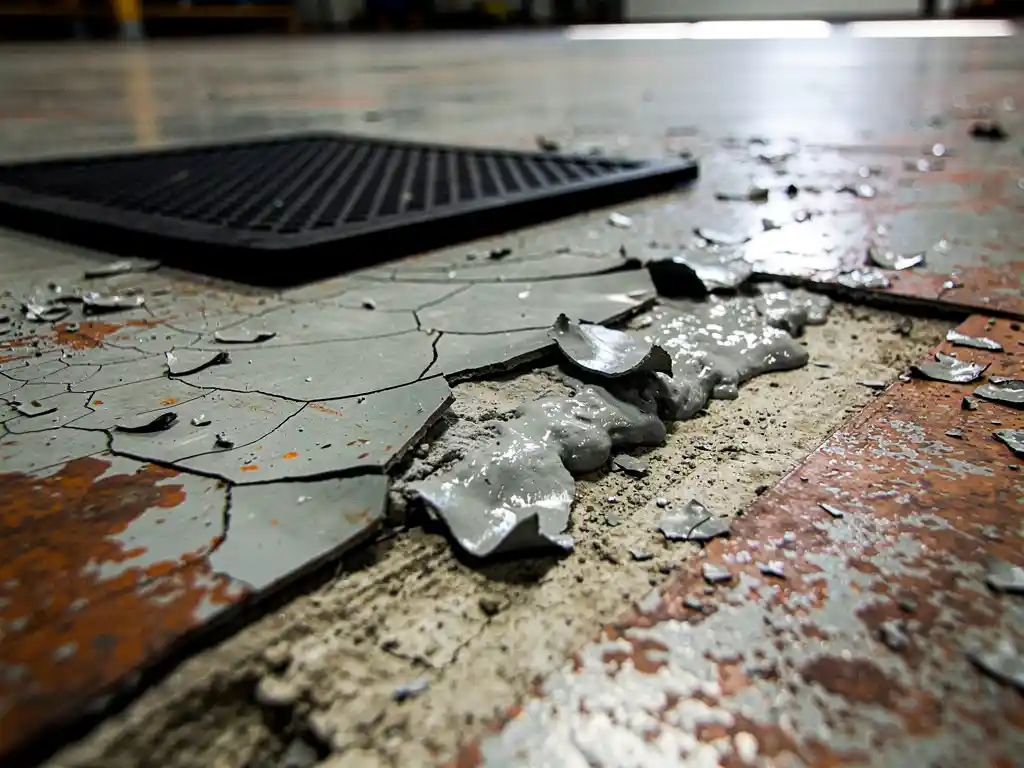
Floor coatings fail for several reasons, but the most common causes are poor surface preparation, moisture trapped beneath the coating, and exposure to environments the coating was not designed to handle. These failures typically show up as peeling, bubbling, cracking, or flaking, and they can appear within months of application. Below, we break down the most common questions around floor coating failure so you can make smarter decisions about protecting your floors.
What are the most common reasons floor coatings fail?
Floor coatings most commonly fail due to inadequate surface preparation, moisture infiltration, chemical exposure, mechanical stress, and using the wrong coating type for the environment. These failures do not happen randomly. Each one has a clear cause, and most are preventable with the right planning and product selection.
Surface contamination is the leading culprit. Oil, dust, old paint, or sealers left on the floor prevent the coating from bonding properly. Even a thin, invisible film of grease can cause adhesion to break down within weeks of application.
Beyond surface issues, using the wrong coating for the job is a frequent mistake. A coating rated for light foot traffic will wear out quickly in a warehouse where forklifts operate daily. Similarly, a coating not designed for chemical resistance will degrade quickly in a manufacturing or food processing environment.
Mechanical stress from heavy loads, rolling equipment, or thermal expansion and contraction also accelerates floor wear. Concrete naturally shifts slightly with temperature changes, and a coating that cannot flex with the substrate will crack and lift over time.
How does moisture cause floor coatings to peel and bubble?
Moisture causes floor coatings to peel and bubble because water vapor moving through the concrete slab creates pressure beneath the coating layer. When this pressure builds up faster than the coating can release it, the bond breaks and the coating lifts away from the surface. This is one of the most damaging and difficult-to-reverse forms of coating failure.
Concrete is naturally porous. Even when a slab looks dry on the surface, moisture can rise from the ground below through a process called vapor transmission. If a coating is applied before the concrete reaches an acceptable moisture level, or if there is no vapor barrier in place, failure is almost certain.
Bubbling is the most visible sign of moisture-related failure. The bubbles form where pockets of vapor have lifted the coating away from the concrete. Once that happens, those areas become weak points that spread quickly under foot traffic or equipment use.
Testing the moisture content of a concrete slab before coating is a straightforward step that prevents this entirely. Calcium chloride tests and relative humidity probes are both reliable methods used in professional flooring projects.
Why does surface preparation matter so much for floor coatings?
Surface preparation matters because even the highest-quality floor coating cannot bond to a dirty, smooth, or contaminated surface. The coating needs a clean, open, slightly porous profile to grip onto. Without that, the coating sits on top of the surface rather than bonding to it, and adhesion failure follows quickly.
Concrete floors in industrial and commercial settings often carry years of contamination. Oil from machinery, cleaning chemicals, old sealers, and even mineral deposits from water all interfere with adhesion. Standard cleaning rarely removes these deeply enough. Professional surface prep typically involves mechanical grinding, shot blasting, or acid etching to open up the concrete profile and remove contaminants.
Cracks and uneven areas in the slab also need attention before coating. Applying a coating over an unstable or damaged surface just traps the damage underneath, and it will show through or cause the coating to crack in the same spots.
Skipping or rushing surface preparation is the single most avoidable cause of premature coating failure. It is also the step most often cut when budgets are tight, which is why so many coating jobs fail well before they should.
What types of environments cause floor coatings to wear out faster?
Environments with heavy mechanical loads, chemical exposure, extreme temperatures, or high moisture levels cause floor coatings to wear out faster than standard settings. Industrial facilities, commercial kitchens, automotive workshops, and food processing plants are among the most demanding environments for any floor coating system.
Chemical and thermal stress
Chemicals are particularly harsh on coatings. Acids, solvents, oils, and cleaning agents can break down the binder in a coating over time, causing it to soften, discolor, or lose adhesion. Not all coatings are rated for chemical resistance, and using one that is not will accelerate floor wear significantly.
Temperature extremes also take a toll. In environments where floors are exposed to freezing conditions, steam cleaning, or rapid temperature swings, coatings expand and contract repeatedly. Over time, this thermal cycling causes micro-cracking that lets moisture in and speeds up deterioration.
Mechanical impact and traffic
Heavy rolling loads from forklifts, pallet jacks, and industrial carts create point pressure and abrasion that few standard coatings can handle long-term. Drop impacts from tools or materials can chip or crack the coating surface, creating entry points for moisture and further damage. The higher the traffic volume and load weight, the faster any coating system will show signs of wear.
How long should a floor coating last before it needs replacing?
A floor coating in a standard commercial setting typically lasts between three and seven years before it needs replacing or significant maintenance. In heavy industrial environments with constant traffic and chemical exposure, that lifespan can drop to one to three years. In lighter-use spaces with proper maintenance, some coatings can last ten years or more.
The type of coating makes a significant difference. Epoxy coatings are popular for industrial flooring because of their hardness and chemical resistance, but they can become brittle over time. Polyurethane coatings are more flexible and better suited to environments with temperature variation. Polyaspartic coatings cure faster and offer strong UV stability, making them a practical choice for spaces with natural light exposure.
Maintenance habits also play a large role in concrete floor protection. Floors that are cleaned regularly, free of standing water, and not overloaded will outlast identical floors that are neglected. Catching small chips or cracks early and repairing them before they spread can add years to a coating’s useful life.
What are the best alternatives to floor coatings for high-traffic areas?
The best alternatives to floor coatings for high-traffic areas include rubber matting, interlocking floor tiles, and modular flooring systems. These options sit on top of the existing floor rather than bonding to it, which means they can be replaced in sections, repositioned, and installed without surface prep or curing time.
Rubber matting is a particularly practical solution for areas where floor coatings repeatedly fail or where operational demands are too unpredictable for a fixed surface system. Rubber mats absorb impact, reduce slip risk, provide underfoot comfort for workers standing for long periods, and protect the concrete beneath from damage. They work well in warehouses, workshops, assembly lines, gyms, and commercial kitchens.
Unlike coatings, rubber mats do not require the floor to be shut down during installation or replacement. They can be laid directly onto existing concrete, even if that surface is imperfect. And because they are non-porous, they do not absorb moisture or harbor bacteria, making them easy to clean and maintain.
Interlocking floor tiles offer a similar benefit in terms of modularity. Individual tiles can be swapped out if one section wears or is damaged, without replacing the entire floor. This makes them cost-effective for large areas where wear patterns are uneven.
At LRP Matting, we offer a wide range of rubber matting solutions designed specifically for demanding industrial and commercial environments. If you are dealing with repeated coating failures or looking for a more durable, low-maintenance alternative, our industrial rubber mats are built to handle the conditions that break down traditional floor coatings.
Frequently Asked Questions
How do I know if my floor coating failure is due to moisture or poor surface prep?
The symptoms can help you tell the difference. Bubbling and blistering that appears in patches — especially near drains, walls, or low-lying areas — typically points to moisture vapor transmission pushing up from beneath the slab. Peeling that starts at edges, seams, or high-traffic zones and reveals a clean concrete surface underneath is more commonly linked to adhesion failure caused by poor surface preparation or contamination. In many cases, both issues are present at the same time, so a professional assessment that includes a moisture test and surface inspection is the most reliable way to identify the root cause before recoating.
Can I apply a new floor coating directly over a failed one?
In most cases, no — and attempting to do so is one of the most common mistakes that leads to repeat failures. A new coating applied over a failed one will inherit all the same adhesion problems, and the added layer can actually trap moisture and accelerate further delamination. The failed coating needs to be fully removed, typically through mechanical grinding or shot blasting, and the concrete surface properly prepared before any new product is applied. If the original failure was moisture-related, the underlying cause must also be resolved — such as installing a vapor barrier or allowing the slab to fully dry — before recoating.
What is the best way to test concrete moisture levels before applying a floor coating?
The two most widely used and reliable methods are the calcium chloride test (ASTM F1869) and the in-situ relative humidity probe test (ASTM F2170). The calcium chloride test measures the rate of moisture vapor emission from the concrete surface over a 60-72 hour period, while the relative humidity probe is inserted directly into the slab to measure moisture deeper within the concrete — making it particularly useful for thicker slabs. Most coating manufacturers specify acceptable moisture thresholds in their product data sheets, so it is important to match your test results against those requirements before proceeding. Skipping this step, especially on ground-level or below-grade slabs, is a leading cause of preventable coating failure.
Are there floor coatings specifically designed to resist both chemicals and heavy mechanical loads at the same time?
Yes, but the right choice depends on the specific chemicals and load types involved. Epoxy coatings with a polyurethane or polyaspartic topcoat are a popular combination for environments that need both chemical resistance and mechanical durability — the epoxy provides a hard, chemical-resistant base while the topcoat adds flexibility and abrasion resistance. For the most demanding environments, such as food processing plants or heavy manufacturing facilities, a multi-layer system specified by a flooring engineer is often the most reliable approach. Always check the product’s technical data sheet for specific chemical resistance ratings and load tolerances before committing to a coating system.
How can I extend the lifespan of my existing floor coating and delay the need for replacement?
Regular, proactive maintenance is the most effective way to extend a coating’s useful life. This means cleaning up chemical spills immediately rather than letting them sit, using pH-neutral cleaning products that won’t degrade the coating’s binder, and avoiding high-pressure washing that can force water into micro-cracks. Inspecting the floor periodically for chips, cracks, or worn patches and repairing them early — before moisture or traffic can widen the damage — can add years to the coating’s lifespan. Placing rubber mats or protective coverings in the highest-wear zones, such as under machinery, near loading docks, or at workstation positions, also significantly reduces localized wear and impact stress.
When does it make more sense to switch to rubber matting instead of recoating the floor again?
If your floor has experienced two or more coating failures in the same area, or if operational demands — such as heavy rolling loads, chemical spills, or frequent washdowns — are consistently exceeding what coatings can handle, rubber matting is often the more practical and cost-effective long-term solution. Matting eliminates the recurring costs of surface prep, product, labor, and downtime associated with recoating, and it can be installed without shutting down operations for extended curing periods. It is also worth considering matting when the concrete substrate itself is damaged or uneven, as coatings require a sound surface to perform correctly, while rubber mats can be laid directly over imperfect concrete.
What questions should I ask a contractor before hiring them to apply a floor coating?
Start by asking what surface preparation method they use and whether they perform moisture testing before application — any reputable contractor should do both as standard practice. Ask for the specific product they plan to use, and request the technical data sheet so you can verify it is rated for your environment’s traffic levels, chemical exposure, and temperature range. It is also worth asking for references from similar projects and whether they offer any warranty on their work. A contractor who is reluctant to answer these questions in detail, or who proposes skipping surface prep to reduce cost, is a significant red flag.
Related Articles
- What shortens the lifespan of commercial flooring?
- How do you design a safer livestock facility?
- What makes a standing workstation ergonomic?
- Why is regular floor maintenance important for long term performance?
- What is the best flooring for an outdoor athletic facility?
- What flooring works best in a high-moisture veterinary environment?
- How do you protect a finished floor during a renovation project?
- How do you keep a horse stall floor from getting slippery when wet?
- How do you make a horse stall more comfortable for an older horse?
- How do you fit flooring in an irregularly shaped sports facility area?