
A sports surface safety inspection should cover visible surface conditions, structural integrity, traction performance, impact absorption, and any signs of wear or damage that could cause injury. Inspections apply to all types of athletic facilities, from gym floors and rubber sports mats to outdoor courts and turf areas. The sections below break down exactly what to check, how often, and who should be doing it.
What are the most common hazards found during a sports surface inspection?
The most common hazards found during a sports surface inspection include surface tears or lifting edges, uneven seams, reduced traction, moisture buildup, and impact absorption that has degraded over time. Each of these creates a real risk of trips, slips, or falls during athletic activity, especially in high-traffic recreational facilities.
Surface lifting is one of the most frequently flagged issues. When the edges of rubber mats or modular tiles begin to curl or separate from the subfloor, they create a tripping hazard that can go unnoticed until someone catches their foot. Uneven seams between adjacent panels are equally problematic in sports flooring, particularly in areas where athletes move quickly or change direction.
Traction loss is another major concern. Rubber sports surfaces depend on a consistent grip level to keep athletes stable. When the surface becomes worn smooth, contaminated with moisture, or coated in cleaning residue, the coefficient of friction drops and slip risk increases significantly. In sports venue maintenance, this is one of the leading causes of preventable injury.
Finally, degraded shock absorption is a hazard that is harder to see but just as important. Over time, rubber matting can compress permanently, reducing the cushioning it provides. This puts more stress on athletes’ joints and increases the likelihood of impact-related injuries during falls or high-intensity activity.
How often should a sports surface safety inspection be carried out?
A sports surface safety inspection should be carried out at least once a month for high-use athletic facilities, with a more detailed annual inspection recommended for all sports flooring. Facilities with heavy daily use, such as gyms or training centers, benefit from brief weekly walk-throughs in addition to formal scheduled inspections.
The right frequency depends on how intensively the surface is used. A community recreation center with moderate foot traffic operates very differently from a professional training facility running multiple sessions a day. In general, the higher the usage, the more often the surface needs to be checked.
Seasonal changes also affect inspection timing. Temperature fluctuations can cause rubber and other flooring materials to expand, contract, or shift. In 2026, with many sports facilities adopting year-round programming, it is worth building inspection checkpoints into the start of each new season or training cycle rather than relying solely on a fixed calendar schedule.
After any major event, after heavy equipment is moved across the surface, or after a spill or flood occurs, an additional inspection is a practical step before resuming normal activity.
What specific checks does a rubber sports mat inspection involve?
A rubber sports mat inspection involves checking for surface tears, edge lifting, seam separation, permanent compression, traction consistency, and signs of moisture or contamination. Each of these factors directly affects the safety and performance of the mat in an athletic or recreational setting.
Start by walking the entire surface and looking for any visible damage. Tears in the rubber, even small ones, can expand quickly under repeated stress. Edges that have started to lift away from the subfloor need to be flagged immediately since they are a direct tripping hazard.
Next, test traction across different zones of the mat, particularly in areas that see the most foot traffic. Drag your foot across the surface in different directions and compare how it feels in heavily used spots versus less-trafficked areas. A noticeable difference in grip signals uneven wear.
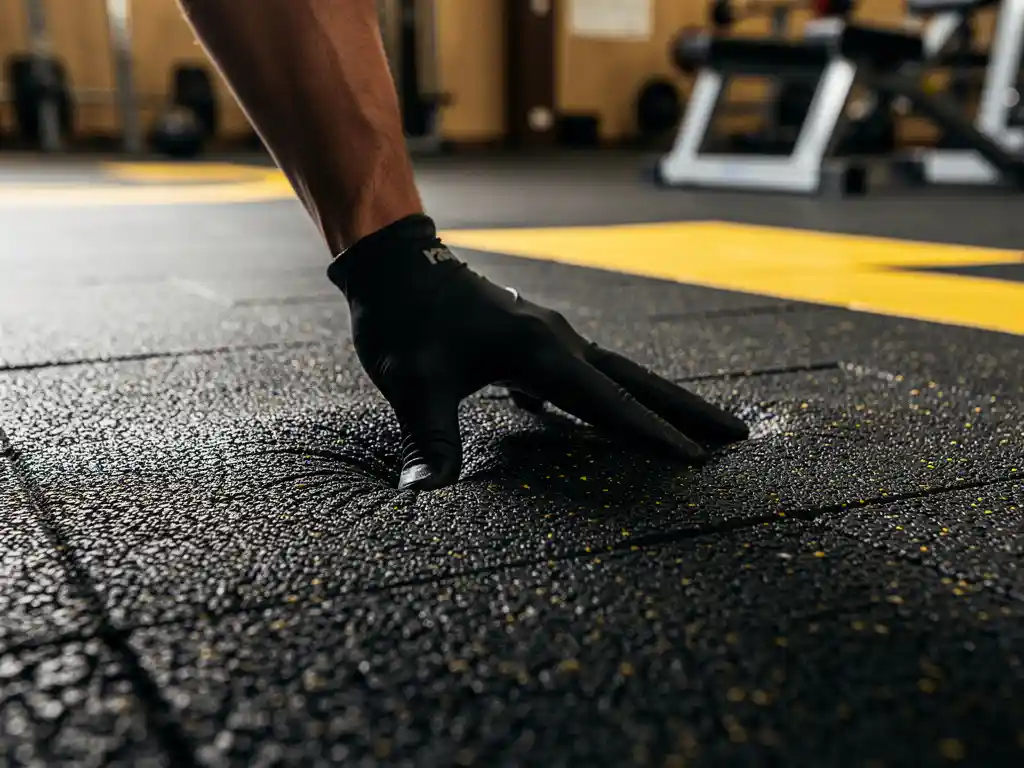
Check for permanent compression by pressing firmly on multiple areas of the mat. A mat that has lost its resilience will feel noticeably harder and will not spring back the way it should. This reduced cushioning matters a great deal in sports flooring, where falls and repeated impact are part of the activity.
Finally, check for moisture beneath the mat if possible. Rubber is non-porous and will not absorb water, but if water has gotten underneath the mat, it can compromise adhesion and create a slipping risk at the surface level.
What’s the difference between a visual inspection and a performance test for sports surfaces?
A visual inspection looks at the physical condition of the surface, such as damage, wear, and cleanliness, while a performance test measures how well the surface actually functions, including its traction, shock absorption, and ball rebound characteristics. Both are important parts of sports facility management, but they serve different purposes.
Visual inspections are something facility staff can carry out regularly without specialist equipment. They are effective for catching obvious problems like surface damage, contamination, or edge lifting. They are fast, practical, and a good baseline for routine sports venue maintenance.
Performance testing goes deeper. It uses standardized tools and methods to measure specific properties of the sports flooring, such as slip resistance ratings, force reduction, and vertical deformation. These tests are particularly useful when a surface looks fine visually but athletes are reporting discomfort, slipping, or inconsistent bounce.
In practice, visual inspections should happen frequently and regularly, while performance testing is typically done annually or when there is a specific concern that visual checks cannot resolve. Together, they give a complete picture of whether a sports surface is safe and fit for purpose.
Who should conduct a sports surface safety inspection?
A sports surface safety inspection should be conducted by trained facility staff for routine visual checks, and by a qualified flooring specialist or independent inspector for formal or annual assessments. The level of expertise required depends on the complexity of the inspection and the type of sports flooring involved.
For day-to-day and weekly checks, facility managers or maintenance staff are well-positioned to carry out inspections, provided they have received basic training on what to look for. They know the surface, they use it regularly, and they are best placed to notice when something has changed.
For annual inspections or when performance issues arise, bringing in a specialist makes sense. Flooring professionals have the tools and training to carry out performance testing, assess structural integrity, and provide documentation that meets insurance or regulatory requirements. In some cases, the flooring manufacturer may also offer inspection support or guidance.
In larger athletic facilities or sports venues, it is worth assigning a named individual to own the inspection process. Having clear accountability means inspections are less likely to be delayed or overlooked, and any issues that are flagged are more likely to be followed up promptly.
When should a sports surface be replaced rather than repaired?
A sports surface should be replaced rather than repaired when damage is widespread, when repairs no longer restore safe performance, or when the surface has reached the end of its practical service life. Patching or spot-fixing can extend the life of a surface, but there comes a point where repeated repairs cost more than replacement and still leave the surface underperforming.
Some specific situations where replacement is the right call include permanent compression across large areas of the mat, multiple seam failures that keep recurring, irreversible traction loss, or structural damage to the subfloor underneath. If the surface is causing athlete discomfort or repeated minor injuries despite maintenance efforts, that is a clear signal that repair is no longer enough.
Age is also a factor. Even a well-maintained rubber sports mat will eventually reach a point where its performance properties have degraded enough that it no longer meets safety standards for athletic facilities. Regular inspection records are useful here because they give you a documented history of the surface’s condition over time, making the replacement decision easier to justify and time correctly.
When replacement is needed, it is worth thinking beyond like-for-like. Advances in rubber sports flooring mean that newer products often offer better durability, improved traction, and greater resistance to compression than older materials. Choosing a high-quality replacement surface from the start reduces how often you will face this decision again.
At LRP Matting, we manufacture rubber sports mats built for exactly this kind of long-term performance. Our mats are made from 100% recycled rubber and many are reinforced with our proprietary FRC® compound, which gives them extra strength and resistance to the wear patterns that typically lead to early replacement. If you are evaluating your current sports flooring or planning a replacement, our sports and recreation matting range is a practical place to start.
Frequently Asked Questions
How do I document a sports surface inspection properly?
Use a standardized inspection checklist that records the date, inspector name, surface condition across each zone, any hazards identified, and actions taken. Photographs are especially useful for documenting wear patterns, edge lifting, or seam separation over time. Keeping a running log of inspection reports gives you a clear history of the surface’s condition, which is valuable when making repair or replacement decisions and when demonstrating due diligence to insurers or regulators.
What cleaning products or methods can damage a rubber sports surface and affect its safety?
Solvent-based cleaners, bleach, and oil-based products can degrade rubber over time, breaking down the surface texture and reducing traction. High-pressure washing can also force water beneath the mat, compromising adhesion and creating a slip hazard at the surface level. Stick to pH-neutral, rubber-safe cleaning solutions and follow the manufacturer’s guidelines to avoid inadvertently accelerating wear or creating the very safety issues you are trying to prevent.
Can a sports surface pass a visual inspection but still be unsafe?
Yes, and this is one of the most important reasons to combine visual inspections with periodic performance testing. A rubber mat can look intact and clean while having lost significant shock absorption due to permanent compression, or its traction rating may have dropped below safe thresholds without any visible surface damage. If athletes are reporting slipping, joint discomfort, or inconsistent ball rebound, treat that as a red flag even if the surface appears fine to the eye.
What are the most common mistakes facility managers make when inspecting sports surfaces?
The most common mistakes include only inspecting high-visibility areas while neglecting edges, corners, and zones beneath equipment, and failing to test traction consistently across the entire surface rather than just the center. Another frequent oversight is delaying action on minor issues like small tears or slightly lifting edges, which tend to escalate quickly under repeated athletic use. Inspection without follow-through is equally problematic — flagging a hazard only counts if there is a clear process for getting it repaired promptly.
How do temperature and humidity levels affect sports surface safety between inspections?
Temperature fluctuations cause rubber flooring to expand and contract, which can gradually loosen adhesive bonds, widen seams, or cause edges to lift — especially in facilities without climate control. High humidity can promote moisture buildup beneath the mat, increasing slip risk and potentially encouraging mold growth on the subfloor. In environments with significant seasonal variation, it is worth adding brief surface checks at the start of summer and winter, not just following a fixed monthly schedule.
Is there a standard or certification that sports surface inspections should meet?
Several international standards govern sports flooring performance, including EN 14904 for indoor sports floors and EN 1177 for impact-absorbing surfaces in play areas, both of which specify measurable performance thresholds for traction, shock absorption, and deformation. In the UK, Sport England also publishes technical guidance for sports hall flooring that many facilities use as a benchmark. Checking which standards apply to your specific facility type and surface is a practical first step, particularly if your venue hosts competitive events or is subject to insurance or regulatory requirements.
How long does a thorough sports surface safety inspection typically take?
A routine visual inspection of a standard gym or sports hall floor typically takes between 20 and 45 minutes, depending on the size of the facility and the number of surface zones being checked. A more detailed formal inspection that includes performance testing, subfloor assessment, and documentation can take several hours and may require specialist equipment. Building the routine inspection into a regular maintenance slot — rather than treating it as a standalone task — makes it easier to carry out consistently without disrupting facility operations.
Related Articles
- How does regular maintenance extend the life of sports flooring?
- How can preventative maintenance reduce unexpected floor repairs?
- What should you consider when designing an animal facility?
- Why is regular floor maintenance important for long term performance?
- How can you reduce fall risk in busy facilities?
- What is the best flooring for an indoor training facility?
- How do you prevent cross-contamination through flooring in an animal clinic?
- How do you make a warehouse floor less slippery?
- Why is my horse stiff after being in the stall overnight?
- What are the pros of rubber mats in a horse stall?