

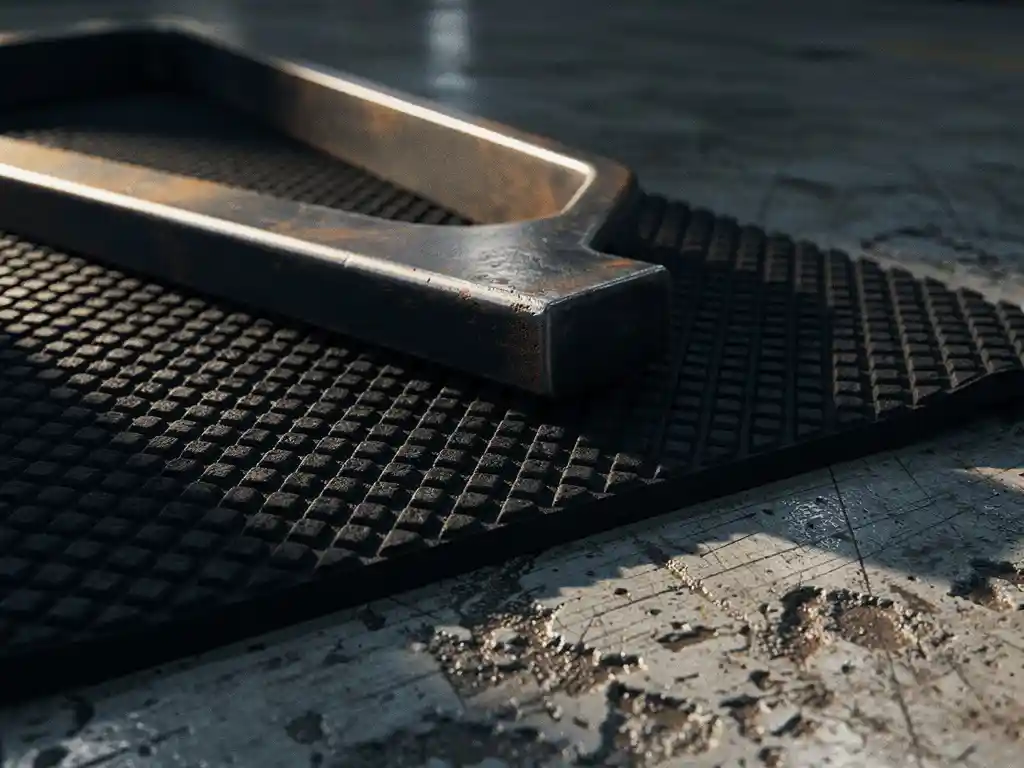
You can prevent surface wear by placing protective matting, coverings, or barriers between high-traffic activity and the underlying floor. Rubber matting is one of the most effective solutions for this, absorbing impact, reducing friction, and distributing weight evenly across the surface. The right approach depends on your environment, the type of traffic involved, and how much protection your floor actually needs. Below, we break down the most common questions around surface wear and how to address them.
What causes surface wear in industrial and commercial spaces?
Surface wear in industrial and commercial spaces is caused by repeated mechanical stress on flooring, including foot traffic, wheeled equipment, dropped loads, and friction from constant movement. Over time, these forces break down the surface layer of floors, especially concrete, which is porous and vulnerable to abrasion, chemical spills, and impact damage.
In manufacturing and warehouse environments, heavy machinery and pallet jacks concentrate enormous pressure on small surface areas, accelerating floor degradation. In commercial spaces like gyms, retail stores, or workshops, the combination of high foot traffic and hard-soled footwear gradually erodes flooring finishes and creates uneven surfaces.
A few of the most common causes include:
- Abrasion from foot traffic and wheeled equipment
- Impact from dropped tools, materials, or machinery vibration
- Chemical exposure from oils, cleaning agents, and industrial fluids
- Moisture penetration that weakens the surface over time
- Thermal expansion and contraction in environments with temperature swings
Understanding what is actually causing wear in your specific space is the first step toward choosing an effective solution. The fix for a concrete floor degraded by chemical spills looks very different from one worn down by forklift traffic.
How does rubber matting prevent surface wear?
Rubber matting prevents surface wear by acting as a physical barrier between the floor and the forces that damage it. It absorbs impact, reduces friction between footwear or equipment and the floor surface, and distributes weight more evenly. This dramatically reduces the stress placed directly on the underlying floor, slowing wear significantly.
Rubber is particularly effective because it is non-porous, meaning it does not absorb moisture or chemicals that could otherwise seep into a concrete floor and cause structural damage. It also stays flexible across a wide range of temperatures, so it does not crack or shift in environments that heat up or cool down significantly.
Beyond floor protection, rubber mats also improve safety by reducing slip risks and providing a stable surface underfoot. This dual benefit makes them a practical choice for spaces where both floor durability and worker safety are priorities.
Which surfaces benefit most from anti-wear matting?
Concrete floors benefit most from anti-wear matting because concrete, despite its reputation for toughness, is highly susceptible to surface degradation from abrasion, impact, and moisture. Uncoated concrete floors in warehouses, factories, and garages wear down faster than most people expect, particularly in high-traffic corridors and loading areas.
That said, several other surfaces also benefit meaningfully from matting:
- Concrete floors in industrial and commercial settings, where abrasion and impact are constant
- Wooden floors in gyms or sports facilities, where heavy equipment would otherwise cause dents and scratches
- Tile and vinyl flooring in commercial spaces, where point loads from furniture or equipment can crack or deform the surface
- Agricultural flooring in barns and stalls, where animal hooves and moisture combine to degrade surfaces quickly
- Assembly line floors, where workers standing in fixed positions for long periods create concentrated wear zones
In each of these cases, matting extends the life of the floor beneath it and reduces the frequency and cost of repairs or replacements.
What’s the difference between standard rubber mats and fiber-reinforced mats?
The main difference between standard rubber mats and fiber-reinforced mats is structural strength. Standard rubber mats are made from rubber compound alone, which provides good flexibility and impact absorption. Fiber-reinforced mats incorporate a fiber matrix within the rubber, which significantly increases tensile strength and resistance to tearing, deformation, and heavy loads.
In practical terms, this means fiber-reinforced mats hold their shape better under sustained heavy use. They are less likely to compress permanently, curl at the edges, or break down in environments where standard mats might fail within a few years. For heavy industrial applications, this difference in durability can translate directly into lower replacement costs over time.
Fiber-reinforced rubber compound, often referred to as FRC, is particularly well suited to environments with forklifts, heavy machinery, or livestock, where the forces on the mat are both significant and repetitive. Standard rubber mats remain a practical and cost-effective option for lighter commercial use where the demands on the mat are more moderate.
How do you choose the right mat thickness for surface protection?
Choose mat thickness based on the weight and type of traffic your floor will experience. Thicker mats absorb more impact and provide better protection for the floor beneath them, but the right thickness varies depending on whether you are dealing with foot traffic, wheeled equipment, or heavy machinery.
Here is a practical guide:
- 3/8 inch (about 10mm): Suitable for light commercial use, retail spaces, and areas with regular foot traffic
- 1/2 inch (about 12mm): A good general-purpose thickness for workshops, gyms, and moderate industrial use
- 3/4 inch (about 19mm): Recommended for heavier industrial environments, assembly lines, and areas with wheeled equipment
- 1 inch or more: Appropriate for very heavy machinery, livestock environments, and applications where impact absorption is the primary concern
Thicker mats also tend to provide better anti-fatigue benefits for workers who stand for long periods, so in environments where both floor protection and worker comfort matter, going slightly thicker often makes sense. When in doubt, err on the side of more thickness rather than less, particularly in industrial settings where floor repair is expensive and disruptive.
How do you maintain rubber mats to keep surfaces protected long-term?
Maintaining rubber mats is straightforward: clean them regularly with mild detergent and water, inspect them periodically for signs of wear or damage, and replace sections that have degraded to the point where they no longer protect the floor effectively. Consistent maintenance keeps mats performing well and extends their service life significantly.
A few practical habits make a real difference:
- Sweep or vacuum mats regularly to remove abrasive debris that can accelerate wear on both the mat and the floor beneath
- Mop with a mild cleaning solution rather than harsh chemicals, which can degrade rubber over time
- Allow mats to dry fully before repositioning them if they have been lifted for cleaning
- Check edges and corners periodically, as these areas tend to curl or lift first, creating trip hazards and reducing floor coverage
- Rotate mats in high-traffic zones where possible to distribute wear more evenly across the surface
One advantage of genuine rubber mats is that they are non-porous, so they do not absorb moisture or harbor bacteria the way foam or textile alternatives can. This makes cleaning faster and more effective, and it means the mat itself does not become a source of contamination in food production or healthcare environments.
At LRP Matting, we offer a wide range of rubber mats built to handle demanding environments without constant replacement. Whether you need concrete floor protection for a busy warehouse or durable matting for an agricultural facility, our mats are made from 100% recycled materials and designed to last. Explore our industrial matting solutions to find the right fit for your space.
Frequently Asked Questions
How do I know when it's time to replace a rubber mat rather than just clean it?
A rubber mat should be replaced when it shows visible signs of structural breakdown: permanent compression (where the mat no longer springs back), cracking, tearing, or edges that curl and won’t lie flat even after repositioning. If the mat has thinned noticeably in high-traffic zones or no longer provides a stable, even surface underfoot, it has lost its protective value and continuing to use it puts the floor beneath at risk. A good rule of thumb is to inspect mats every six months in heavy-use environments and annually in lighter commercial settings.
Can rubber mats be used on top of already-damaged floors, or does the floor need to be repaired first?
Rubber mats can be placed over floors with minor surface wear, such as light abrasion or small scuffs, and will help prevent further deterioration. However, if the floor has significant structural damage — deep cracks, spalling concrete, uneven sections, or moisture seeping up from below — it is worth addressing those issues first. Placing matting over a compromised surface can trap moisture, accelerate subsurface damage, and create an unstable base that causes the mat itself to shift or degrade faster. Think of matting as a preventive and protective layer, not a substitute for necessary repairs.
What's the best way to secure rubber mats so they don't shift or create trip hazards?
Most heavy-duty rubber mats stay in place through their own weight and a textured or cleated underside that grips the floor surface. For lighter mats in high-traffic areas, double-sided tape or mat anchors can be used around the perimeter to prevent movement. In environments where mats need to be lifted regularly for cleaning — such as food production or healthcare spaces — interlocking mat systems are a practical option, as they connect securely without adhesives. Always ensure mat edges are flush with the floor or use beveled edge ramps to eliminate raised lips that could cause trips.
Are there environments where rubber matting is not the right solution for surface protection?
Rubber matting is highly versatile, but it is not always the ideal solution. In cleanroom environments or spaces with strict electrostatic discharge (ESD) requirements, standard rubber mats may not meet the necessary specifications, and purpose-built ESD or anti-static matting should be used instead. In areas with extremely high temperatures — such as near furnaces or industrial ovens — standard rubber can degrade, and high-temperature-rated materials would be more appropriate. For spaces where aesthetics are a primary concern, such as upscale retail or hospitality settings, there may be more visually suitable flooring protection options worth considering alongside rubber.
How much money can I realistically save by using matting instead of repairing or replacing a floor?
The cost savings depend heavily on your floor type and environment, but the difference can be substantial. Industrial concrete floor repairs typically cost anywhere from a few dollars per square foot for surface grinding and recoating to significantly more for full resurfacing or replacement — not counting the operational downtime involved. A quality rubber mat, by contrast, can protect the same surface for years at a fraction of that cost. In high-traffic warehouse or manufacturing settings, facilities that invest in matting early often report extending their floor’s effective lifespan by several years, making matting one of the highest-return preventive maintenance investments available.
Can I cut rubber mats to fit irregular spaces or around equipment footings?
Yes, most rubber mats can be cut to fit using a sharp utility knife or heavy-duty scissors, and a straight edge or template helps ensure clean, accurate cuts. For complex shapes around machinery footings, columns, or doorframes, it helps to create a cardboard template first and trace it onto the mat before cutting. Some mat formats — particularly interlocking tile systems — are easier to customize for irregular layouts than large roll-out mats. Always check the manufacturer’s guidance, as some fiber-reinforced mats may require more effort to cut cleanly due to their internal fiber matrix.
Does the color or surface texture of a rubber mat affect its protective performance?
Color does not affect a mat’s protective performance, but surface texture does. Mats with a raised diamond, coin, or stud pattern on the top surface help channel water and debris away from the walking surface, improving traction and reducing the risk of slip-related incidents. A smooth top surface may be easier to clean but offers less grip in wet conditions. On the underside, a cleated or textured surface improves grip on the floor below, reducing mat movement. When selecting a mat purely for floor protection, the key performance factors are thickness, rubber compound quality, and whether the mat is fiber-reinforced — texture and color are secondary considerations.
Related Articles
- How does prolonged standing affect the body?
- How does regular maintenance extend the life of sports flooring?
- How can flooring materials be reused or recycled?
- What are the warning signs of floor deterioration?
- How do uneven floors increase accident risk?
- How do you reduce impact on a horse's legs during stabling?
- How often should you replace horse stall bedding?
- What should you put on a concrete barn floor to protect your horse?
- What is the best flooring for a horse stable grooming area?
- Is concrete a good floor for a horse stall?